There's nothing like a gentle sea breeze to lift you through that crux move.
I've heard climbers throw a lot of shade at Euro climbing over the years. Too many bolts, too many crowds, too much polished limestone, not enough granite, and poor traditional climbing are a few of the criticisms launched at Europe by the jaded rocksmiths among us.
But one thing that even the most cynical climber can't deny is that Europe offers the world's best coastal climbing. The sheer number of sea cliffs is unmatched anywhere else in the world, and it's not just famous Mediterranean hotspots like Greece and Finale Ligure. Ireland, the U.K., Norway, France, Malta, and Croatia are all home to extraordinary seaside climbs.
So let's dive into a breakdown of the continent's best seaside climbing and what to expect, from the most famous destinations to places you may have never heard of.
Quick Note: Why Is There So Much Limestone in Europe?
Reading this article, you might start to notice a common theme. Europe is filled with limestone. From limestone cliffs along the sea to limestone canyons worn away over millions of years by water flowing out of mountains, Europe is largely a limestone continent. Of course, Europe is also a large continent with abundant geological diversity; you can find many rock types, but limestone is the most common.
Limestone is great for climbing. Of outdoor rock, it most closely resembles the style of climbing you see in indoor gyms. Limestone is often heavily featured, with pockets, holes, jug handles, tufas, cracks, and crystal protrusions jutting out every which way. Holds are usually sharp and positive. Limestone climbing is fun.
The downsides of limestone climbing include the tendency to become polished under heavy climber traffic. Many of the great routes in Europe now have polish on them, including many of the areas mentioned in this guide.
Another downside with limestone is the bias toward bolted climbing. Limestone tends not to form the sort of crack systems ideal for placing modern protection, like cams, into the rock. So most limestone is either sport climbing or mixed sport and trad; however, there are still plenty of full trad routes out there, you just have to search a bit harder for them.

About PeakVisor: PeakVisor is a 3D mapping tool that offers insight into mountain regions across the world, though we’re based in the Alps. We’ve recently added rock climbing areas — both in the app and here on the website. Browse them in our climbing search, then tap any card to open that crag on the 3D map, with its description, weather forecast, GPS location, and a route to the base. So check it out!
A note on grades. This article uses French climbing grades throughout — here's a grade conversion chart (French grades are in the left column).
Cala Gonone, Sardinia
Location: The eastern coast of Sardinia.
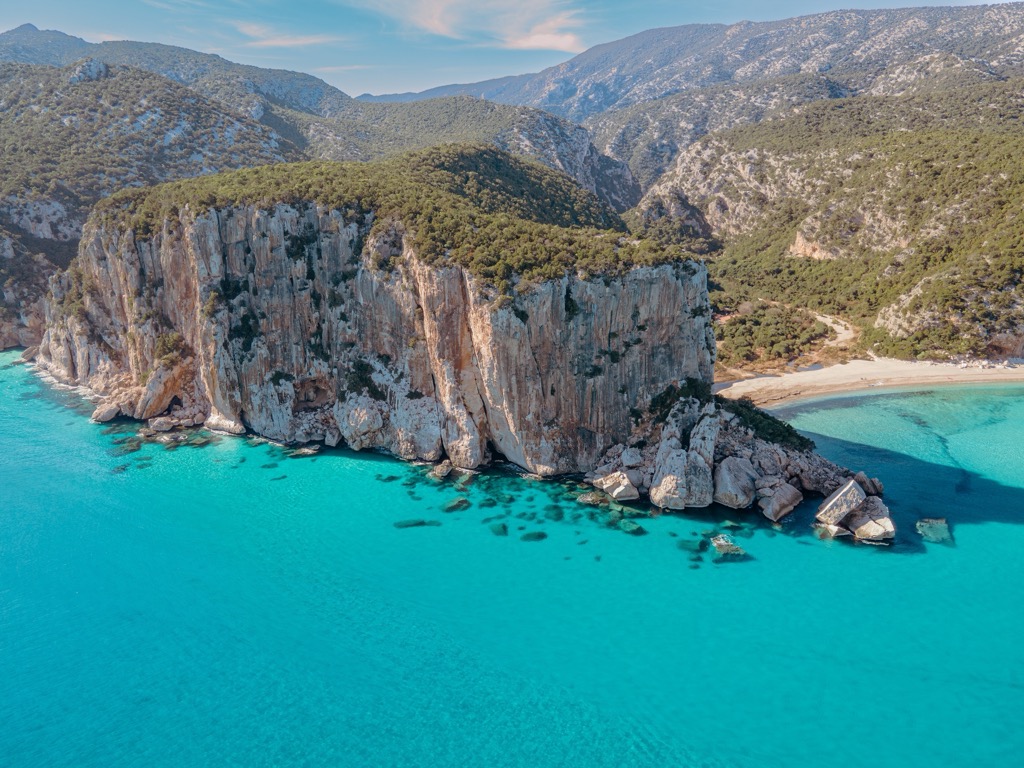
Cala Gonone sits on the Gulf of Orosei, where the Supramonte mountains plunge into the Tyrrhenian Sea. Erosion has gifted climbers hundreds of limestone cliffs along the coastline.
The area offers more than 1,000 climbs, concentrated around the cliffs of the Gulf of Orosei. Popular crags include Cala Fuili, Biddiriscottai, and Buchi Arta, though there are scores to choose from. While not all crags are directly on the water, some are, such as Cala Luna (pictured below).
The limestone is generally excellent quality and well-featured, as we'd expect from our limestone. That means plenty of pockets and tufas (long, rib-like rock protrusions that are common on certain types of limestone). Grades range from low 4's to 9's; however, most routes are intermediate to advanced. Seeing as it's quite steep and pumpy, Cala Gonone isn't the best for beginners.
Season: Cala Gonone is too hot to climb in the summer, but it offers great climbing for the other nine months of the year. Head here from autumn through spring. The climbing can be excellent in winter if you chase the sun.

See it on the map: explore Cala Gonone on the PeakVisor 3D map → for crag locations, approaches, weather, and the route finder.
Kalymnos, Greece
Location: Kalymnos is in the southeastern Aegean Sea. It's actually much closer to Turkey than mainland Greece.
Kalymnos is featured on just about every climbing listicle out there, unless the author is trying to avoid being cliché. If you go around asking climbers what the best climbing destination in the world is, many will say Kalymnos.
What you can expect from Kalymnos is an island with little else but thousands of world-class routes. During the climbing season, which is spring, fall, and parts of winter, if you chase the sun, the vast majority of the island's visitors will be climbers. Some crags will be busy, but with at least 5,000 routes across 80 sectors… any time spent waiting in a queue is a waste. Just find another route. Don't worry about the "classics."
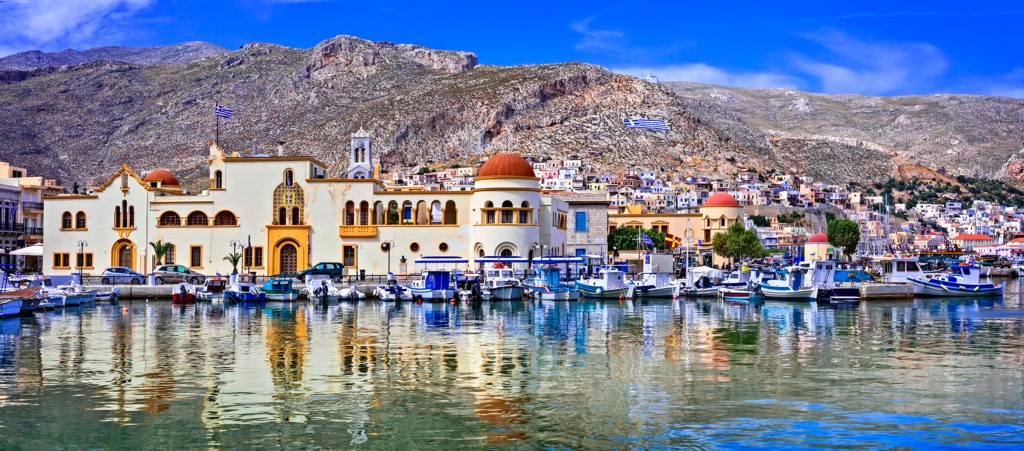
The featured limestone is known for its abundance of tufas, stalactites, pockets, and caves, creating a steep, three-dimensional climbing style. Routes range from beginner-friendly slabs to some of the world's hardest. You could visit for your first climbing trip or your 1,000th, and have an amazing time either way.
While you might not have the cultural immersion of, say, Athens, Kalymnos has delightful food and plenty of beaches to bask on during rest days.
Some consider the grades at Kalymnos a bit soft; that is, they are easier than other climbs of the same grade elsewhere.
Also consider: The "new Kalymnos" is Leonidio, which is in the Peloponnese region of mainland Greece. Like Kalymnos, it's entirely limestone sport climbing, mostly single pitch, and very close to the sea. Because the routes here have seen far fewer ascents, the rock shows much less polish. More than 1,000 routes now pepper the cliffs above town.
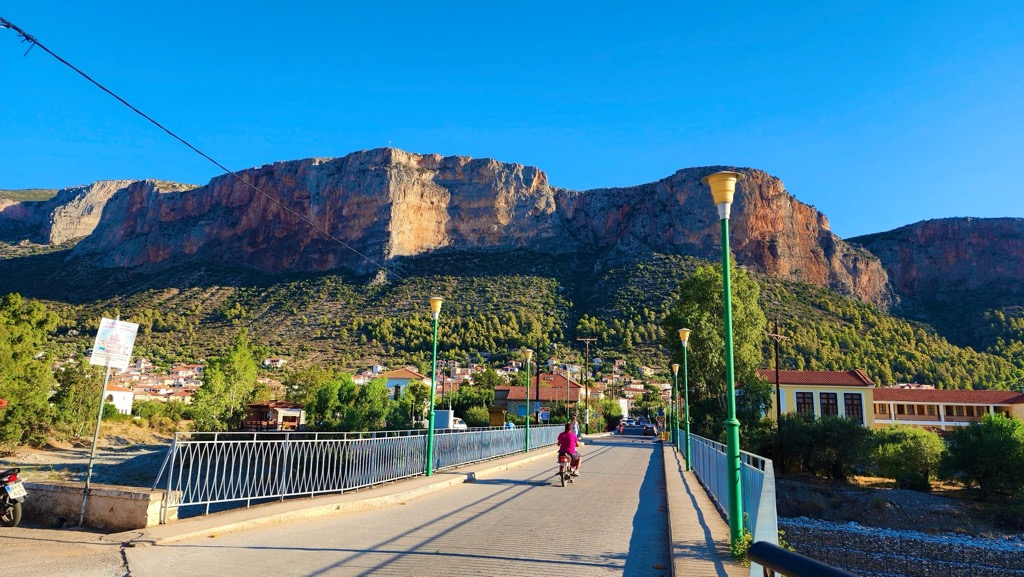
See it on the map: explore Kalymnos on the PeakVisor 3D map → for crag locations, approaches, weather, and the route finder.
Fair Head, Northern Ireland
Location: Fair Head sits on the coast of County Antrim, just 5 kilometers (3 miles) east of the town of Ballycastle.
Now for something completely different. While every climber has gotten at least some online exposure to Mediterranean limestone sport climbing, how many people have you heard talk about Ireland?
In fact, Fair Head (also known as Benmore) is one of Europe's most spectacular sea-cliff climbing destinations. Rising dramatically above the North Atlantic, this enormous headland offers several hundred trad routes on 60-million-year-old high-quality basalt.
Similar to the wild Atlantic Ocean crashing far below, the climbing at Fair Head is gnarly, with unrelenting steepness and plenty of searching for routes/protection. It's a place for experienced trad climbers who don't mind a bit of self-mutilation, from both the climbing and the weather.
Even the approach is difficult, requiring either a rappel or a downclimb through steep gullies.
Season: Aye, here lies the crux. Ireland's notoriously bad weather rears its ugly head at any and all times of year. Thus, climbers should aim for the summer months and be ready for chilly, wet, and windy weather. The cliffs are north-facing, which keeps them cool year-round.
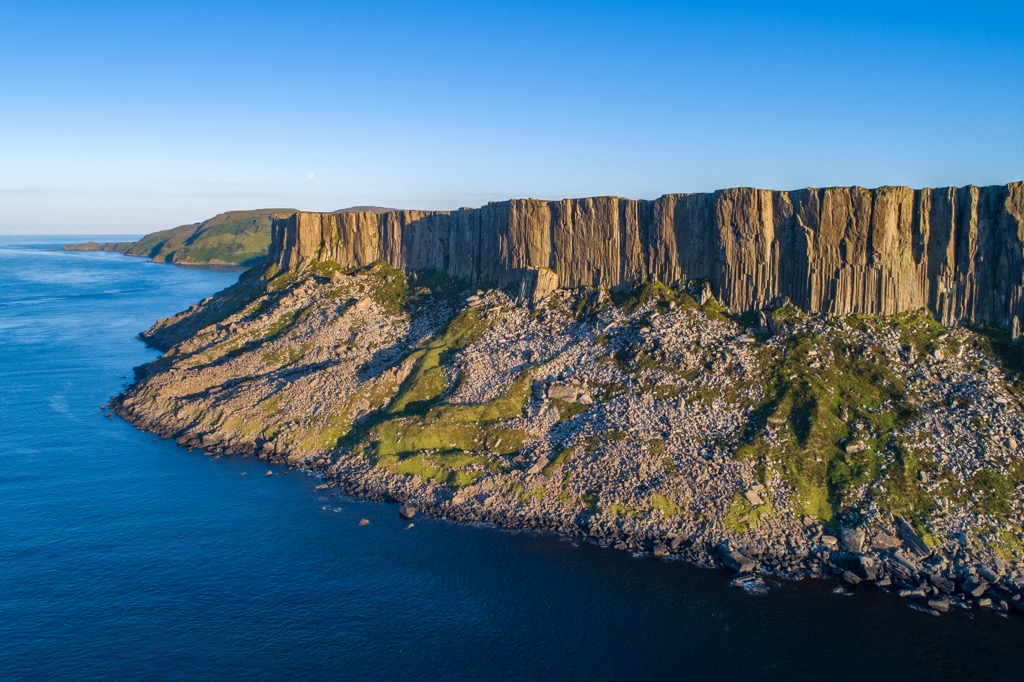
See it on the map: explore Fair Head on the PeakVisor 3D map → for crag locations, approaches, weather, and the route finder.
Jaizkibel, Basque Country, Spain
Location: The mountain of Jaizkibel forms the western end of the Pyrenees, dropping directly into the Bay of Biscay in Basque Country, Spain. The bouldering areas are located from the shoreline to the forests above, along the foot of the mountain.
Jaizkibel is famous for its distinctive Eocene sandstone. Wind and water have sculpted the rock into a unique boulderer's playground, with lots of dish-like depressions and holes.
There's also plenty of bolted routes here for sport climbers to climb with a rope.
Jaizkibel is isolated, with a wild feel, but the Basque Country is one of Europe's most treasured cultural regions. Between swimming in the Atlantic and exploring nearby towns, you won't be short of things to do outside of climbing.
Season: Plan to take a trip here anytime from spring through fall. Summer may be uncomfortably warm at times, but you can break up the climbing with a quick swim.
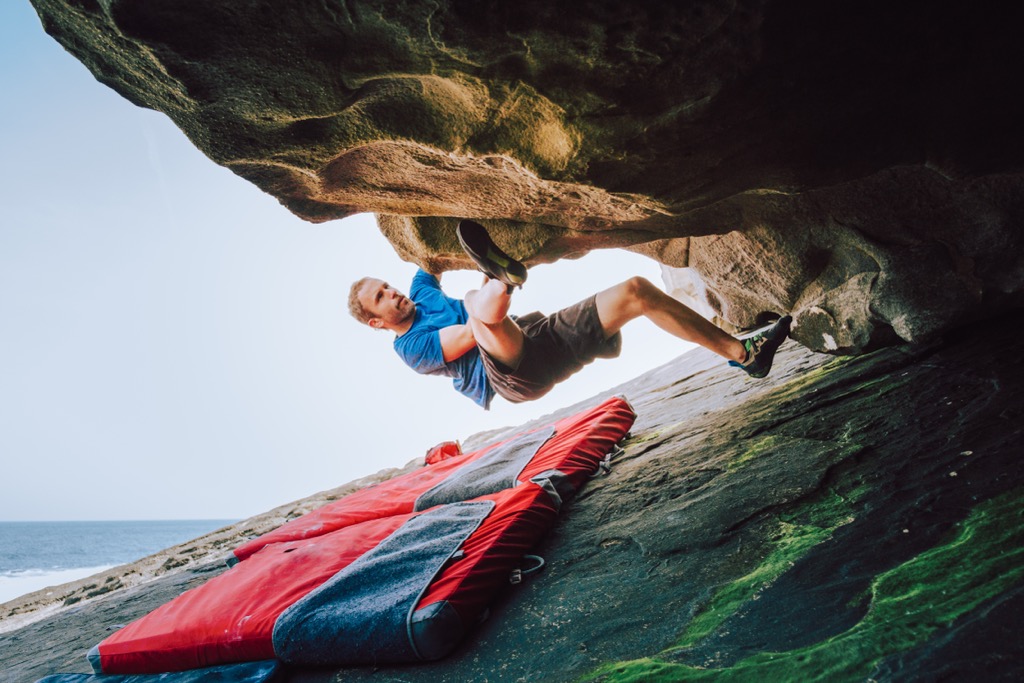
See it on the map: explore Jaizkibel on the PeakVisor 3D map → for crag locations, approaches, weather, and the route finder.
Dingli Cliffs & Wied Babu, Malta
Location: The southwestern coast of Malta.
These two crags are close together and comprise Malta's two premier climbing destinations. If you're going to Malta to climb, you're probably coming here.
Dingli Cliffs are the premier destination, with climbing set on the spectacular sea cliffs that reach 250 meters (Malta's highest point). The climbing is not set directly above the sea, as the limestone there is of poor quality, but rather on the cliff's upper tiers. Rock quality ranges from excellent to mediocre, but the views are incredible.
Wied Babu (Babu Valley) heads inland from the coast and is home to a variety of routes. It's not world-class by any means, but it offers a good complement to the Dingli Cliffs, and an excuse to explore Malta.
Season: You can climb year-round, but in the summer months, climbing is limited to before 9 a.m. Therefore, climbers looking to visit from abroad should choose the October to May timeframe for the best chance of ideal conditions.
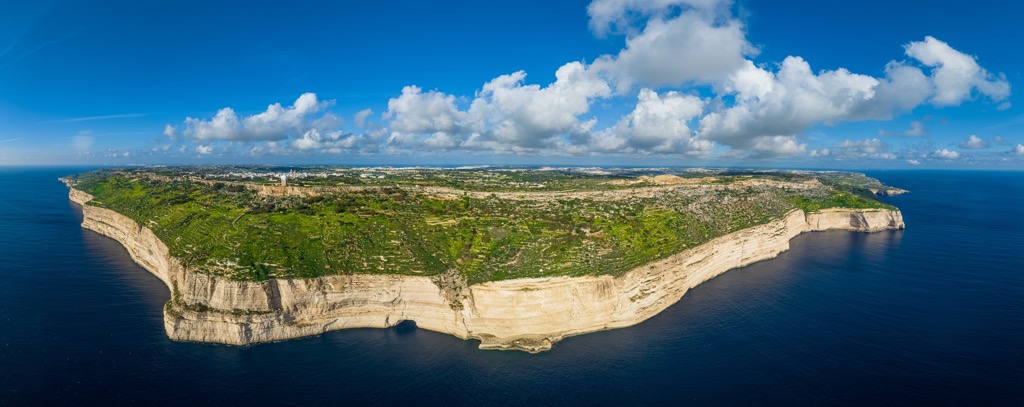
See it on the map: explore the Dingli Cliffs on the PeakVisor 3D map → for crag locations, approaches, weather, and the route finder.
Paklenica National Park, Croatia
Location: Croatia's Dalmatian coast near the town of Starigrad.
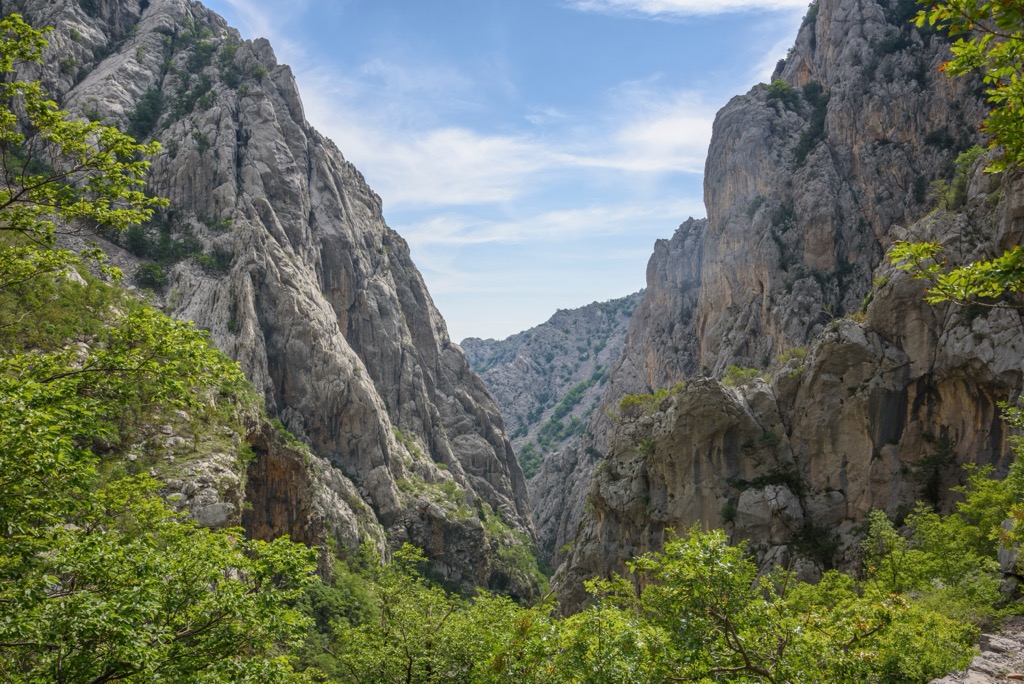
Unlike most of the other destinations on this list, Paklenica is not directly on the coastline. These are not seaside crags; they are big mountain routes in a large alpine valley, albeit one that happens to be a few kilometers from Croatia's stunning Dalmatian coast. But you'll still smell the sea on the breeze, and you can easily hop in the water at the end of the day.
Paklenica has been a National Park since 1949 and saw early development in the climbing scene throughout the 1950s. Hundreds of routes snake their way up the karst limestone, with the highlight being Anića Kuk, a 350-meter wall. Many routes are a mix of sport and trad, and approaches are quite manageable considering the quality and Alpine nature of the climbing.
Paklenica is also host to an annual climbing festival and camping options. The nearby town of Stalingrad is a historical gem that offers plenty to do for a rest day or two, not to mention a post-climb dip in the Adriatic Sea.
Season: The best time to visit for long, full days of climbing is the spring and autumn. Technically, climbing is possible year-round, but summer can be scorching on the rock and winter is cold and shadowy in the canyon (but not snow-covered).
See it on the map: explore Paklenica National Park on the PeakVisor 3D map → for crag locations, approaches, weather, and the route finder.
Gogarth, Wales, United Kingdom
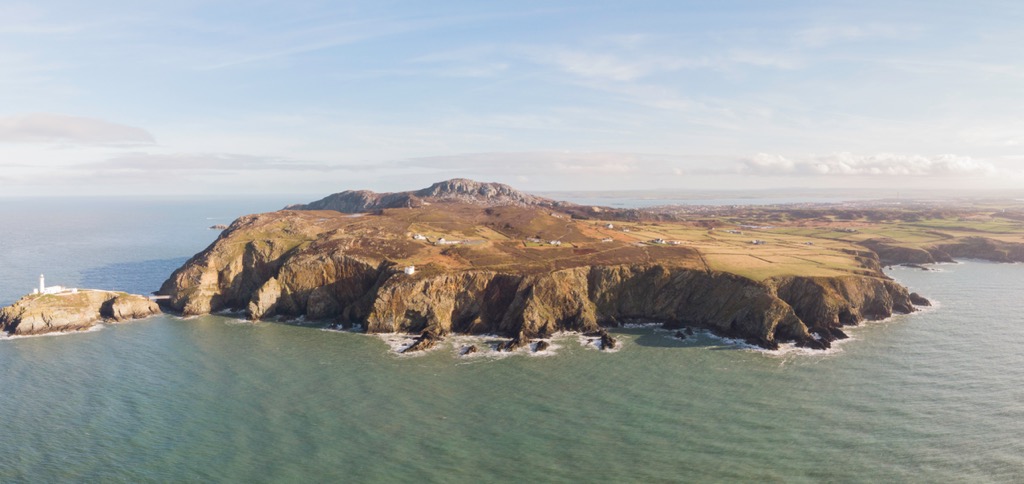
Location: The Gogarth sea cliffs are on Holyhead Island, on the Anglesey Coast in North Wales, United Kingdom.
It's not just the name — Gogarth — which somehow harkens recollections of sea monsters and storm-tossed ships. This place is big, scary, committing, cold, hot, and generally brutal. But despite the higher-than-usual dose of self-mutilation in Gogarth trad climbing, a dedicated community of hard, hard locals embraces the place above all others. The international climbing community has no choice but to hold their tail between their legs and smile in awe.
Most of these cliffs are accessible only by rappelling (abseiling) into them from above, which makes bailing very difficult (some groups leave a dedicated rope after the rappel, which can then be used to jug up in case of a bail).
The rock is quartzite, rhyolite, and dolerite. Exploration began in the early 1960s. Despite the wild reputation, there are well-trodden classic routes from the low 5s and up.
Season: Contrary to what you might expect, climbing here is possible year-round because the cliffs face west and south. For a dedicated trip, late spring through early autumn offers the best chance of decent conditions, but winter afternoons are also great for locals who can sneak out.
See it on the map: explore Gogarth on the PeakVisor 3D map → for crag locations, approaches, weather, and the route finder.
Lofoten Islands, Norway
Location: The Lofoten Islands form an archipelago on the west coast of northern Norway.
Lofoten has achieved legendary status in the canon of world destinations, and not just for climbers. Year-round, tourists visit for Aurora borealis viewing, ski touring, hiking, and just plain old sightseeing.
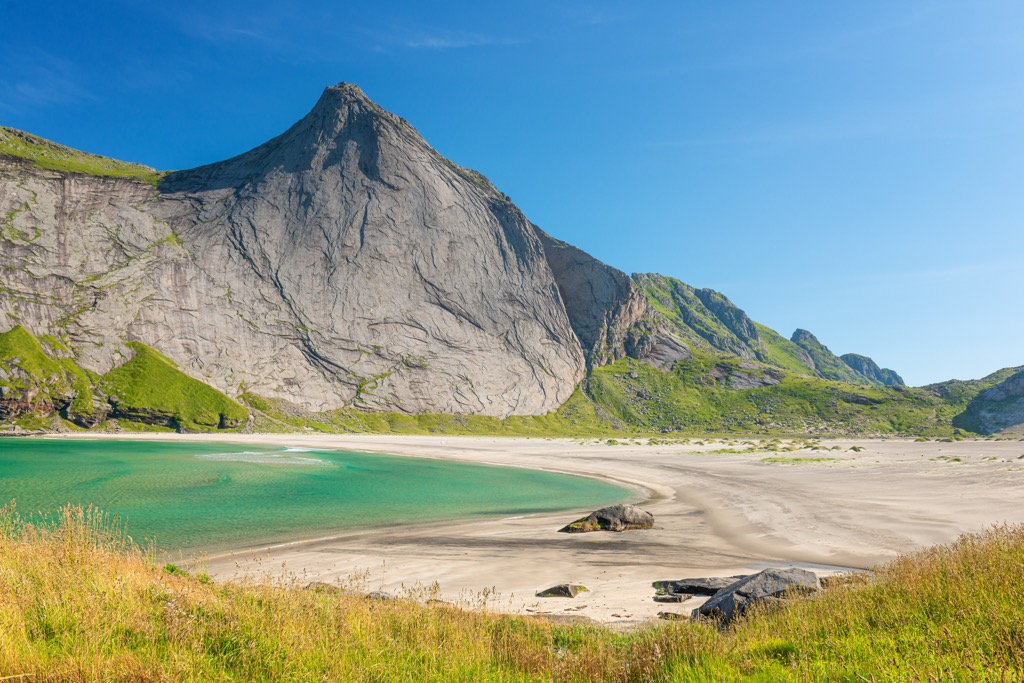
As far as climbing goes, Lofoten is up there with the best. Massive, high-quality granite walls abound, making this one of Europe's premier trad climbing destinations. Classic multi-pitch routes range from 100 to 700 meters, while approaches are relatively short (15–60 minutes from the road). Not bad for Chamonix-style alpine trad climbing.
The rest of the scenery is also extraordinary. Whether you're hiking, kayaking, or just sightseeing, Lofoten is one of Earth's treasures. It's just too bad Norway is one of the most expensive countries in Europe.
Season: Like many destinations along the coast of Northern Europe, the weather is the crux here. The summer months will offer the best chance for warm days with no precipitation (Lofoten has 147 rainy days per year). Midnight sun, when the sun does not set in summer, lasts from May 25 to July 17, making climbing possible around the clock.
See it on the map: explore the Lofoten Islands on the PeakVisor 3D map → for crag locations, approaches, weather, and the route finder.
Scogliera di Salinella, Sicily
Location: Scogliera di Salinella is just south of San Vito Lo Capo, on the western end of Sicily.
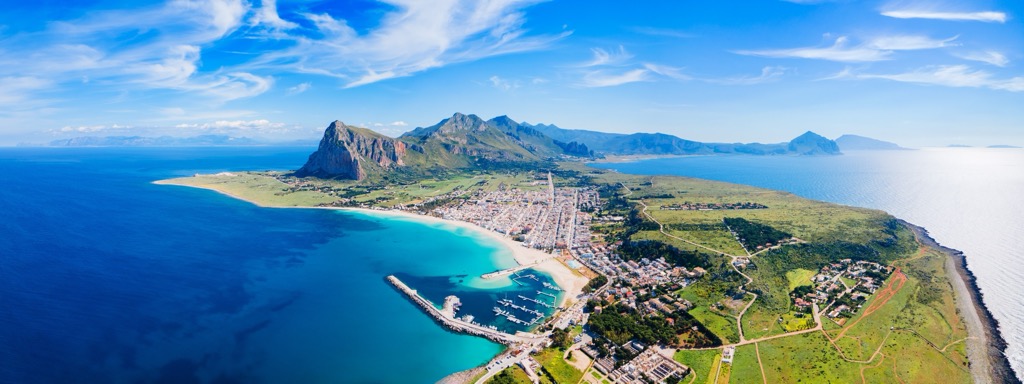
We're back to classic limestone climbing along the Mediterranean coast. Here's a deeper cut for those seeking something a bit more exotic. San Vito Lo Capo is Italy's most far-flung climbing destination, all the way out on the western coast of Sicily. The town is most renowned for the nearby Monte Monaco, which is great for hard multipitch sport routes.
There are several areas in the vicinity of San Vito, but Scogliera di Salinella offers the most climbing, with nearly 1,000 routes so far. The cliff is 3 kilometers long, which explains how one cliff could have so many climbs.
It's not towering; most routes are in the 15–30 meter range. You've got a bit of everything. Beginners, intermediates, and experts will all have something to do here. And you're just minutes from the turquoise water of the Mediterranean.
It's also the perfect base for exploring other nearby crags, such as the aforementioned Monte Monaco, as well as Cofano and Castelluzzo.
Season: September to May — fully 9 months out of the year. But don't bother coming here in the summer. It's far too hot.
See it on the map: explore Scogliera di Salinella on the PeakVisor 3D map → for crag locations, approaches, weather, and the route finder.
Finale Ligure, Italy
Location: Finale is perched along the Ligurian Coast, just north of the city of Genoa.
Finale is one of Europe's best-known climbing destinations. If you've found yourself on this page, there's a good chance you've already heard of it.
Is it just another played-out, crowded European destination? Certainly not. The town of Finale is quite crowded, but that is also because of the high number of mountain bikers and other tourists who visit; climbing is just one of the attractions here. And with over 4,000 routes and 200 crags, there's no reason to be waiting in a queue.
The limestone is of very high quality, though there is plenty of polish on the well-trodden routes. Most approaches are 5–20 minutes long. Most of the climbing is sport, but there is also trad, bouldering, and multi-pitch in the mix.
Season: Spring and fall; summer and winter can work if you dance with the sun.
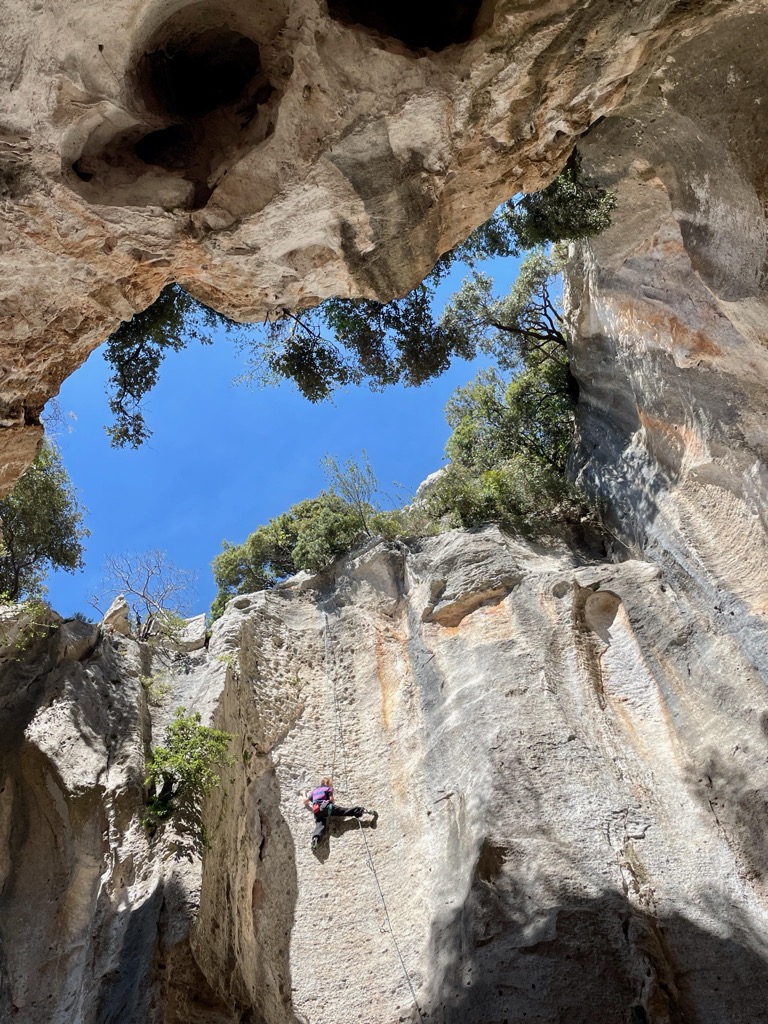
See it on the map: explore Finale Ligure on the PeakVisor 3D map → for crag locations, approaches, weather, and the route finder.
Using PeakVisor to Plan Your Climbing
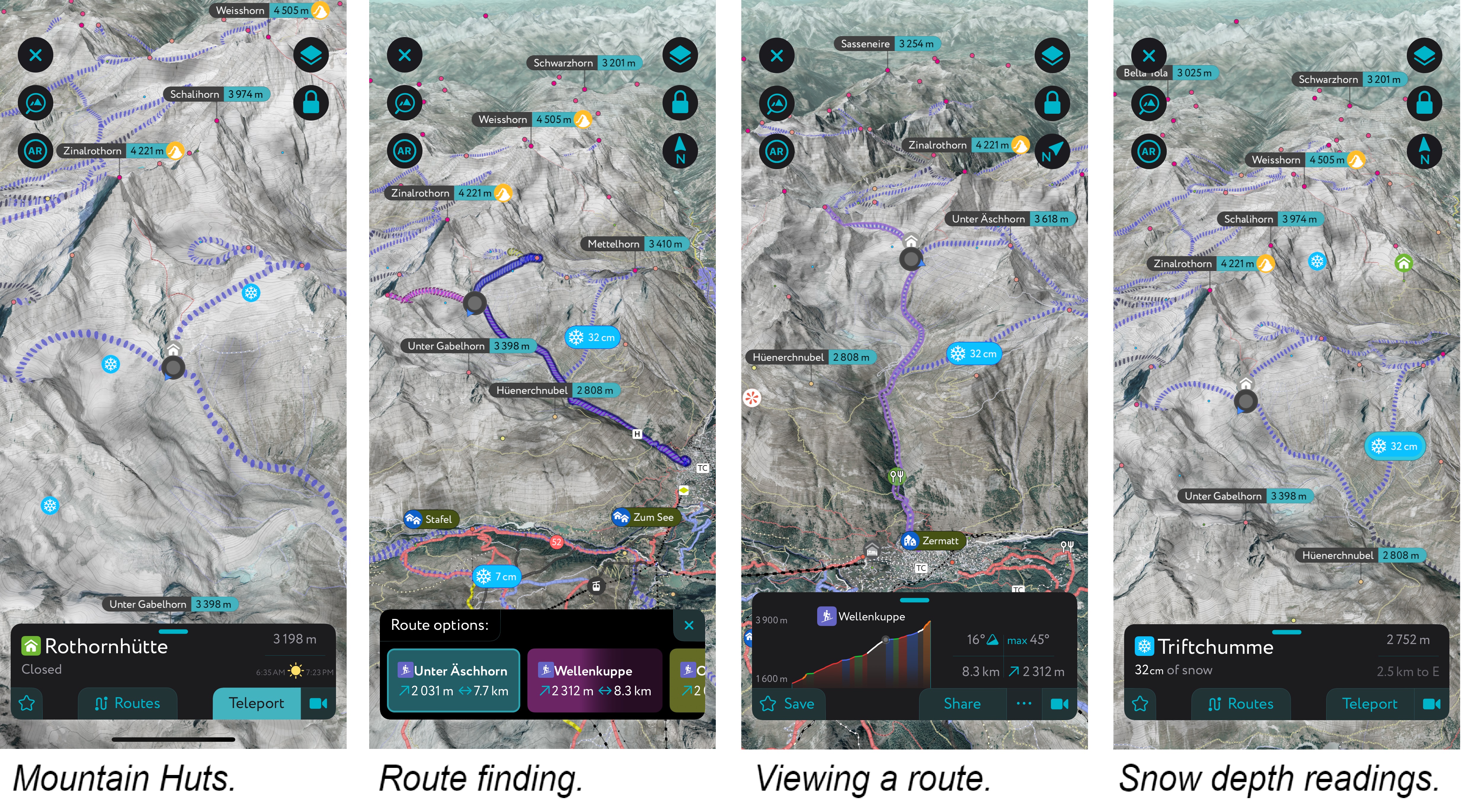
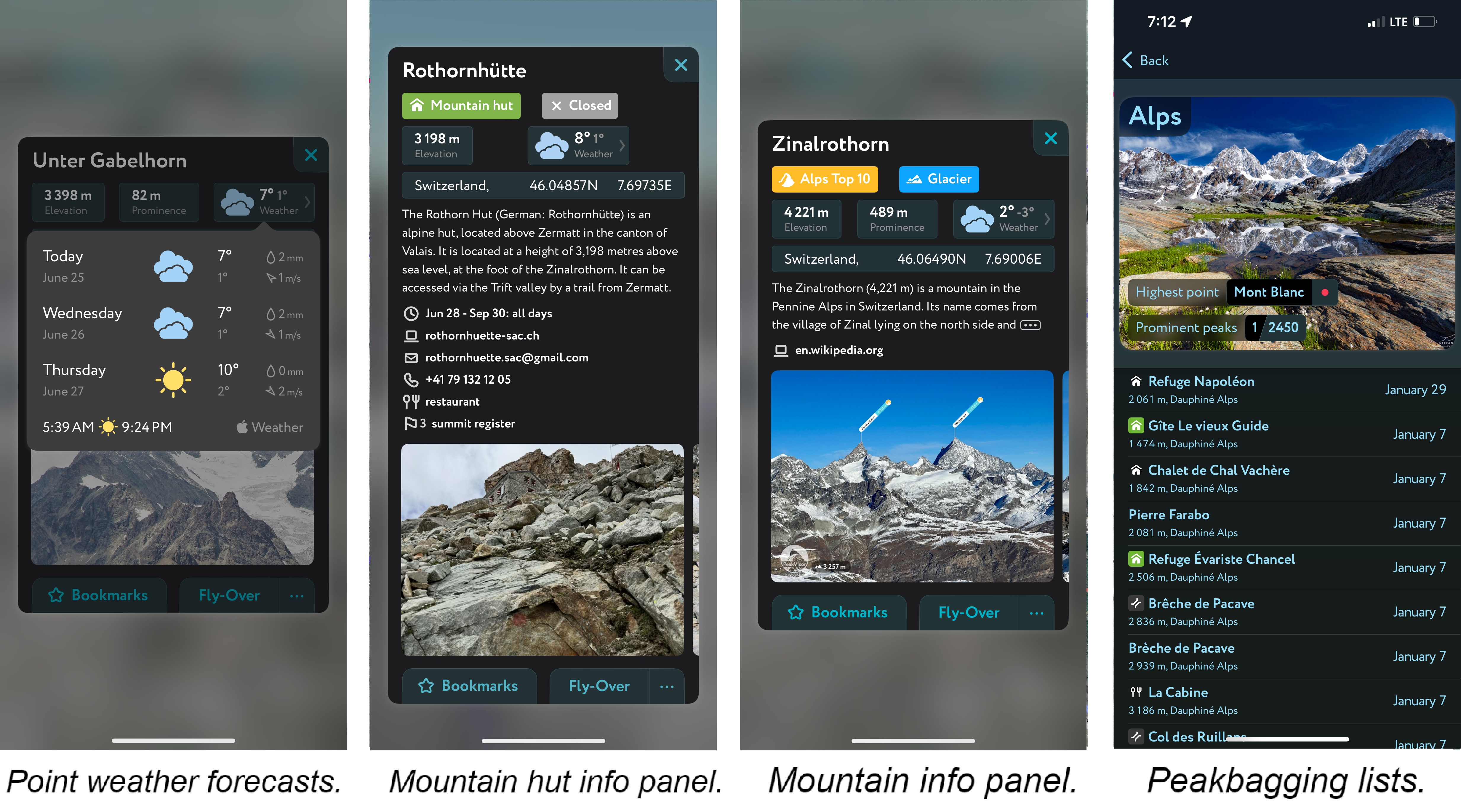
If you liked this story, you should know that it was brought to you by the one and only PeakVisor App. PeakVisor is a 3D mapping tool that offers insight into mountain regions across the world, though we're based in the Alps — the product of nearly a decade of effort from a small software studio smack dab in the middle of the range. The 3D maps, route finder, point weather forecasts, and mountain-hut info make it a great companion for scouting an area, finding the approach to a crag, and planning your days out.
PeakVisor Features
In addition to the visually stunning maps, PeakVisor's advantage is its variety of tools for the backcountry:
- Summer and winter modes let you use the app year-round, whether hiking on trails or skiing backcountry routes.
- Thousands of hiking and ski touring routes throughout the European Alps and beyond.
- Slope angles help evaluate approach terrain and difficulty.
- Mountain hut schedules and contact info save the time and hassle of digging them up separately.
- The route finder feature generates a route to any location on the map. You can tap the route to view it in more detail, including the maximum and average slope angle, length, and elevation gain.
- A point weather forecast for any tap-able location on the map, tailored to the exact GPS location to account for local variations in elevation, aspect, etc., that are standard in the mountains.
- You can use our Hiking Map and Ski Touring Map on your desktop to create GPX files for routes to follow later in the app.