
Before our knowledge of science — weather forecasts, flood models, glacial analysis, etc. — the mountains appeared to be in charge of their own destiny. A river waited for a child. A lake knew whether a stone had fallen by accident. Ice listened for mockery. Like other walks of life, the mountains developed their own set of myths and superstitions.
These Swiss legends don't prove that the Alps were once inhabited by dragons and devils, only the age-old tradition of people attaching particular stories to particular places. Some were printed centuries ago, while others survive mainly through modern retelling. Collectively, these stories show how mountain inhabitants gave danger a face, a motive and sometimes a rule for survival.
The stories also give us an oral history of the landscape. We can see that many mountainsides, free of ice in the early medieval period, saw advancing glaciers during the Little Ice Age. Children were given stories of river monsters, likely because so many had died falling in or getting swept away by flash floods.
Return to any of these places and the mountain is not literally alive. Water follows gravity; glaciers advance and retreat; rock fails along fractures; storms form without judging anyone's intentions. The legends gave those forces characters because characters can be remembered. A hooked man, a notorious dragon, or a cackling demon remains in the collective consciousness long after the details of a natural event are forgotten.
1. The Hook Beside the Water
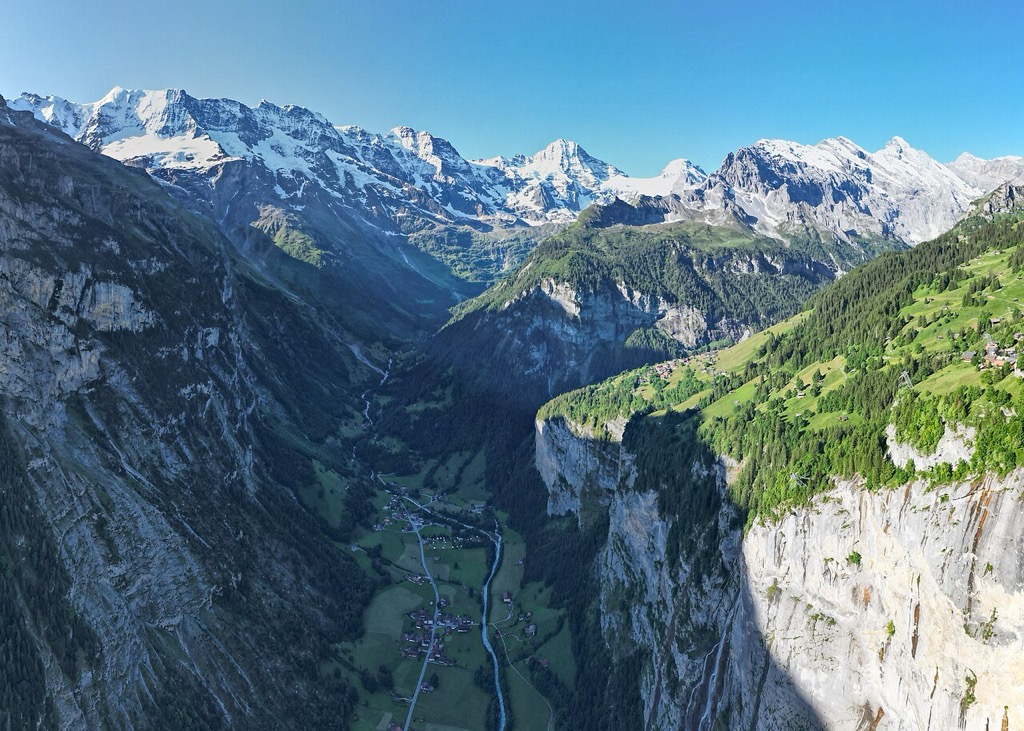
At Stechelberg, near the head of the Lauterbrunnen valley, the Weisse Lütschine moves through a narrow floor beneath cliffs. Children who threw branches into the water were warned about the Haaggenmanndli.
He looked small and ordinary, but carried a long ash pole tipped with a hook curved like a vulture's beak. One quick catch around the leg, then a jerk and a splash.
Hans Michel first printed the story in 1936, presenting it as oral tradition from the valley. The story places the mysterious figure along the river and near the valley's cliff edges.
What the legend remembers
Fast water after rain and paths beneath sheer drops. The Haaggenmanndli turns two hazards that children cannot judge well into one creature that notices every careless step.
 Where to stand Sagen-Trail Stechelberg beside the Weisse Lütschine →
2. The Dragon in the Breathing Cave
High above Lake Thun, water pours from the mouth of the St. Beatus caves. Legend has it that a dragon occupied the cavern until the wandering monk Beatus climbed up, drove the creature away with his pilgrim's staff, and resided there for the rest of his life.
A chapel at the cave is recorded in 1231, and the place became an important pilgrimage destination. But the Swiss life of Beatus that supplied the dragon story was printed only in 1511. It appears its author, Daniel Agricola, borrowed the story of a French hermit for the Lake Thun landscape.
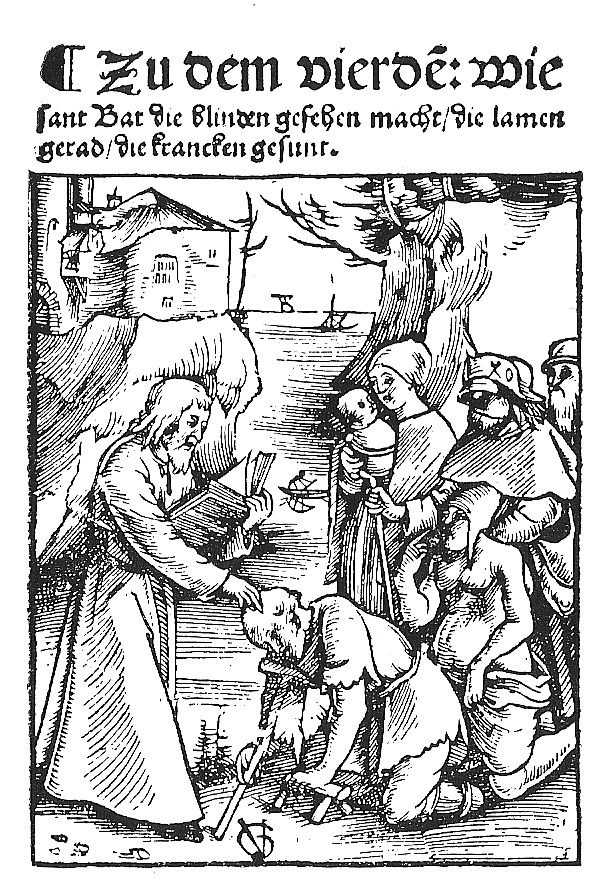
The distinction makes the place more interesting because we can observe the birth of a legend. It begins with an existing pilgrimage site and a mountain whose hidden river already supplied the sound of an animal breathing underground.
What the legend remembers
Waterfalls roar at the entrance before the visitor sees the cave river. Unseen water becomes a body inside the mountain.
Where to stand The terrace at the St Beatus cave entrance →3. The Alp Buried by Its Own Excess
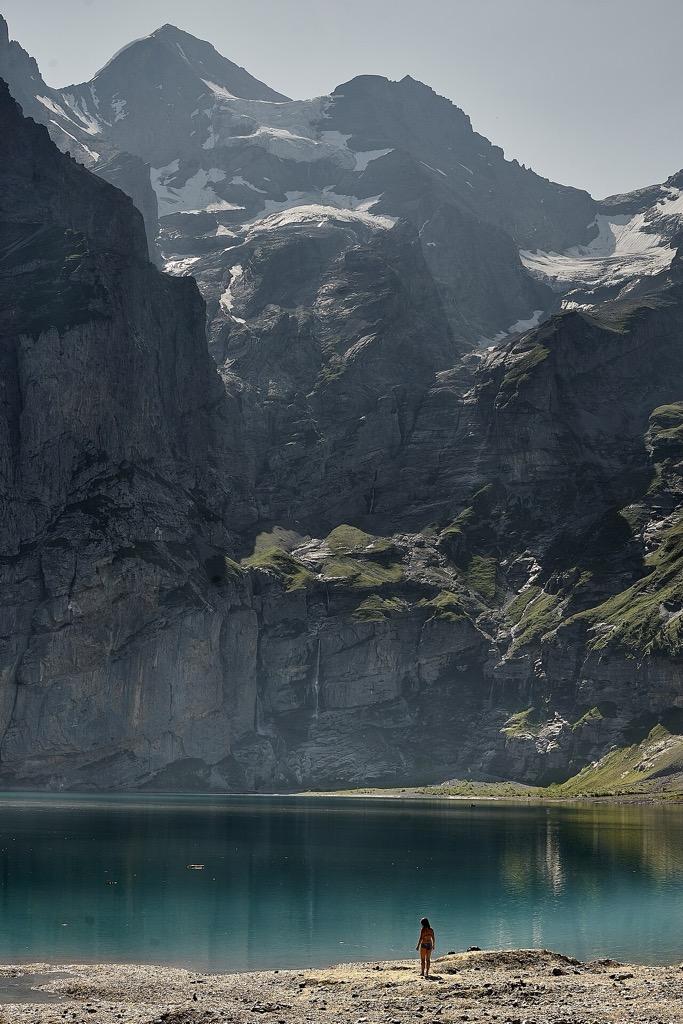
Blüemlisalp means the flowering alp, yet the mountain is crowned by ice. Legend has it that this contradiction is a punishment. A wealthy herdsman became so wasteful that he built steps from wheels of cheese, spread them with butter and washed them with milk. His old mother arrived hungry but he refused to feed her. In turn, she put a curse on the mountain.
A storm covered the pasture with snow and ice. The herdsman, his household and his animals remained imprisoned beneath the glacier. The story has many Alpine variants, but its core is consistent: abundance becomes cruelty and Mother Nature serves her punishment.
What the legend remembers
During colder centuries, glaciers did advance over high grazing ground. Today GLAMOS measurements record the Blüemlisalp glacier retreating. The cursed ice is leaving, and the old image now runs in reverse.
Where to stand Oeschinensee, looking towards Blüemlisalp →4. Pilatus
On Pilatus, the creatures were not always enemies.
One story tells of a cooper who fell into a cavern in autumn and spent six months beside two dragons. He survived as they did, licking minerals from the cavern walls. When spring came, he held a dragon's tail and was pulled back into daylight.
To some extent, the details are grounded. Pilatus has karst caves, and Mondmilch — moon milk — is a soft calcite deposit once collected as medicine.
Other witnesses described sparkling dragons in the sky, sometimes admitting that they first thought they had seen a meteor.
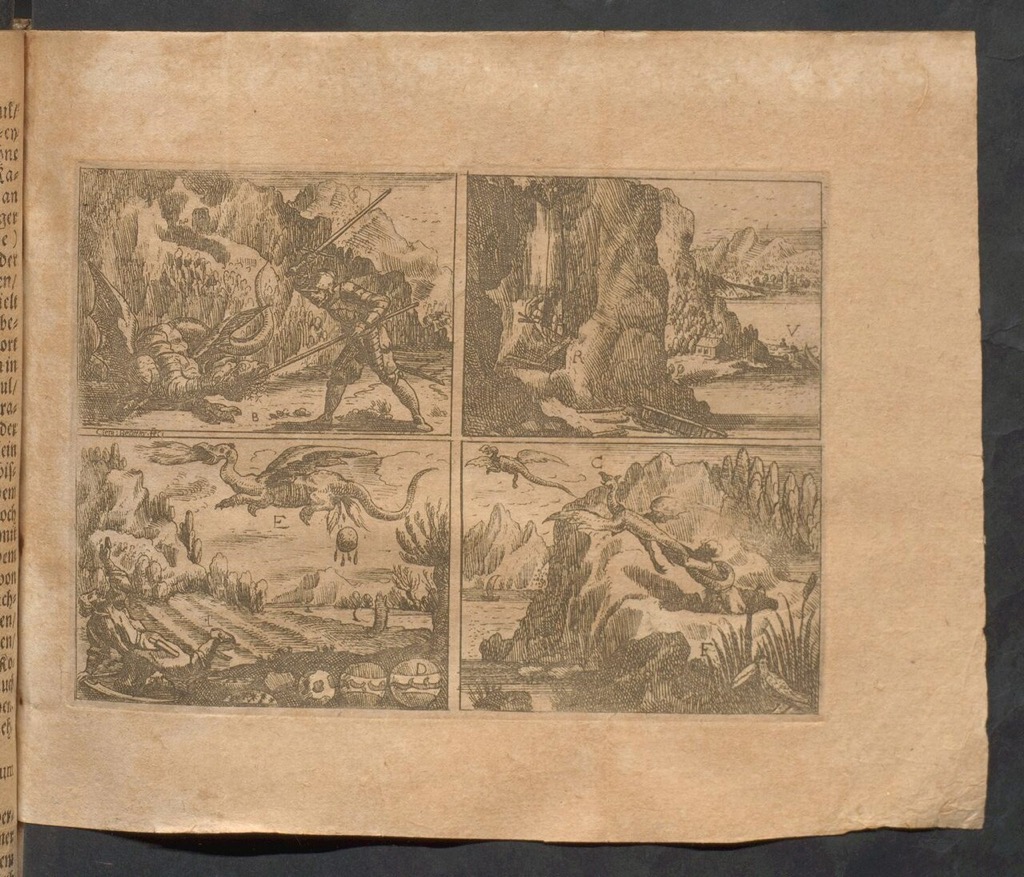
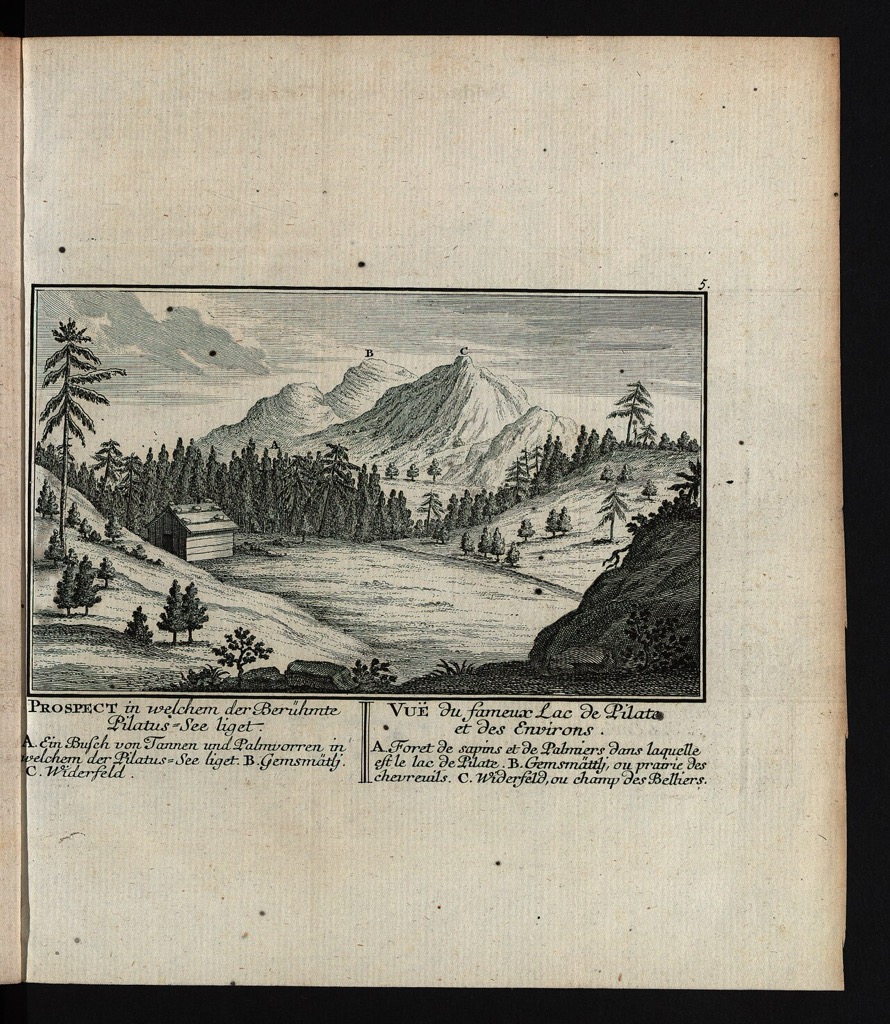
West of the summit, another story gave the mountain's storms a moral intelligence. There, Pontius Pilate's body was said to lie in a small lake. Throw something deliberately into the water and his spirit answered with destructive weather; let something fall by accident and the lake remained calm.
Lucerne treated the risk seriously enough to restrict access. Then, in 1585, a priest and a crowd climbed to the lake, threw stones, disturbed the water and waited. Nothing happened. It's the rare legend whose public debunking is documented almost as carefully as the fear.
What the legends remember
Karst hollows, medicinal deposits, fireballs and fast-building mountain storms. Pilatus gathered separate phenomena into a population of creatures with tempers, remedies and rules.
Where to stand Pilatus Kulm and the seasonal Dragon Path →Where to stand Pilatussee on Oberalp — accessible only on foot →5. A Bridge for the Price of a Soul
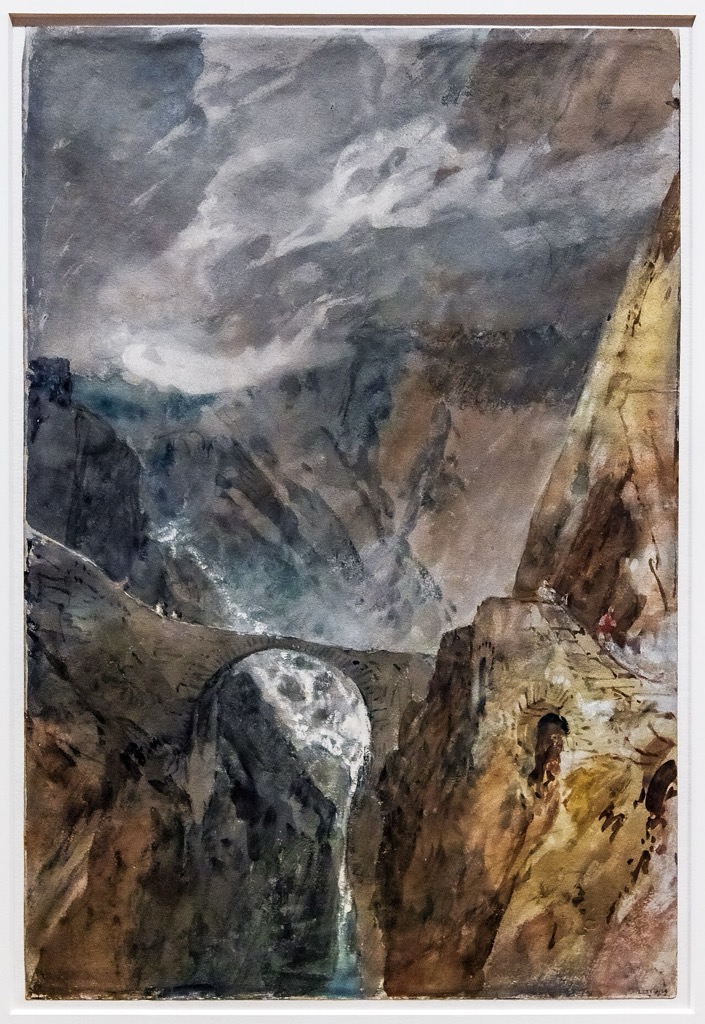
For centuries, the Schöllenen gorge was the locked door of the Gotthard route. The Reuss River filled the bottom; granite walls left no easy ledge.
In the legend, a leader of Uri cried that the devil might as well build the bridge. The devil agreed, asking for the first soul to cross. The people sent a goat. Enraged by the trick, he carried a huge rock back to destroy his work, but an old woman scratched a cross into the stone and he dropped it outside Göschenen.
In October 1973, the boulder in question was shifted 127 metres on steel rollers to clear the motorway works. A stone that the devil could not bear to carry was moved by a federal road project — though slowly and expensively.
What the legend remembers
A bridge where a bridge appeared impossible. The devil does not explain the gorge; he measures how extraordinary the human crossing seemed.
Where to stand The pedestrian bridge in the Schöllenen Gorge →6. The Glacier Guardian
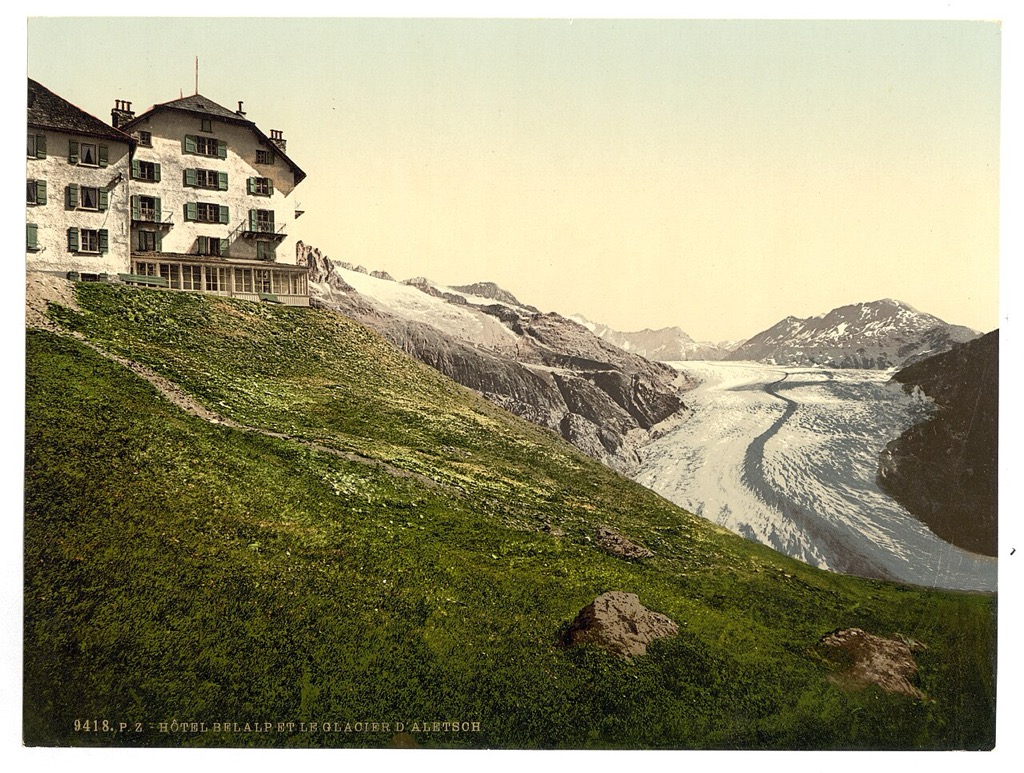
The Rollibock was a buck larger than any animal in the Alps. It had sprawling pronged horns, fiery eyes and slabs of ice hanging from its body instead of hair. When it charged from the Aletsch Glacier, those slabs struck one another with a terrible ringing. Anyone who mocked or provoked the Rollibock could not outrun it; only a chapel or blessed house offered safety.
The earliest printed trail leads through collections of 1872 and 1907. The later book did something unusually helpful: it interpreted its own monster. The Rollibock was a poetic image of the Märjelensee, the lake once dammed by the glacier. When that barrier failed, water broke through the ice and flooded towards the Rhône valley. A drainage tunnel completed in 1895 reduced the danger.
What the legend remembers
A glacier lake that could release water without warning. The creature's ice armour did not merely decorate it; it made the hazard visible and audible.
Where to stand Aletschbord at Belalp, above the glacier →7. Where Demons Bowled with Mountains
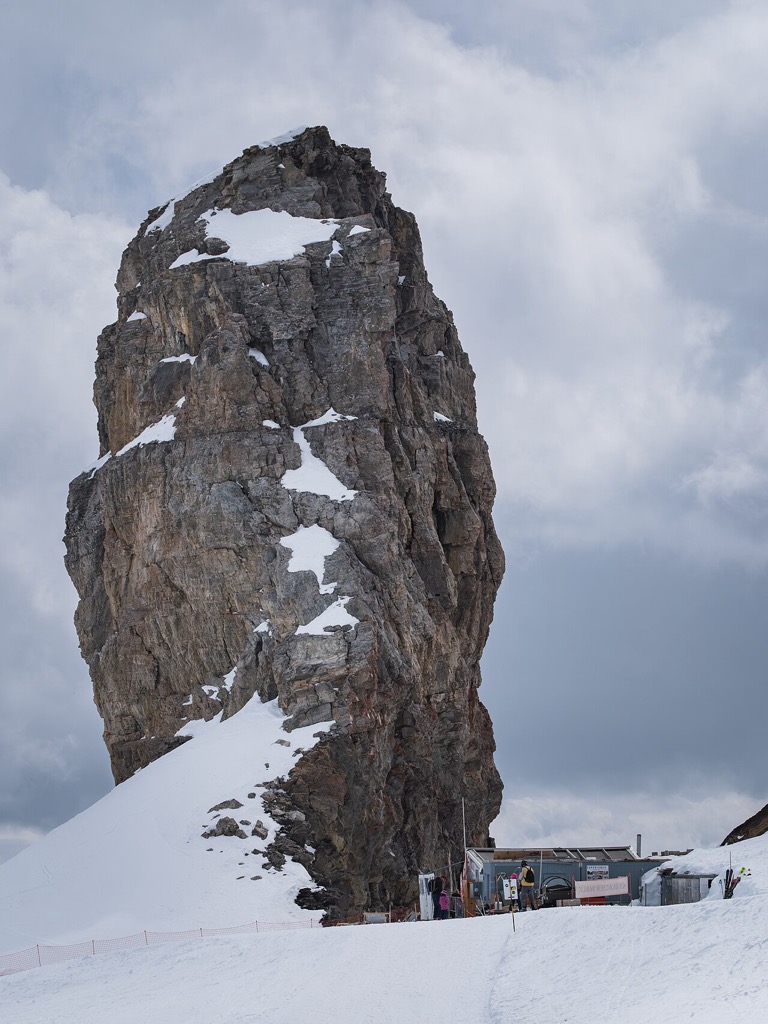
Above Derborence, a solitary limestone tower rises from the edge of the high plateau. Maps call it Tour Saint-Martin; legend calls it the Devil's Skittle.
Demons assembled there for games, and badly aimed throws sent boulders bouncing down towards the pastures and lake. Their wailing was said to grow louder before the mountain broke.
The rockfalls are historical, of course. On 23 September 1714, part of Les Diablerets collapsed, burying pasture and killing over a dozen people. Another fall followed in 1749. Debris blocked the valley and formed Lac de Derborence.
Like the ancient Greek myths, the legend credits deities with the power to bring immense natural destruction. Rock did not simply fall; a game played far above the pastures sent pieces of the mountain across the mortal realm. The bowlers were imaginary but the landscape they left behind is not.
What the legend remembers
Two catastrophic rockfalls, and the sound that could precede them. The lake and protected forest are consequences of destruction, not a landscape untouched by history.
Where to stand Quille du Diable above Derborence →8. Grief on Bernina
At Morteratsch, the monster gives way to a voice. In the story, Aratsch left the Engadin to earn the wealth required to marry Annetta. When he returned, she was dead. He rode into the glacier and disappeared. Her ghost later wandered the alp, softly repeating “Mort Aratsch” — Aratsch is dead.
One herdsman tolerated the spirit and his cows prospered. His successor drove her away. She cursed the alp, and from that hour the glacier advanced over pasture and hut.
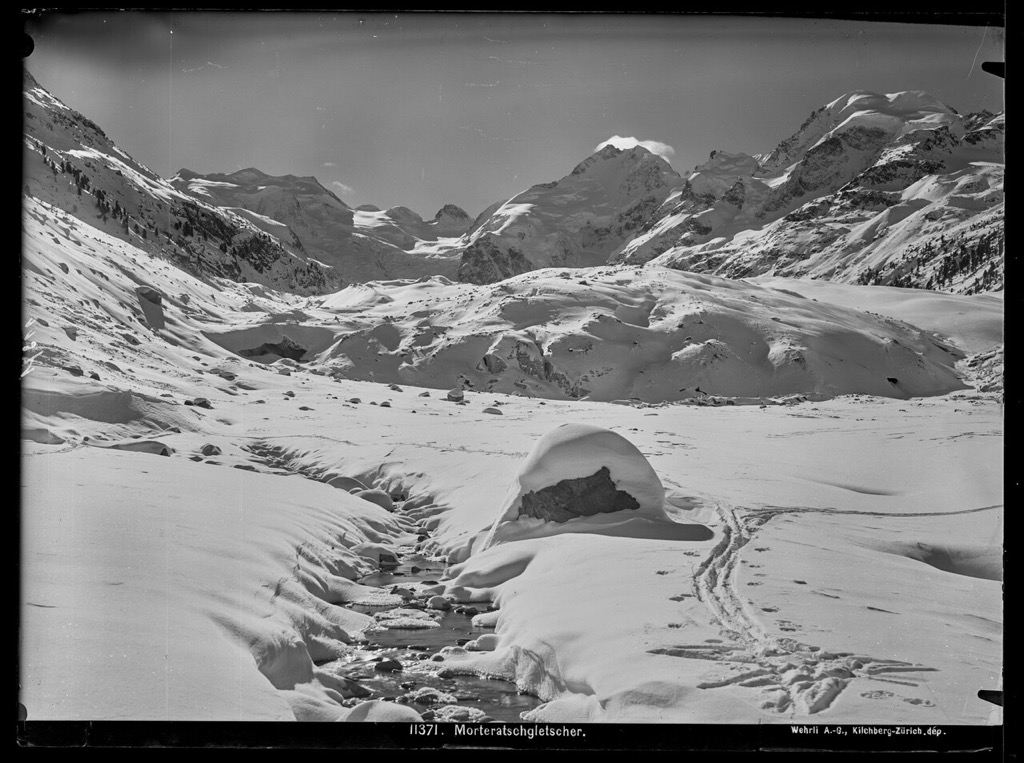

The legend was recorded locally in 1858 and printed again in 1876. Linguistic scholarship derives Morteratsch more soberly from Romansh murter, a high alp, with the suffix -atsch.
What the legends remember
Glaciers that once advanced over pasture and now retreat past dated trail markers; high ice where grief and disappearance acquired a voice or a face.
Where to stand Chünetta above the Morteratsch glacier trail →Where to stand Diavolezza above the Pers–Morteratsch basin →Sources and Further Reading
- Hans Michel, “Kinder, hütet euch vor dem Haaggenmanndli” (1936).
- Daniel Agricola's 1511 life of St Beatus, illustrated by Urs Graf — the Swiss dragon narrative.
- Brothers Grimm, “Blümelisalp” — the cheese-stair version of the legend.
- Pilatus-Bahnen: Dragon Path and Pilatus legends.
- Pilatus legend booklet — dragons, Pilate's lake and the 1585 challenge.
- Die Teufelsbrücke, Freilichtspiele Andermatt programme — Josef Müller's Uri telling and its source history.
- Walliser Sagen, volumes 1–2 — Rollibock.
- Alfred Cérésole, Légendes des Alpes vaudoises — the Devil's Skittle.
- Valais: Lac de Derborence — the 1714/1749 rockfalls and resulting landscape.
- Engadin: legends in the Bernina glacier region — current Morteratsch and Diavolezza tellings.
- GLAMOS glacier monitoring figures — measured glacier change.