Rock Climbing Is Hard. Finding Good Beginner Routes Shouldn't Be.
Rock climbing is a notoriously difficult sport. The physical, technical, and mental challenges are already hard enough. But there's another important factor that makes climbing a brutal sport to break into, and that is the fact that hard routes are much more concentrated than easy routes.
One of the initial challenges, therefore, is not struggling through painful, strenuous moves or a long approach hike (although you will have to do this, too). It's even more basic: finding quality routes at moderate grades. Especially if you're learning to climb as an adult, you'll want to focus on seeking out achievable climbs. That means looking for routes that are under about 5c (5.9–5.10 in the Yosemite Decimal System) for toproping, and in the 3s and 4s (5.3–5.6) for budding leaders.
To help you on this journey, PeakVisor has compiled a list of the best places for beginners to discover the joy of climbing in the Alps. We're taking into account the quality and density of routes, accessibility, rock type, progression opportunities, and more. We're also including both trad and sport areas. Although traditional climbing requires more protective gear pieces and more knowledge to place them, the style of climbing is often less technical than in sport climbing.
9 climbing areas · 5 countries
From beginner slabs to long, easy multipitch — the friendliest crags in the Alps.
Tap a marker to jump to that area. 8 climbing destinations across the Alps, plus the Frankenjura ~250 km north.

About PeakVisor: PeakVisor is a 3D mapping tool that offers insight into mountain regions across the world, though we’re based in the Alps. We’ve recently added rock climbing areas — both in the app and here on the website. Browse them in our climbing search, then tap any card to open that crag on the 3D map, with its description, weather forecast, GPS location, and a route to the base. Or explore a whole region’s crags right on the map — often the easier way to plan. So check it out!
A note on grades. This article uses French climbing grades throughout — here's a grade conversion chart (French grades are in the left column).
Ailefroide, France
Ailefroide is located in the Écrins National Park, in the Vallouise Valley in the Hautes-Alpes department. The closest town is Briançon, where you can get any gear and supplies you need.
Never touched rock before? Looking to climb long, hard multi-pitch routes? It simply does not get better than Ailefroide in the Alps. From the rock, the routes, the camping, the crowds, and the access to guides… this place provides the optimal climbing experience.
Sometimes there's so much hardship associated with a day of climbing that it's hard to get beginners to stick with it. Hour-long approaches. Crags that are baking in the sun or freezing in the shade. Hard routes. Ailefroide solves all those issues.
Let's start with the routes. If you've never even looked at a rock before, and you're finding the shoes very uncomfortable and the rope very scary… well, that's fine, because you can head over to the Fissure d'Ailefroide, where they have the "école de la fissure." Here, you can easily toprope on incredibly easy but fun routes (mostly 3s, some 4s). There are guide offices in Ailefroide and throughout the surrounding valleys that offer climbing instruction, including for children. Once you've had your fill of the easiest routes, there are scores of routes in each grade through the 4s and 5s, ensuring that you can safely continue your progression.
Are you a beginner in a different climbing discipline? Ailefroide is home to 750 boulders for anyone who wants to start bouldering. Perhaps the most popular instruction with local guide offices is multi-pitch courses (Ailefroide has an abundance of multi-pitch routes, including easy and moderate ones). You can also get an introduction to traditional climbing, with several moderate, multi-pitch trad routes. Did I mention that the rock is granite? That might not mean much to a beginner, but it's often considered the best rock for climbing.
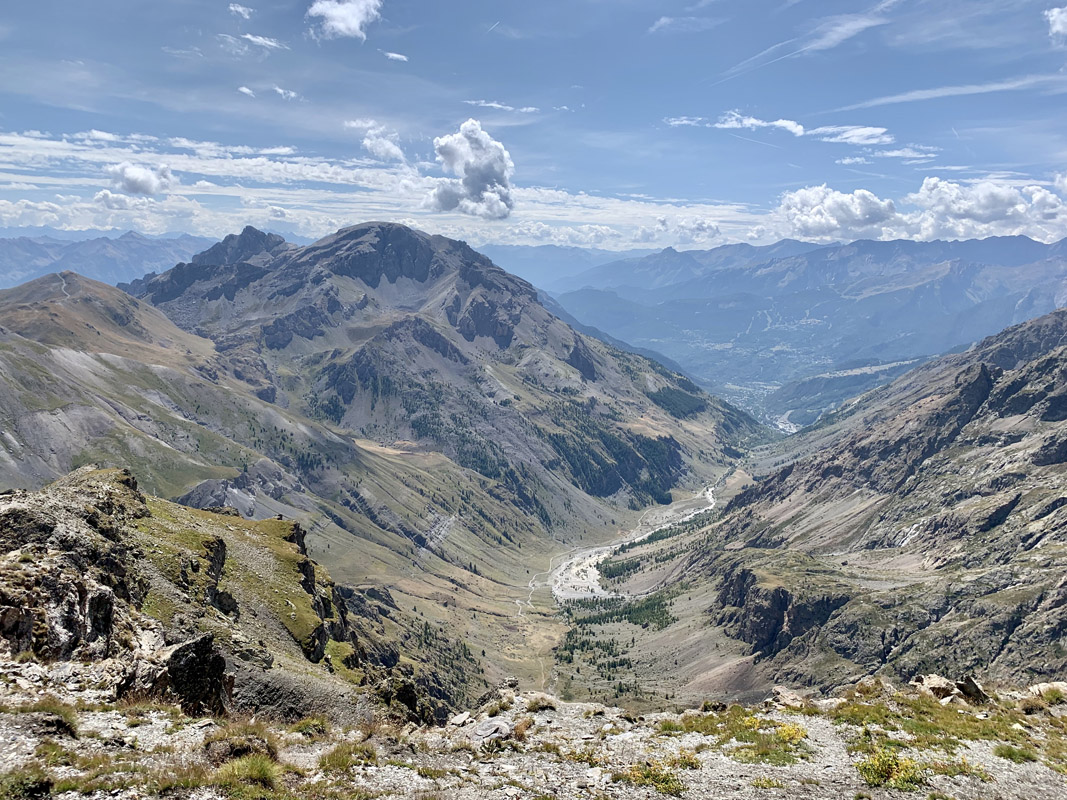
Now let's get to the camping. It's just so convenient — basically a massive piece of grass surrounded by cliffs on all sides. The area offers more than 400 basic, undesignated sites. It gets crowded in the summer, but there are no reservations, so you can't do anything about it except show up early. Still, it's so big that you should be able to get a space, and the prices are very low, at around 8 euros per person per day.
The approaches are equally agreeable. You'll quickly forget that a day of climbing often starts with a steep, hour-long scramble to the base of some shadowy cliff. Not here. Most approaches are 5–20 minutes, and you can climb in the sun or in the shade at most hours of the day by switching aspects. All of your shopping needs are covered as well: there are local stores within walking distance of the campground in the village of Ailefroide, but if you want the best deal, shop in Briançon. All in all, Ailefroide is a place where you can show up as a beginner and spend a week climbing and working on your progression with no other worries in the world.

See it on the map: explore the Ailefroide climbing area on PeakVisor → for crag locations, approaches, weather, and the route finder.
Arco, Italy
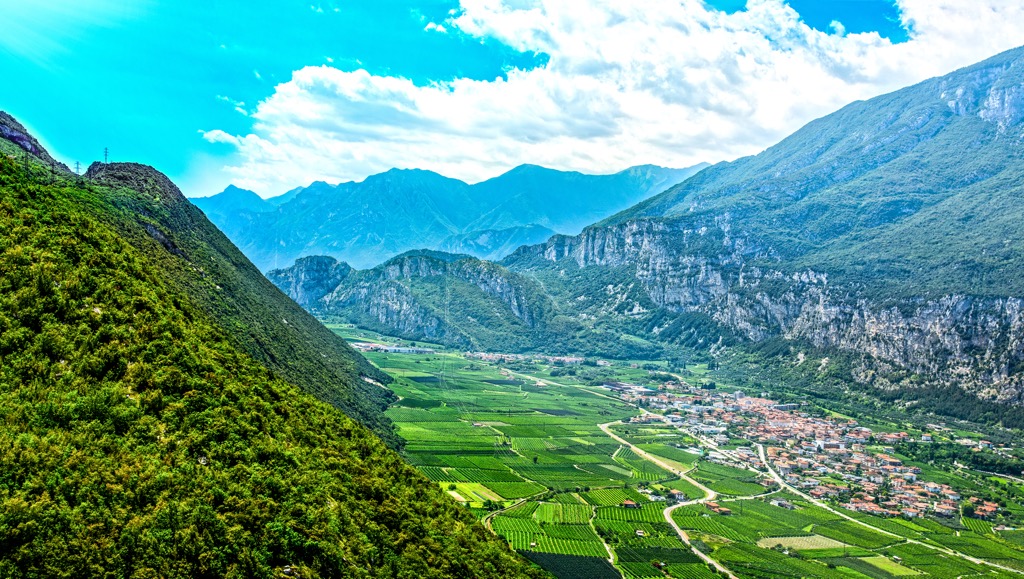
Arco is the gateway town to the Valle del Sarca, home to a casual 3,500 climbing routes of all shapes and sizes. The town sits at the northern end of Lake Garda, on the border between Lombardy and Veneto. Trento is the nearest large town.
This is one of the true hotspots of European climbing. It's got great access, good prices (Italy is the least expensive Alpine country), climbing schools, and plenty of entry-level and moderate crags. A beginner climbing for the first time will have all the resources they need to toprope with an instructor or climbing school. And a novice leading French 4s and 5s could spend months here without exhausting the available routes. Like most great climbing destinations, the culture at Arco revolves around its campgrounds, like Camping Arco, Camping Zoo, and Camping Al Porto.
The best areas for a beginner will be the crags around Nago. Massone is also a very popular spot, great for those breaking into 5s, but it is the most crowded area in the entire valley. Some of the routes have become quite "polished," meaning the limestone becomes slippery after lots of climbing traffic. Check out the Muro dell'Asino to further your progression.
The spring (March–May) and autumn (Sept.–Nov.) are the best seasons. Summer is too hot, and winter can be chilly, although you can climb all year round if you choose the right crag for the day. The season is much longer than in many other destinations in the Alps. In addition to climbing, you have an ancient, historic town, a beautiful lake, excellent food, Mediterranean culture, and other sports like mountain biking and sailing. Just don't expect to have the place to yourself, and you're all good.
See it on the map: explore the Arco climbing area on PeakVisor → for crag locations, approaches, weather, and the route finder.
Orpierre, France
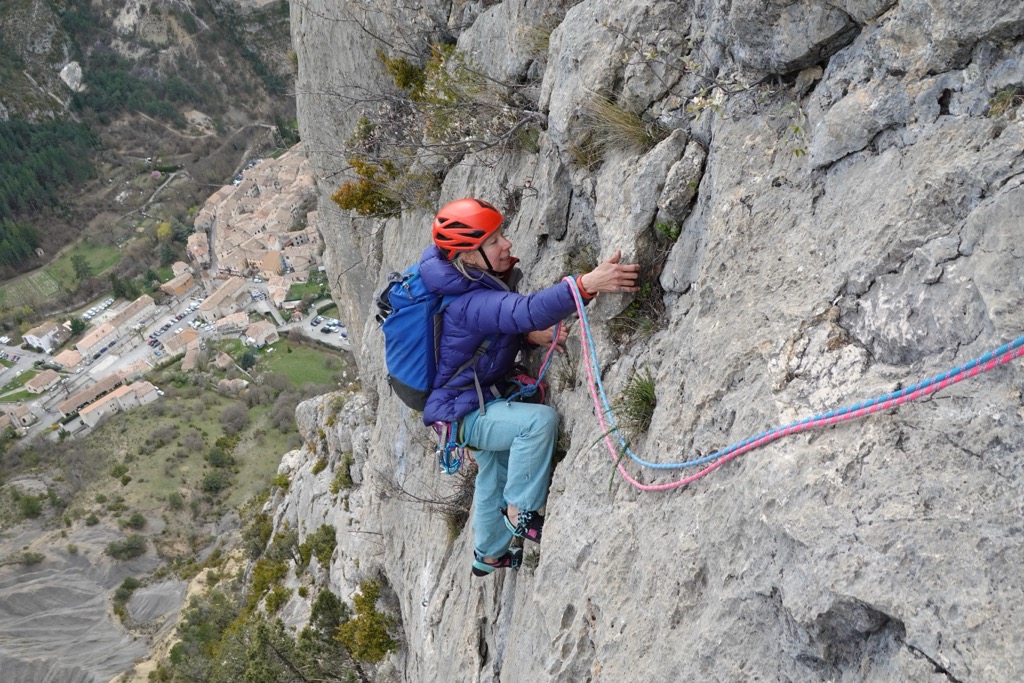
If Arco is Europe's international climbing resort, Orpierre is its climbing village. In fact, Orpierre is a model for building a successful economy around rock climbing. The entire community revolves around climbing, and nearly every cliff was developed with accessibility and enjoyment in mind. We're talking about things like the distances between bolts (close together when needed), climber approach trails (well-marked and walkable), accessible parking, and rockfall mitigation.
The limestone is compact and varied, and the concentration of moderate routes is extraordinary. While most climbing areas are heavily skewed toward expert routes, Orpierre is the opposite. There are actually more routes 6a and below than above. The well-textured limestone can add friction and holds and lower the grades in areas like this. Just watch out for the polish, which is to be expected in such a popular area.
Sectors such as Belleric, Cascade, and Château contain dozens of routes in the 4–5 range. Many routes feature straightforward but fun climbing and comfortable stances, making them ideal for learning to lead. Longer beginner multipitches include routes like Les Valseuses. The large camping area is just a few minutes from the village; there are also many gîtes and other lodgings. Approaches are in the 5–20 minute range, and most climbs are 15–25 meters. Orpierre is the closest thing you'll get to an outdoor climbing gym in the Alps.
See it on the map: explore Orpierre on the PeakVisor 3D map → for crag locations, approaches, weather, and the route finder.
Tannheimer Berge, Austria
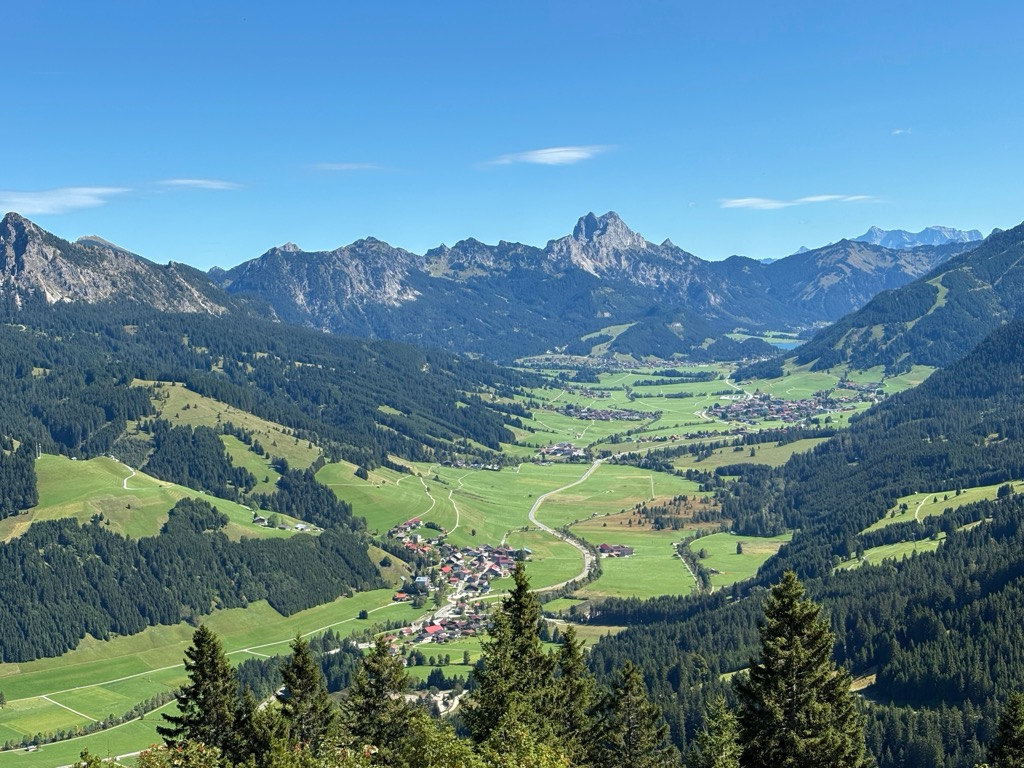
The Tannheim Valley and surrounding limestone peaks represent one of Austria's finest moderate climbing regions. What makes it especially good for beginners is the combination of short approaches, well-bolted limestone, and a huge number of moderate routes. Many crags sit directly above valley roads; approaches are often 10–30 minutes. The rock is generally solid limestone with positive holds. At the same time, the valley is large enough that it never feels like a single overused crag — it's easy to find quieter areas even in peak season.
Beginners should check out the Gimpel and Rote Flüh, the iconic towers of the Tannheimer Tal. There are many well-bolted routes around 4–5c with short pitches. Don't forget about the incredible Alpine scenery — you're well and truly in the mountains here.
You can also check out the Klettergarten and the Tannheim valley crags, with very short approaches (often 5–15 minutes) and a high concentration of 4s and 5s. There are some good sites for toproping here as well, and the local climbing schools frequently use these crags. The Neunerköpfle and Aggenstein area crags sit slightly higher in the valley and tend to be quieter, with routes often in the 4c–6b range, including some longer pitches. It's far less crowded than the main valley crags.
See it on the map: explore the Tannheim Valley on the PeakVisor 3D map → for crag locations, approaches, weather, and the route finder.
Furka Pass, Switzerland
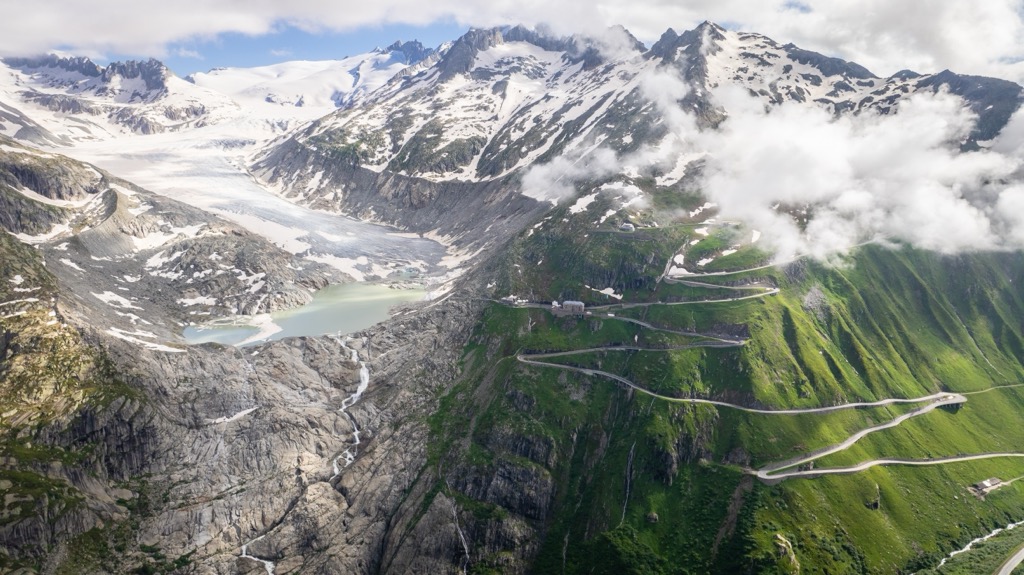
Furka Pass is a famous destination in and of itself. There's an old rail line that heads to the top of the pass in the summer, where visitors can stop at the Hotel Belvedere and view the Rhône Glacier, a long river of ice that descends from the high peaks around the pass.
However, Furka Pass also offers some of the best beginner granite climbing in the Alps. The high-elevation setting provides cool summer temperatures, and the glacier-polished granite slabs are among the finest anywhere in Europe. Unlike the steep limestone cliffs so popular across the Alps, granite climbing rewards balance, footwork, and trust. Moderate routes around the Sidelenhütte and the roadside crags provide an excellent introduction to slab climbing. Easy lines on sectors such as Salbit's lower walls and the Furka training crags teach precise movement and efficient weight transfer. Beginners often discover that their footwork improves dramatically after a few days of climbing on Furka granite.
However, the best opportunities at Furka Pass are the long, easy, granite multipitch climbs. Imagine Chamonix, but easier routes and no crowds — that's what's happening at Furka Pass. It's a great place to get introduced to multi-pitch and Alpine climbing on super cruisey routes. We're talking classics like the 13-pitch Kreuzbandweg (4b) and the 11-pitch Glacier Express (4c). Novices will undoubtedly have to hire a guide, but the actual climbing movement is not difficult. The only disadvantage? The season is short. Being at the foot of a glacier, the climbing here is really only accessible during the short summer season.
See it on the map: explore Furka Pass on the PeakVisor 3D map → for crag locations, approaches, weather, and the route finder.
Frankenjura, Germany
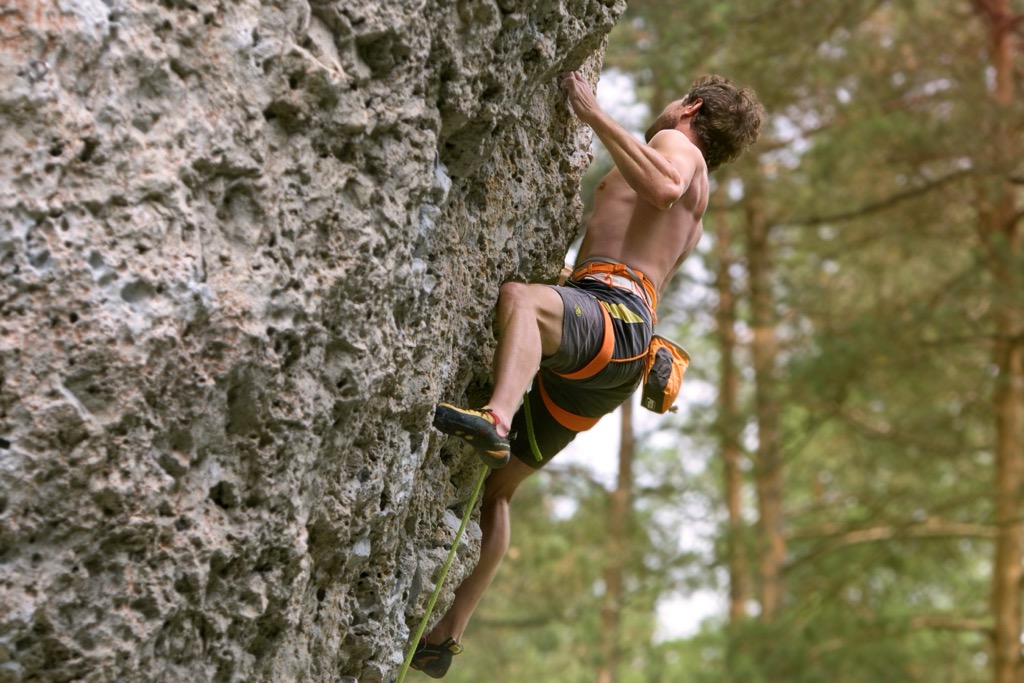
Although technically outside the Alps, this article simply wouldn't be complete without including Frankenjura. The area is located about 250 km north of the Alps, in Northern Bavaria, Germany. The density of routes here is unmatched by all but a few other places in the world. We're talking tens of thousands of routes, most of which are single-pitch sport routes located in the forests around Frankenjura. While many destinations have a lifetime of climbs, there are literally a lifetime of climbs here in each grade. For that reason alone, it is one of the best places for climbers of any skill level.
There are over 1,000 separate crags, most of which are giant slabs of limestone scattered throughout the forest. Every climbing area has its own character; Frankenjura is defined by steep, pocketed limestone. Most routes are relatively short but strenuous. The textured limestone makes for lots of holds, but the steepness keeps things honest. Another advantage is not having to climb in the sun — many of the climbs are forested and shaded, even in the middle of summer.
There are numerous beginner-friendly crags. Areas such as Weißenstein, Leupoldstein, and certain sectors around Gößweinstein contain excellent routes in the 4–5 range. However, you'll have to dive into a guidebook to really lock in on what you're looking for here.
See it on the map: explore Frankenjura on the PeakVisor 3D map → for crag locations, approaches, weather, and the route finder.
Carnic Alps, Italy/Austria
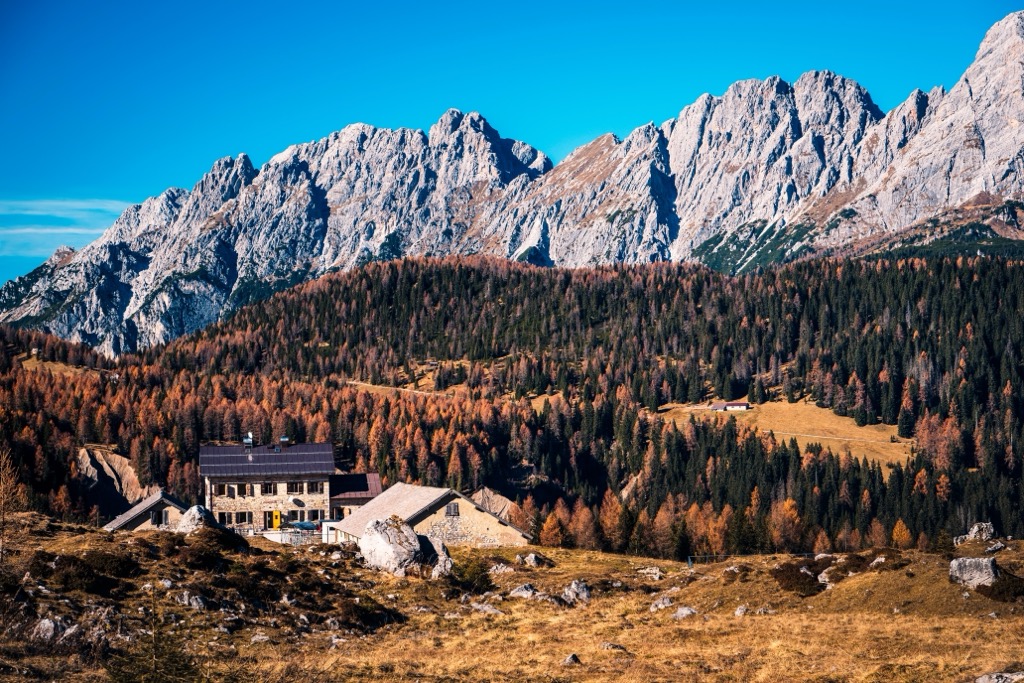
For something completely different, let's check out the Carnic Alps, which have long remained one of the most underrated climbing regions in the Alps. Stretching along the Austrian–Italian border, this range combines beautiful limestone and a wealth of moderate climbing. Compared to the Dolomites, crowds are minimal. On many days, it is entirely possible to climb several pitches without encountering another party, which is not easy to find in the Alps.
Unlike Arco or Orpierre, the Carnic Alps are not a sport climbing destination built around roadside crags. Instead, they are a region of well-protected alpine multipitch routes. The climbing is longer and the approaches slightly more committing. Fortunately, many classic routes are graded between 3 and 5c, well within reach of competent beginner climbers looking to step into alpine climbing.
Wolayersee is the best base for beginner alpine climbers in the Carnic Alps. The beautiful lake lies beneath several moderate limestone peaks and is served by the Wolayersee Hut, allowing direct climbs from the hut without lengthy valley approaches. Beginners will froth on easy ridges and moderate multipitch routes on the surrounding peaks, which usually involve about 200–350 meters of climbing. Most approaches from the hut take between 20 and 60 minutes. Meanwhile, Rauchkofel is one of the best moderate climbing peaks in the western Carnic Alps. Beautiful ridge climbing, moderate routes, and good rock make this a common recommendation as an ideal introduction to alpine limestone.
See it on the map: explore the Carnic Alps on the PeakVisor 3D map → for crag locations, approaches, weather, and the route finder.
Interlaken, Switzerland
Interlaken is one of the capitals of the Alps. Most climbing around here is challenging, but there is one crag that is perfect for beginners and budding leaders, nicknamed the "Plaisir" sector — pleasure climbing, baby. It's just five minutes from Interlaken, at a crag known as Bockstor. You won't have any trouble finding a guide in town.
This crag is in the forest, but recent storm winds have cleared the trees at the bottom, so you'll be climbing in the sun for the time being. There are dozens of routes ranging from 3 to 6a on clean rock. And because Interlaken is centrally located to many things in the Alps, there are hundreds more crags within an hour's drive from here.
See it on the map: explore Interlaken on the PeakVisor 3D map → for crag locations, approaches, weather, and the route finder.
Les Gaillands (Chamonix), France
The first place I ever climbed outdoors, back in 2015. Les Gaillands isn't the best crag in the world, but it's famous — and worthy of its fame — for a few reasons. First of all, it's smack dab in the middle of Chamonix, making it a super straightforward outing for visitors to the "Birthplace of Mountaineering."
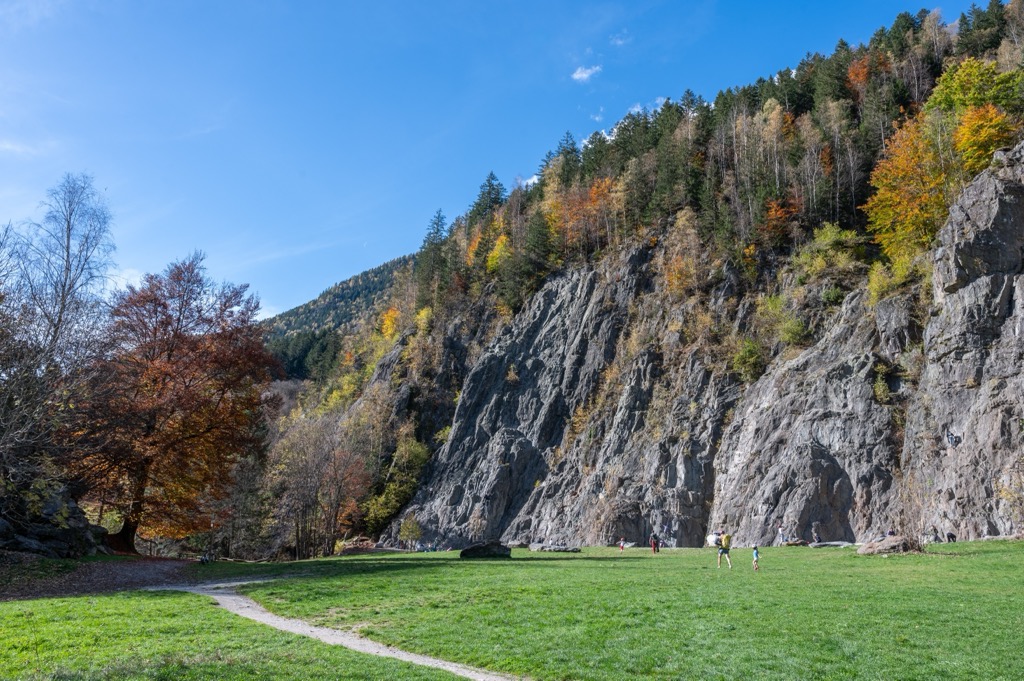
Secondly, although Chamonix is best known for its expert offerings across the board, Les Gaillands is a great place for beginners who have never climbed before (as was the case for me). There are loads of easy routes (3–5c), and setting up top ropes is easy.
Thirdly, Les Gaillands is a great spot to hang out. There's a big, flat grassy lawn at the base that's as conducive to taking naps in the sun as it is for belaying your partner. And don't forget about the lake — it's the perfect spot for not only climbing, but also just lounging with friends. Plus, the crag is south-facing, meaning it gets plenty of sun (though it can get too hot to climb here in the middle of the summer); April–May can be ideal on warm sunny days.
Like the famous spires of the Mont Blanc Massif, Les Gaillands is granite. And you won't struggle to find excellent instruction — there are many climbing schools and hundreds of IFMGA guides in the Chamonix valley. Overall, an established climber wouldn't come to Cham just to climb at Les Gaillands, but it's a fantastic place to discover rock climbing.
See it on the map: explore the Chamonix climbing area on PeakVisor → for crag locations, approaches, weather, and the route finder.
Using PeakVisor to Plan Your Climbing
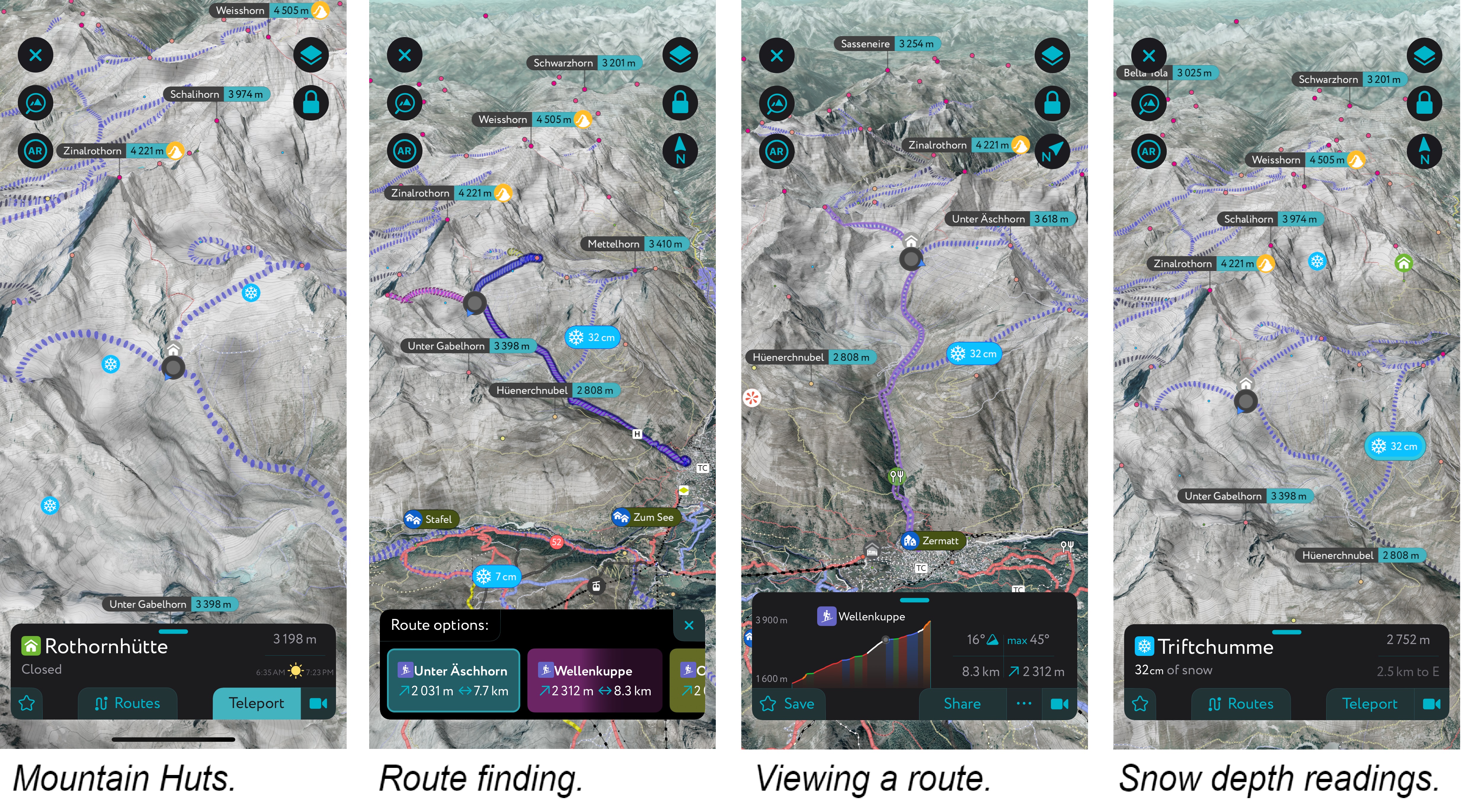
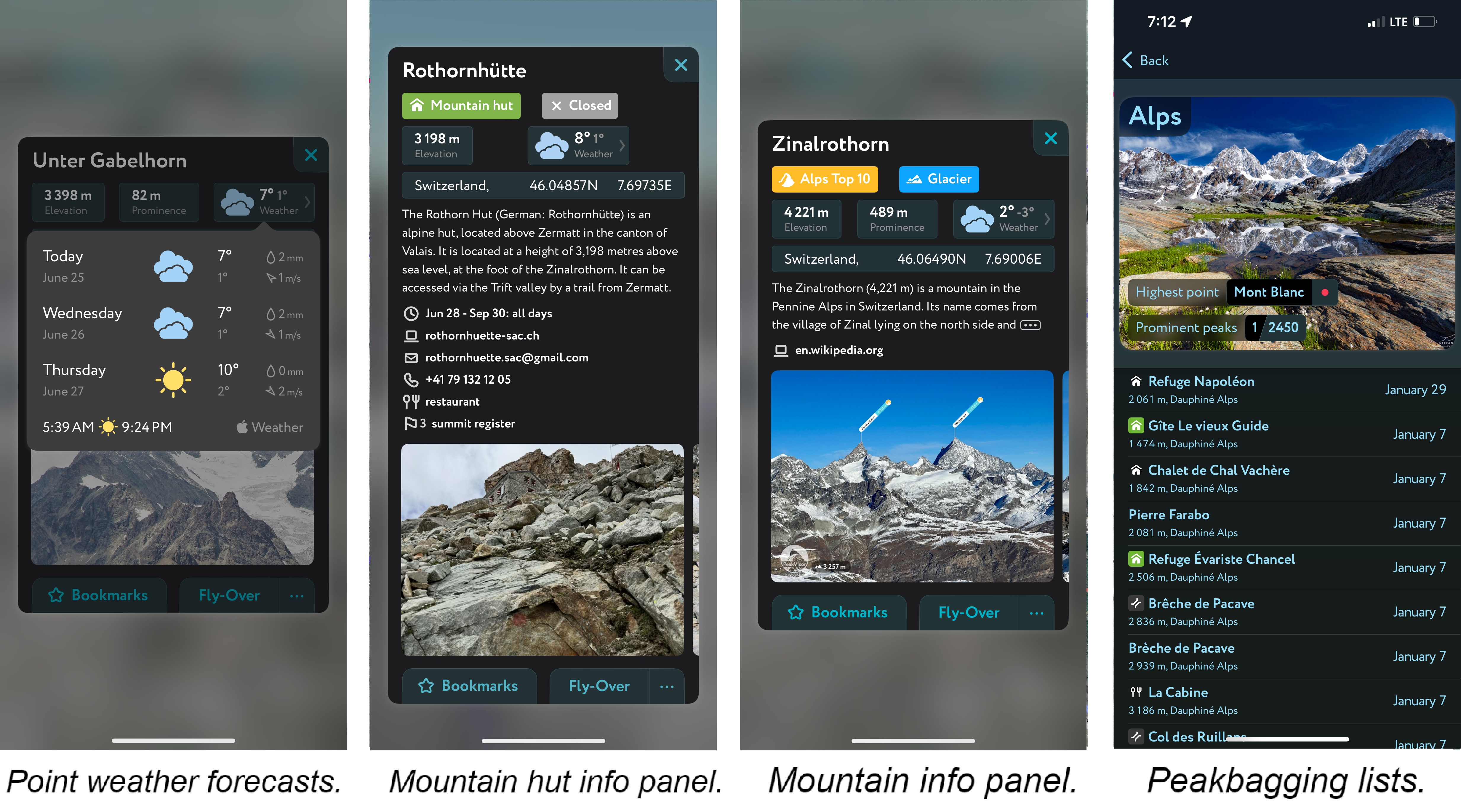
If you liked this story, you should know that it was brought to you by the one and only PeakVisor App. PeakVisor is a 3D mapping tool that offers insight into mountain regions across the world, though we're based in the Alps — the product of nearly a decade of effort from a small software studio smack dab in the middle of the range. The 3D maps, route finder, point weather forecasts, and mountain-hut info make it a great companion for scouting an area, finding the approach to a crag, and planning your days out.
PeakVisor Features
In addition to the visually stunning maps, PeakVisor's advantage is its variety of tools for the backcountry:
- Summer and winter modes let you use the app year-round, whether hiking on trails or skiing backcountry routes.
- Thousands of hiking and ski touring routes throughout the European Alps and beyond.
- Slope angles help evaluate approach terrain and difficulty.
- Mountain hut schedules and contact info save the time and hassle of digging them up separately — handy for the hut-based areas like the Carnic Alps.
- The route finder feature generates a route to any location on the map. You can tap the route to view it in more detail, including the maximum and average slope angle, length, and elevation gain.
- A point weather forecast for any tap-able location on the map, tailored to the exact GPS location to account for local variations in elevation, aspect, etc., that are standard in the mountains.
- You can use our Hiking Map and Ski Touring Map on your desktop to create GPX files for routes to follow later in the app.