
Scan the QR code and open PeakVisor on your phone
RED Mountain Ski Resort, located in Southeastern British Columbia, Canada, is a fiercely independent ski destination known for its rowdy off-piste terrain, authentic ski town vibe, and minimal crowds. This Canadian ski resort in the Kootenay Range has a summit elevation of 2,075 m (6,807 ft), a vertical drop of 887 m (2,910 ft), 119 runs, and 3,850 acres spread over five peaks. Red Mountain is located in Rossland, B.C., and the nearest major city is Spokane in the USA.
As one of the oldest ski resorts in North America, RED combines deeply rooted history with modern appeal. People have been skiing this range since the late 1800s; over 125 years of ski history have helped this unique ski resort retain much of its original charm while also moving forward in the industry. With a focus on community ski culture, they’ve shunned large conglomerates and flashy development to preserve the authentic ski experience you remember from your childhood.

RED Mountain Resort has ski terrain suited for powder hounds, backcountry enthusiasts, and the advanced skier. Beginners will struggle to find their footing here because easy terrain is limited. However, RED Mountain’s off-piste terrain is a marvel to behold.
Prices here are in Canadian dollars; RED Mountain is not expensive relative to other high-profile ski resorts in British Columbia. US dollars, euros, pounds, and other Western currencies are subject to a favorable exchange rate (as of April 2025, the exchange rate is 72 US cents per Canadian dollar).
RED Mountain Ski Resort is less than a 10-minute drive from Rossland in the West Kootenay Region of Southeastern British Columbia, Canada.
Geographically, RED Mountain’s four peaks (Red, Granite, Grey, and Mount Kirkup) sit in the Rossland Range, a subrange of the Monashee Mountains. On a greater scale, the Monashees are a subrange of the Columbia Mountains. Although Canada does not classify these mountains as the Rockies, American Geography accepts them as part of the Rocky Mountains.
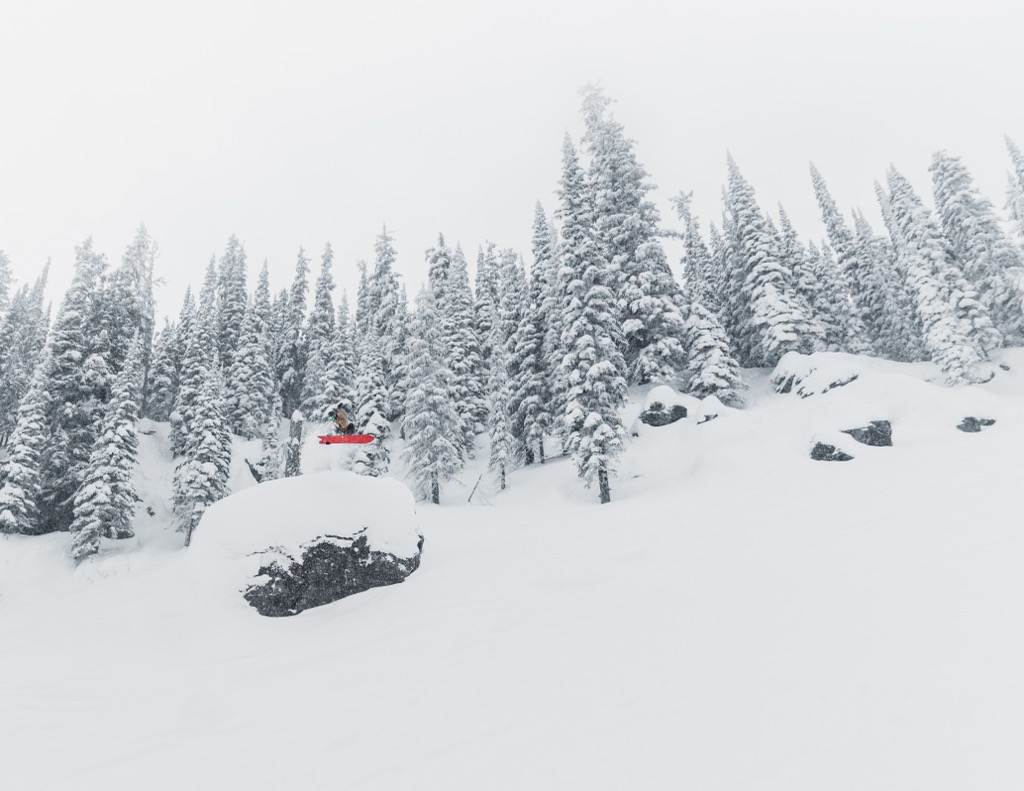
Due to RED Mountain’s remote location, limited public transport can make it a mission to get to from an airport.
There are two international airports and one regional airport you can fly into.
Spokane International Airport (GEG): In Washington, USA, about a 2.5-hour drive away—but you’ll have to cross an international border.
Kelowna International Airport (YLW): In British Columbia, Canada, about 3.5 hours away—you can choose this option to avoid the hassle of the border crossing.
West Kootenay Regional Airport (YCG): In Castlegar, only a half-hour drive from the ski resort—you’ll pay a premium for this convenience. Additionally, be mindful that poor weather conditions often delay and cancel flights.
Each airport will have both shuttle and car rental options. Shuttles are very expensive, so if you’re travelling with a couple of people, it’s best to opt for a car rental and drive.
Spokane: Spokane Airport Shuttle operates 6 days a week and costs $175 one-way per person. If you choose to rent a car, driving directions can be found here.
Kelowna: Kootenay Transit operates Thursday - Sunday and costs $150 one-way per person. If you choose to rent a car, driving directions can be found here.
Castlegar: Kootenay Charters is the only company offering shuttles. Local taxis are also available. Driving directions can be found here.
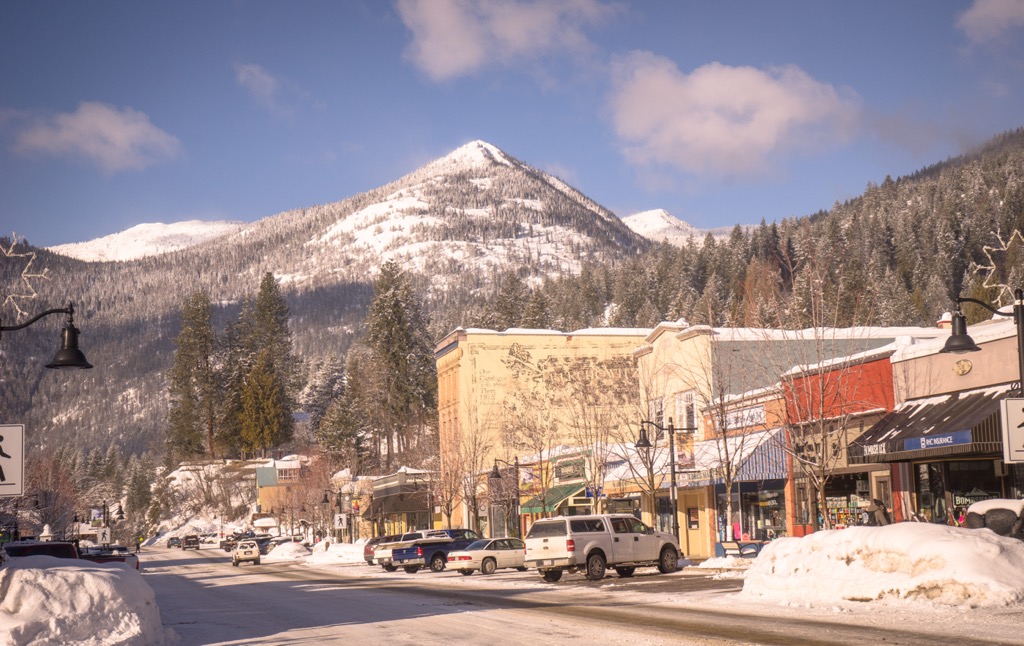
The village at RED Mountain is tiny and can be covered on foot in less than ten minutes. There are a few shops, restaurants, and about a dozen accommodations. Parking at the ski resort is ample and always free.
If you’re staying in Rossland, there’s a free shuttle multiple times per day to whisk you between the town and the ski resort. There are also a couple of taxi companies if you need to get around Rossland.
One of the best aspects of the resort is the self-contained overnight parking lot for overnight RV campers, which costs $25 per night.
The ski season at RED Mountain Resort is a touch shorter than most major ski resorts in Western Canada. Due to the lower elevation, they aim to open from mid-December to early April. As far as major Canadian ski resorts go, this one is off the radar to those outside the local area, which equates to minimal crowds. Even after 10 am on most mornings, you’ll ski right onto the chairlifts.
The season starts right as kids get out of school for the holidays, so early season and the Christmas holidays can be pretty busy, as some terrain doesn’t fully open until later in December. Coverage in open areas is usually quite good, with plenty of natural snow. This stretch in December is historically the snowiest period of the season.
Christmas and New Year's are bustling but not as busy as competitor resorts. You’ll find holiday events for families, ski-with-Santa days, and small New Year's events, but you won’t find a lot more than that once the sun goes down.
January and February are the core ski months and can be the best time of the year to visit due to snow accumulation, non-existent lift lines, and superb ski conditions. Despite the lower elevation, March can also be a great month to visit, as the snow base reaches its seasonal peak.
However, it can also quickly become spring skiing conditions; April usually wraps up with the usual end-of-season antics of silly costumes, pond skims, and sunburns.
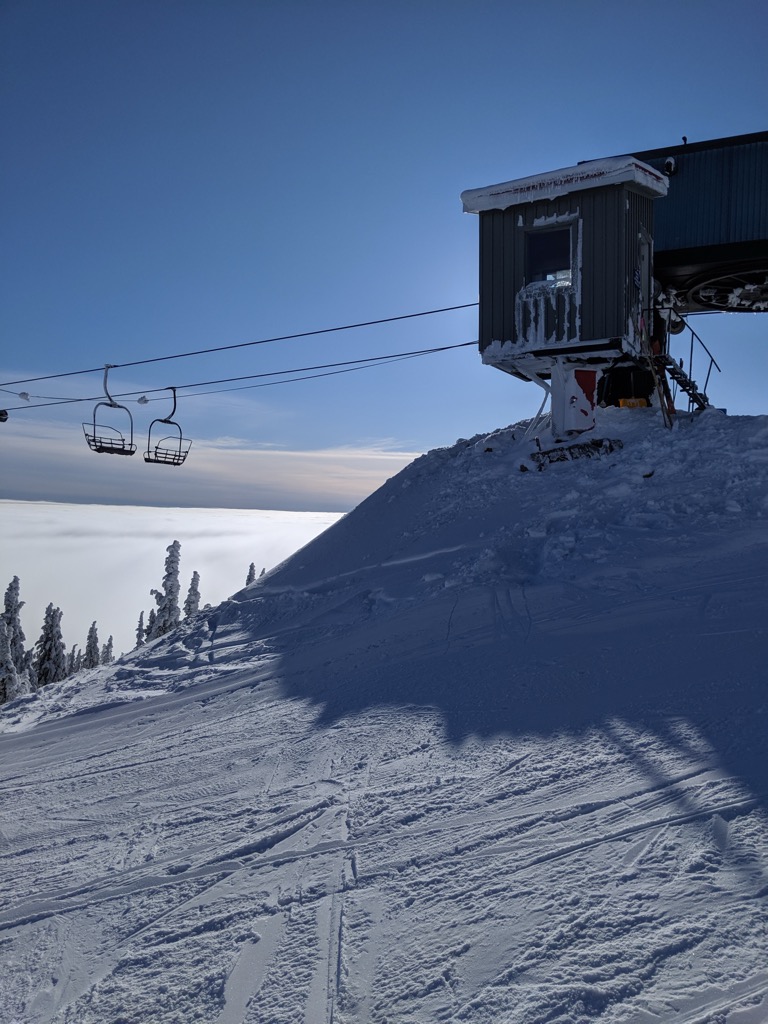
RED Mountain is another ski resort known for its Western Canadian powder. The ski resort sees about 7.5 m (24 ft) of snow a season. While most storms during the season dump light and dry powder that lasts for days, the lower elevation of the ski resort can cause dense snow and occasional rain. The ski resort relies heavily on snowmaking to supplement natural snow on the lower mountain. Meanwhile, the upper mountain is a snowscape, full of powdery slopes and snow-covered trees, often called “snow ghosts.”
During the early season, rain can fall at lower elevations. With that said, it’s rare, and the norm is to see a majority of the snow accumulation occur in December and January.
The overall weather at RED can range from -13°C to -1°C (9°F to 30°F) at the summit, with snowfall occurring regularly. Regular cold snaps can make the temperatures even colder, so check the weather before your trip. I’d recommend bringing water-resistant gear, like a Gore-Tex ski suit, and a few different mid-layers for warmer or colder days. It can get very windy, so bring a face covering.
RED Mountain is often described as a true off-piste skier’s mountain. The resort consists of four different peaks: Red Mountain (1,591 m / 5,219 ft), Granite Mountain (2075 m / 6,807 ft), Grey Mountain (2,048 m / 6,719 ft), and Mt. Kirkup (2,064 m / 6,772 ft). Each peak boasts slightly different terrain. However, all highlight considerable off-piste zones, cat-ski access, and even backcountry gates.
RED Mountain features 119 marked runs totaling over 120 km (75 mi). That’s a lot of terrain spread over the four inbound peaks of the resort. Let’s explore the resort in every detail, starting with the quaint RED Village. The RED Mountain Trail Map is linked here, but you can also check out the PeakVisor app, a better tool for discovering the ins and outs of the resort and the surrounding backcountry.
The ski resort village is small, and within ten minutes, you can easily walk around the whole area. The base consists of about thirty lodging options, a few shops, restaurants, the learning area, and two chair lifts to whisk you into the mountains.
You’ll find parking behind the main day lodge and additional parking a touch north between Granite and Grey Mountain.
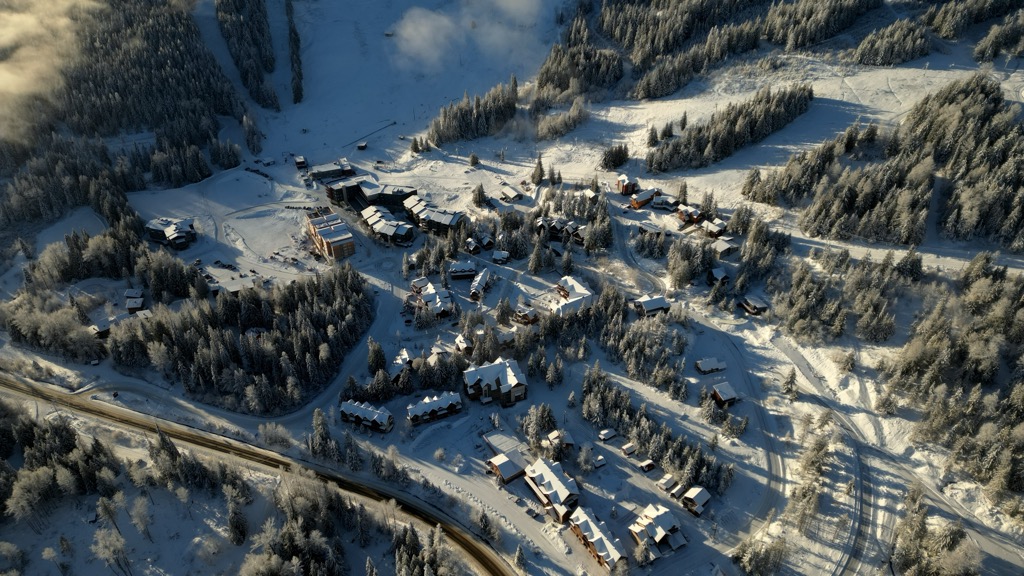
Right from the left side of the village, access this zone by taking the Red Chair to this peak. RED Mountain is smaller but has a steeper fall line, offering more direct lines and technical terrain. The “side country” consists of ample glades with a few blue runs encompassing these chaotic moguls that locals like to warm up on.
There’s also a T-Bar, terrain park, and a very short green run beside the T-Bar, for beginners.
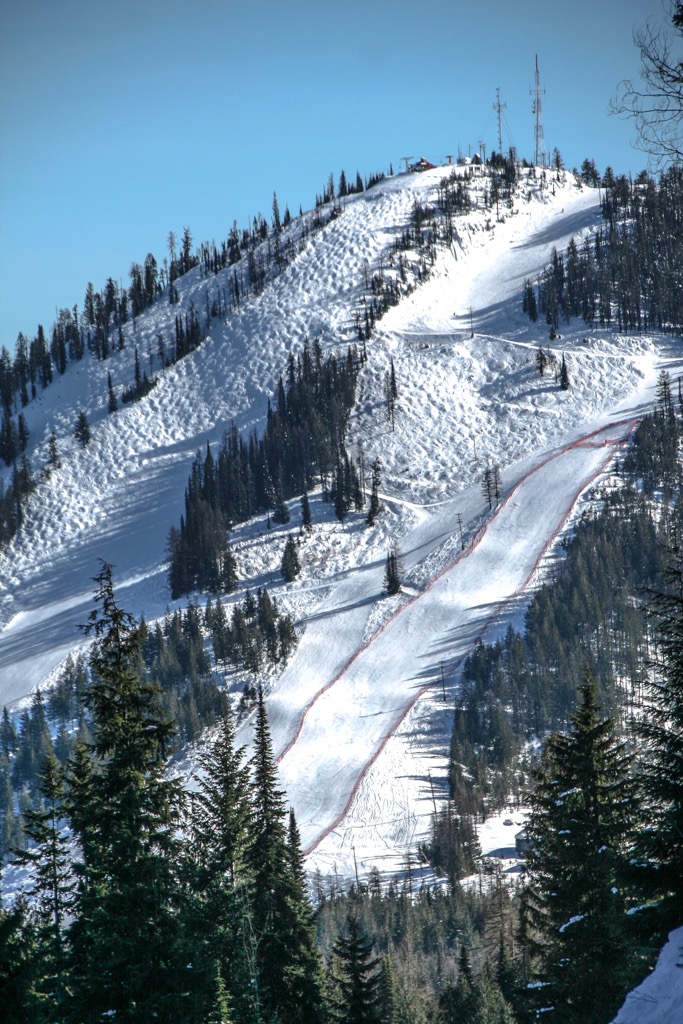
From the right side of the village, take Silverlode and Motherlode to access the entirety of Granite Mountain. This mountain is the resort's crown jewel, offering the largest vertical, long fall lines, wide bowls, chutes, cliffs, and the best glade runs at the ski resort. The ski map highlights Zone A and Zone B.
On the left side of the Motherlode chair (Zone A), the terrain consists entirely of challenging open meadows dotted with perfectly spaced trees. To the right (Zone B), it’s more of the same but with a longer fall line and more typical groomed runs. Zone B highlights several runs lined with chutes, powder stashes, and very steep bowl terrain.
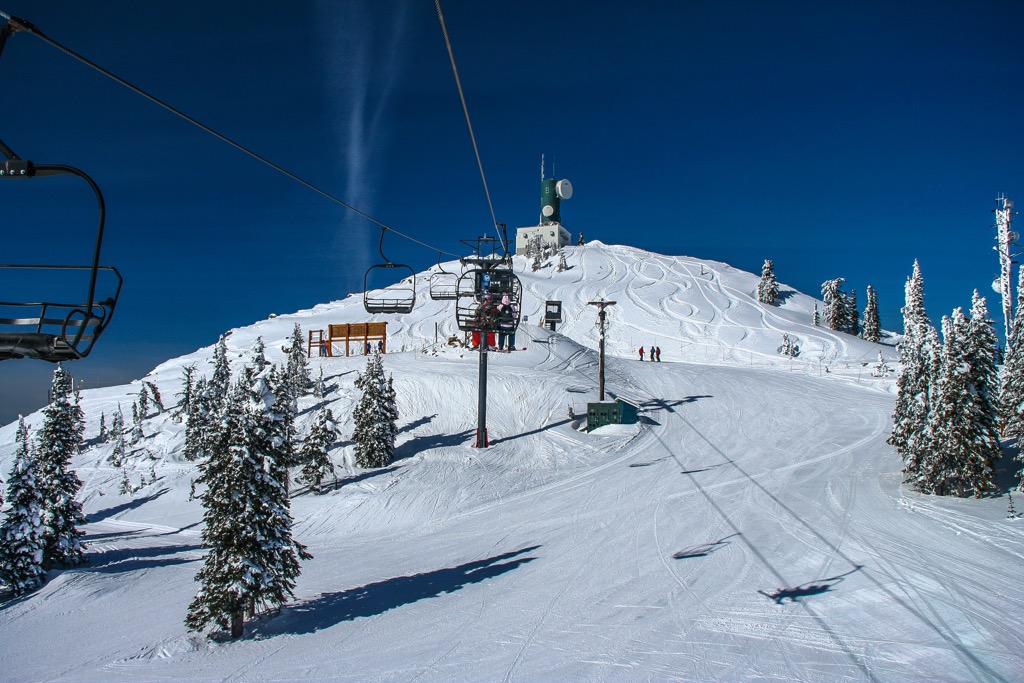
Lower down around the Silverlode chair, the runs are mainly blue groomers with a couple of short green runs.
Granite Mountain also holds the most green runs on the resort, hidden on the backside. Accessed by the Paradise Chair, they’re mostly cat-tracks with the odd wider slope. The rest of the slopes in this zone are a mix of blue groomed runs, black alpine zones, and a lovely lodge to warm up at, the Paradise Lodge. The Constella Clubhouse is another on-mountain eatery to fuel up at.
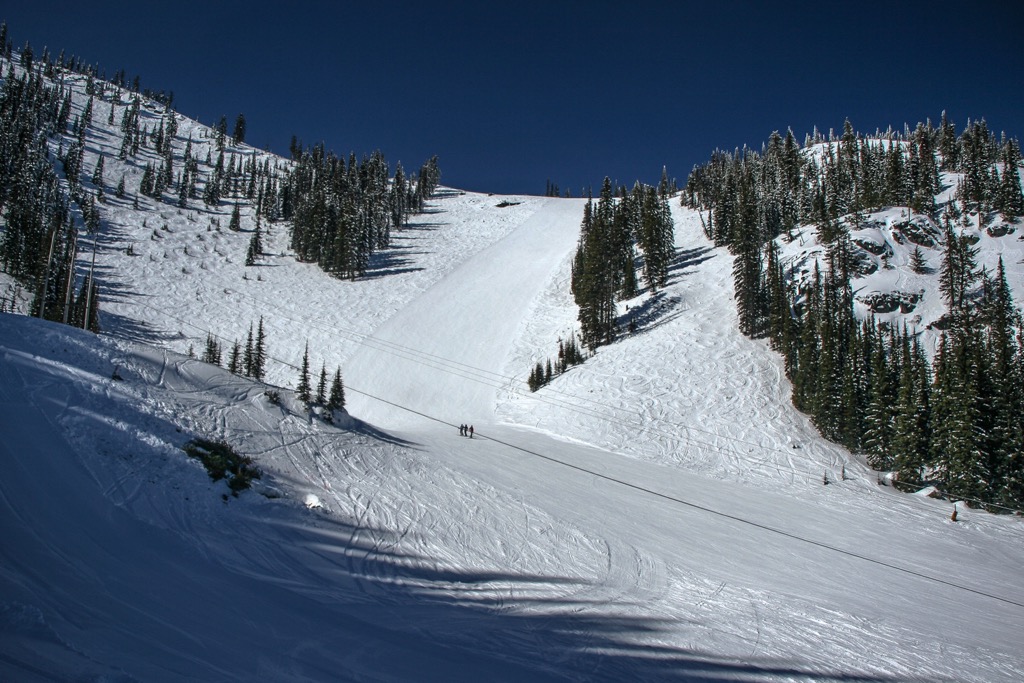
To access Grey Mountain, go from Granite Peak and take Topping Creek or Grey Mountain Chair. This zone consists of about 1,000 acres and offers less-trafficked powder stashes due to its isolated location. There’s a good variety of groomed blue runs around Topping Creek chair and more off-piste style stuff up top at the Grey Peak, including vast open powder fields, easier glades, and a challenging cliff zone called The Chute Show.
The final inbound peak is accessible by resort cat or hiking. If you take the cat, you’ll have to purchase additional tickets. This step seems to deter the masses because the conditions here are usually excellent days after a big snowstorm. There are three cut runs of black difficulty and a decent amount of hidden stashes around the trees.

The ski slopes available at RED are mainly advanced and expert-rated. Out of 119 runs available, 50% are rated advanced and expert. High-level skiers will find no shortage of technical terrain, cliff drops, and powder stashes if they know where to look.
Overall, the off-piste terrain can be technically demanding, and you can find yourself out of your comfort zone real quick. It’s best to work your way up to the big runs or find a local who is happy to let you tag along.
This leaves the novice skier little wiggle room to find some ideal slopes for learning and progressing. A lot of the green runs serve as the highways of the ski resort; skiers funnel onto them on their way back to the chairlifts, making it challenging to find a quiet place to practice.
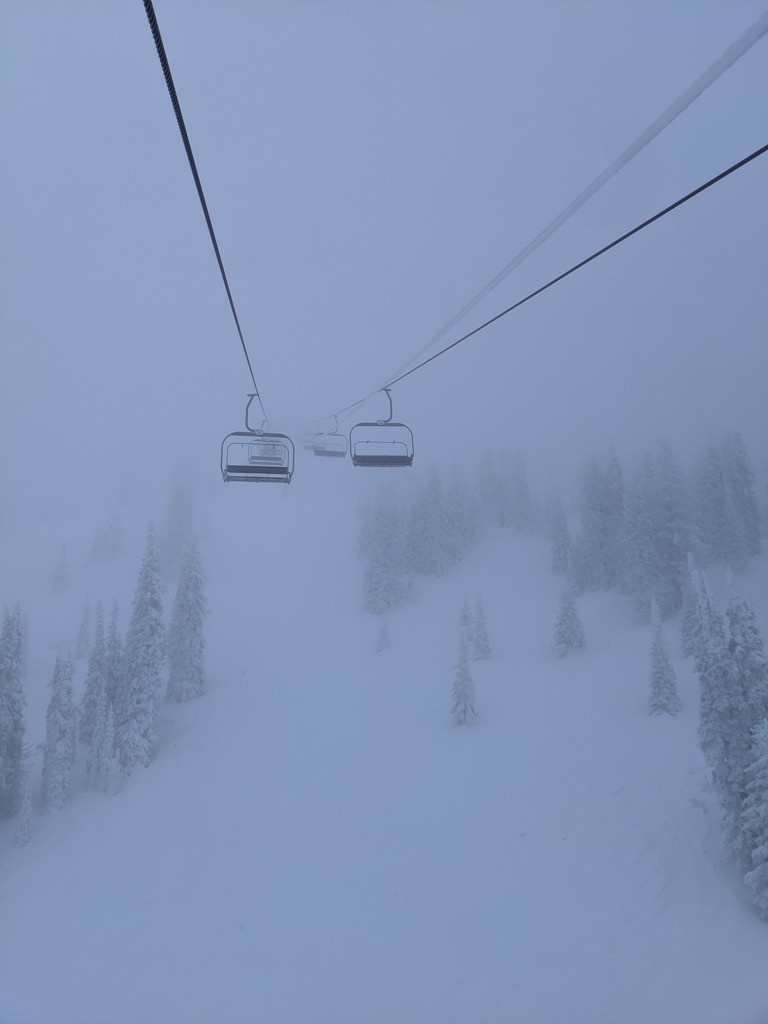
One major downside of the ski resort is the outdated lift system. Not a single chair lift is high-speed. Fixed-grip is all you get, and they can be quite slow. There’s also no gondola or six-pack—it’s the price you pay for staying independent. It’s also an integral part of the resort’s old-school charm, and I imagine many locals wouldn’t have it any other way. Just keep this in mind when you’re dressing for the weather.

The ski-touring around RED Mountain is impressive and abundant. Right from the ski resort, you can access backcountry zones through gates at the edge of the ski resort’s boundary. The variety is plentiful and ranges from free-flowing natural glades to insane 50-degree pitches.
Important: Leaving the ski resort's boundaries is not for the untrained. You will enter avalanche territory, cliff areas, and some challenging backcountry terrain features, including cornices. Tour with people you can count on in emergencies, as your life could depend on the group’s training. AST 1 and 2 are highly recommended, along with up-to-date avalanche gear.
One of the more mellow ski tours to access from the resort. Enter the backcountry through the gate that intersects Silver Sheep and Rino’s Run (Granite Peak). About 30 minutes later, you’ll drop in from the ridge and can make your way through natural tree glades right back to where you started. Here’s a view of the access on the desktop ski touring map.
Possibly one of the steepest backcountry lines you’ll find in the area. Start your tour through the backcountry gate on Silver Sheep on the backside of Granite Peak. Forty-five minutes later, you’ll drop into a 50-degree pitch through natural channels back towards the paradise chair. Here’s a link to Mount Roberts on the ski touring map.
This zone is accessed in the same way as the above routes. However, you’re dropping into the north/west face and away from the ski resort. This zone is highly challenging and heavily dotted with cornices. You’ll also end near the Big Sheep Road highway, which is about 10 km away from the resort. It’s best to drop a vehicle up the road.
You can also start this tour from the parking lot to avoid the lift access option. This option creates a 13.5 km ski tour. Here’s the point on the map.
RED Mountain offers multiple pass products, making skiing accessible to all. Single-day tickets cost $175 with additional discounts if you purchase in advance. Multi-day tickets are available with additional savings and come in 2 consecutive days, 3 of 4 days, 4 of 6, 5 of 7, 6 of 8, and 7 of 9. Again, you’ll save more the further out you purchase.
The Lake Louise Plus Card offers free ski days on your 1st, 4th, and 9th day of skiing for $149 with 20% off for additional ski days at RED, Lake Louise, Panorama, and Castle Mountain. IKON Pass holders can also enjoy 2,3, or 4 days, depending on their pass, and are subject to blackout dates
This independent ski resort offers all the same amenities and services as its corporate cousins.
RED Sports offers all your rental needs for skis and snowboards in both budget and high-performance models. There’s also a dedicated pro shop to service your gear as needed.
RED MTN Snow School is the ski resort’s dedicated learning program offering group, private, and kids lessons. Additional products like kids camps, adult programs, adaptive lessons, freestyle groups, and mountain tours offer something for everyone.
Kindercare is designed to keep the young ones engaged while you’re out ripping turns. RED offers childcare and ski programs for young kids from 1.5 to 5 years old.
Free Mountain Tours: RED Snow Hosts give you an insider's tour of the ski resort daily at 9:00 am and 12:30 pm in front of the base lodge.
RED Mountain Resort
4300 Old Red Mountain Rd.
Rossland, British Columbia (BC)
Canada, V0G1Y0
Guest Services: 1 800.663.0105
Local Number: +1 250.362.7384
General Inquiries: info@redresort.com
Website: https://www.redresort.com/
Given the smaller size of the RED Mountain Village, food options are rather limited. You’ll find some on-mountain dining options as well as a few restaurants and bars scattered around the base. Down the road in nearby Rossland, your options open up a bit more.
On-mountain eateries include Constella Clubhouse and Paradise Lodge, which offer the standard ski resort food like soups, burgers, chilli, pizza, and salads. A new notable stop at Flyin’ Phils is Taco Rojo, which recreates Mexican street food with additional features for breakfast and après.
At the base, The Velvet Restaurant is considered the resort’s best restaurant. The RED Day Lodge, a traditional cafeteria-style eatery, offers the most options.
Less than a 10-minute drive to downtown Rossland, you’ll find more variety with restaurants, bars, and grocery stores. Gabriella’s is the town's best spot for authentic Italian cuisine. You’ll also find sushi at Aka Dake.
Rossland is where you’ll find the most affordable grocery stores. Stock up on essentials and ski day snacks to save money while staying at the resort.
Overnight accommodation is available both at the ski resort and in the town of Rossland. Staying at the resort offers easy access to the slopes and a more peaceful and secluded holiday. Opting to stay in Rossland will be easier on your budget and provide more variety and things to do in the evening.
A mixture of hotels, lodges, condos, townhomes, and homes can all be found here. Sites like Airbnb and VRBO offer nightly rentals in addition to the larger hotel chains. RED Mountain and the town of Rossland cater to most needs, but you won’t find high-end resorts and true catered luxury in this neck of the woods.
The Josie Autograph Collection offers luxury rooms, studios, and one-bedroom units at great prices and sits right at the mountain's base. There’s even an extra budget option for younger travellers called the Nowhere Special Hostel. You can’t beat the location at only a two-minute walk from the slopes.
In Rossland, Prestige Mountain Resort is the town's 4-star hotel with conference rooms, a hot tub, and a restaurant. You’ll also find a wide variety of Airbnb and VRBO properties to suit most accommodation needs.
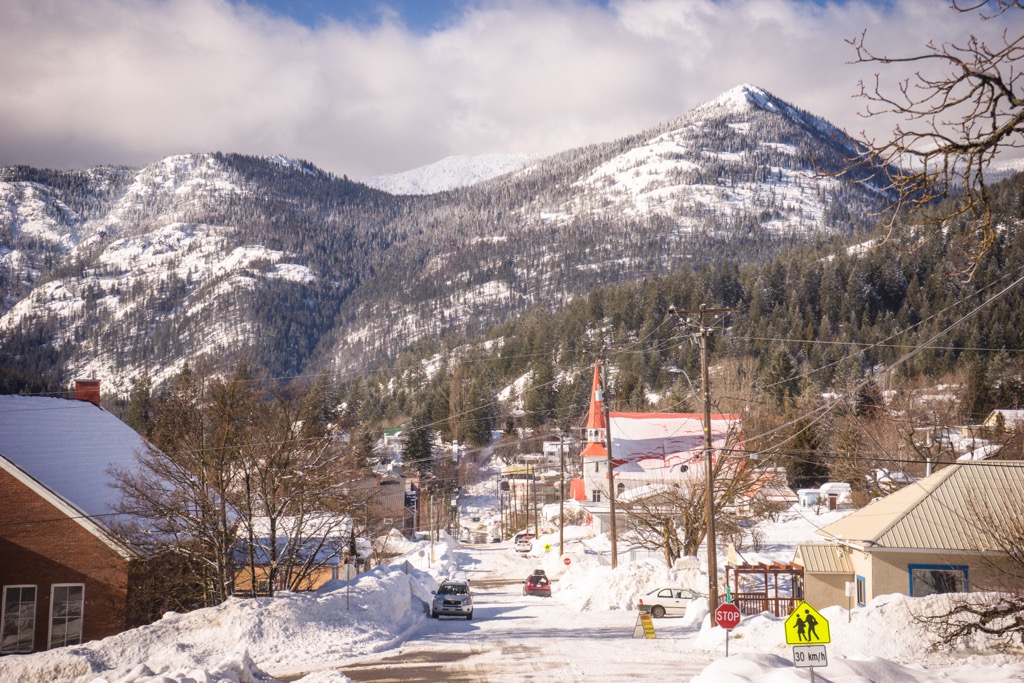
RED Mountain Ski Resort is far from a party resort, and there’s not much in terms of events that occur here once the lifts stop spinning. With that said, you can still find somewhere to hang out and take in the funky small-town vibes this local area is known for.
Rafters Lounge is the go-to après spot for food, drinks, live music, and dancing, especially late night on weekends. Powder Magazine once rated this joint the Number One Ski Resort Bar in North America, and it still lives up to the hype.
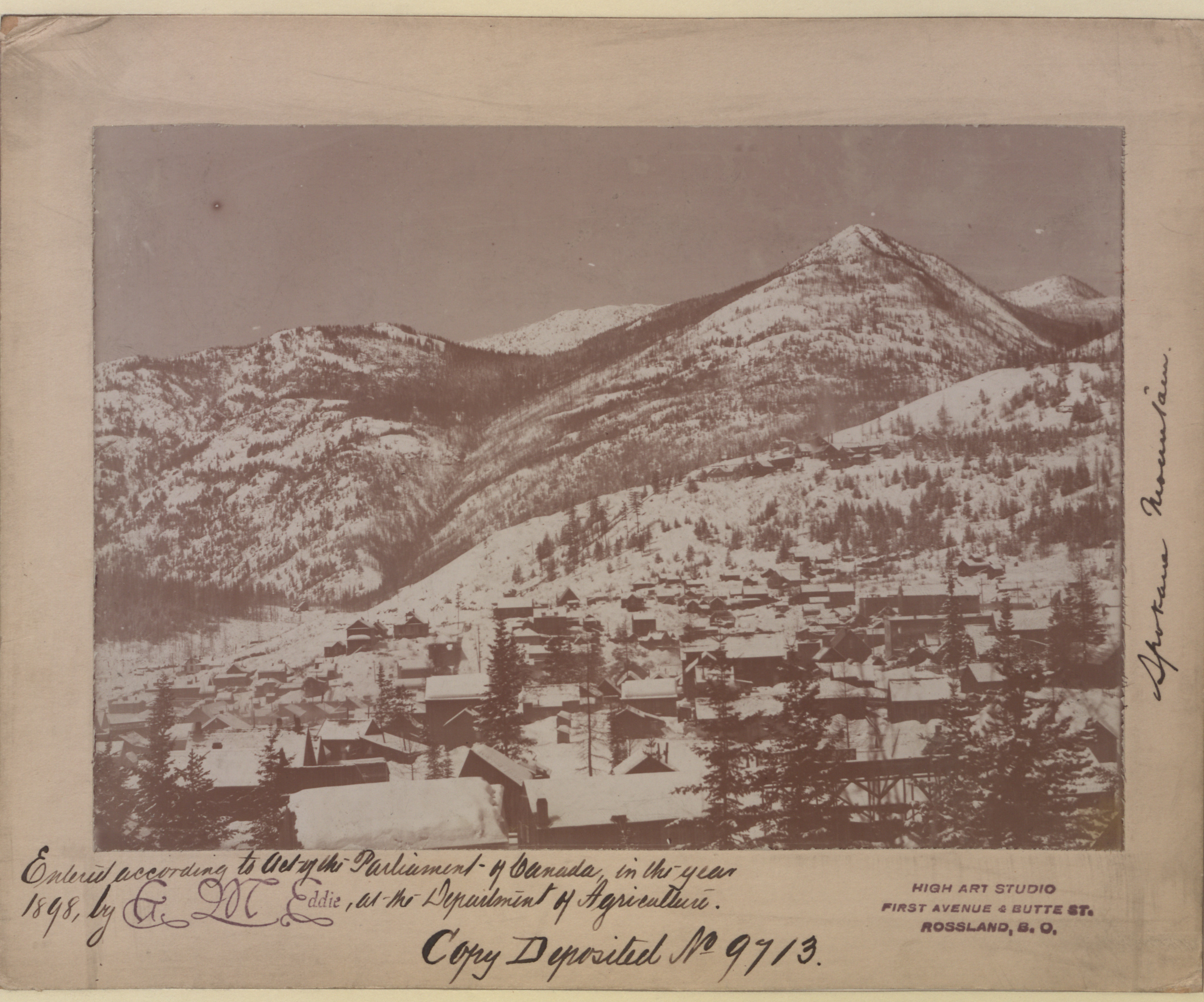
The historic Rossland Winter Carnival happens locally near the end of January. It’s actually Canada’s longest-running winter carnival, dating back to 1898! Ice sculptures, snow sliding, live music, local business specials, rail jams, and more occur during the week. If you’re looking for excitement and a glimpse into Canadian winter culture, this winter festival is worth checking out.
Late January also welcomes the Canadian Open Freeride Championships to RED Mountain. The best freeriders in the country flock to the ski resort for a chance to qualify for the World Freeride Circuit.
Rossland is the nearest town to RED Mountain and is a four-season destination for adventure seekers and outdoor enthusiasts. This small logging and mining town doesn’t have many local landmarks besides the Rossland Museum. It is, however, a mecca for mountain biking, hiking, backcountry camping, cat and heli-skiing.
In addition to the world-class outdoor recreation, the many small interior BC towns within an hour's drive are rich with genuine people, local traditions, and a deeply connected sense of community. Take a drive, and you will be immersed in an environment where strangers smile at you, spark up a conversation, and remind you of what life used to be like.
If you liked this guide, you should know that it was brought to you by the one and only PeakVisor App.
PeakVisor is a leader in the augmented reality 3D mapping space; we’re the product of nearly a decade of effort from a small software studio smack dab in the middle of the Alps.
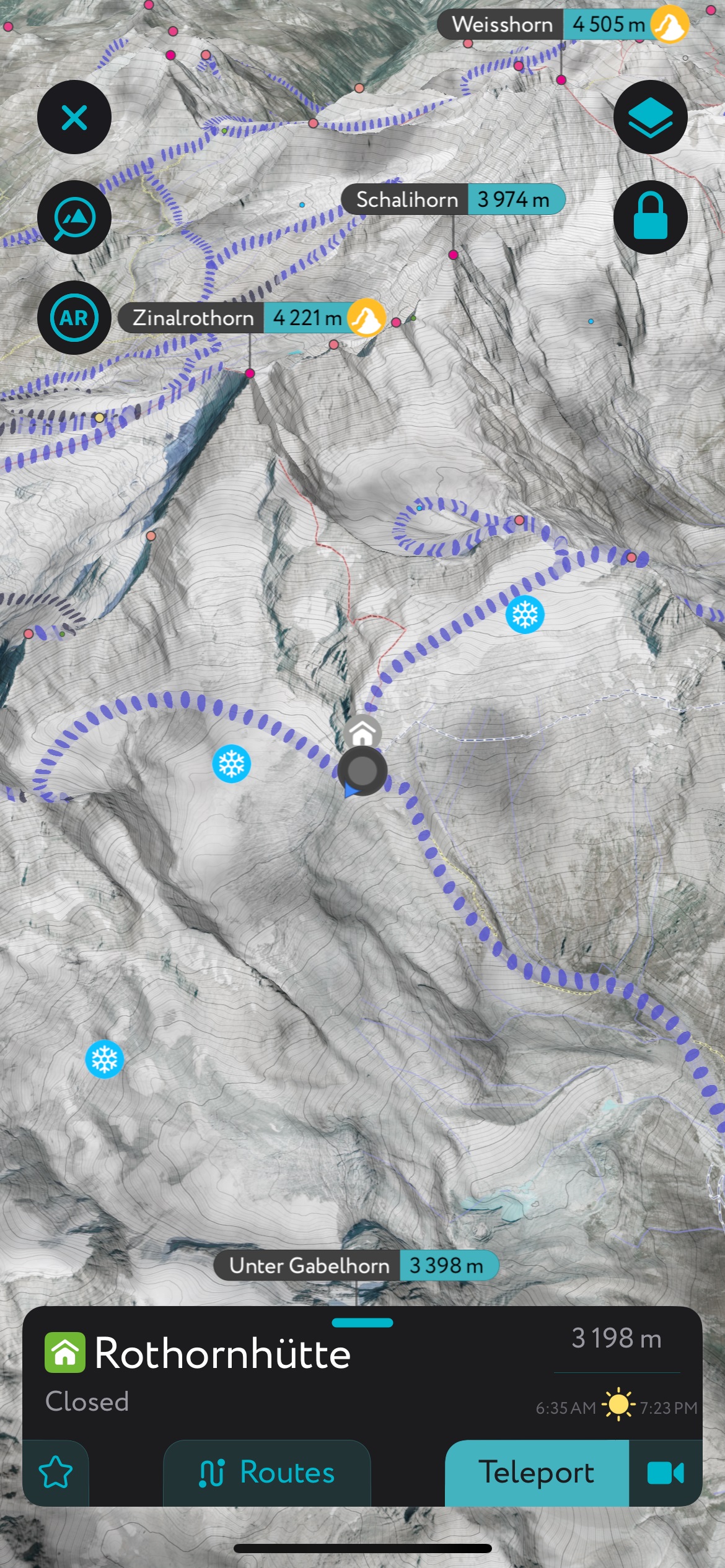
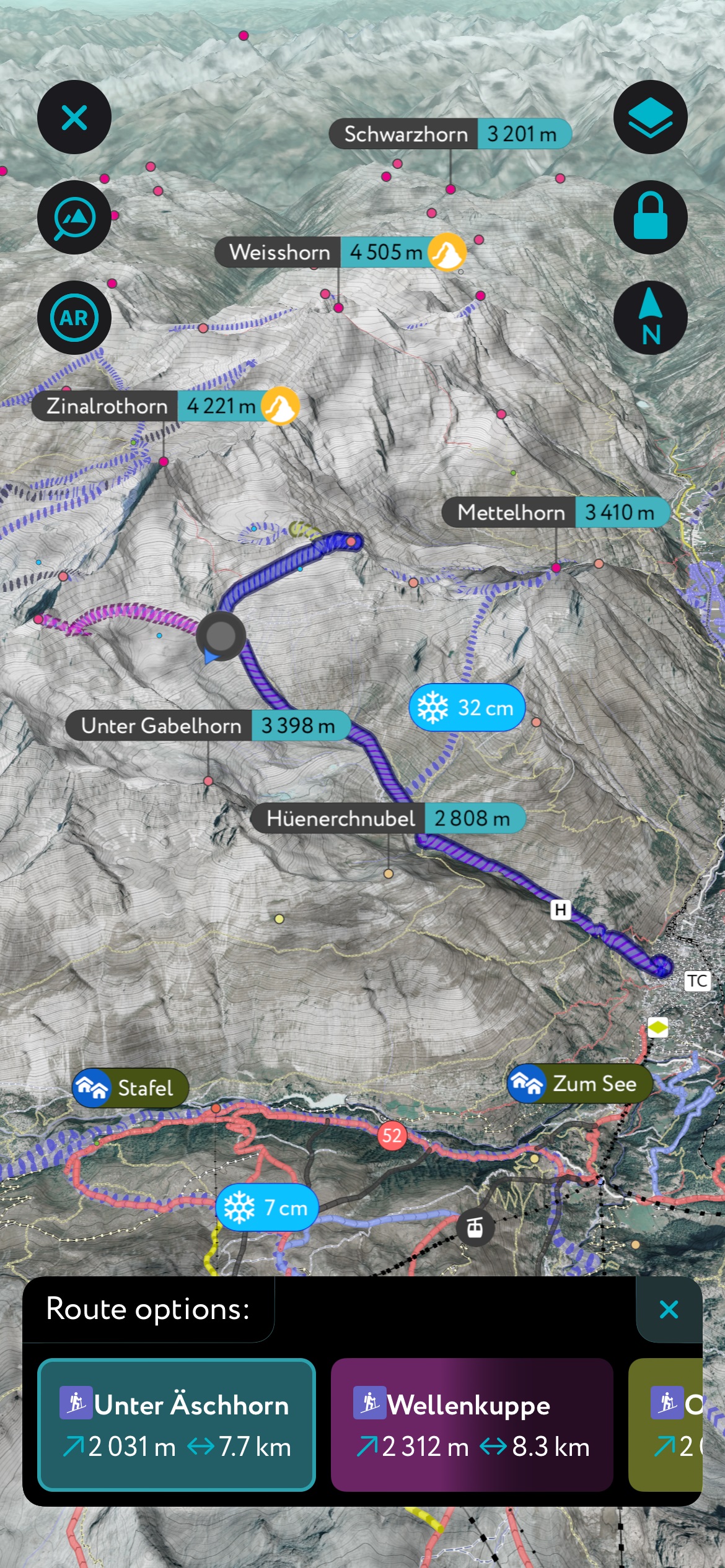
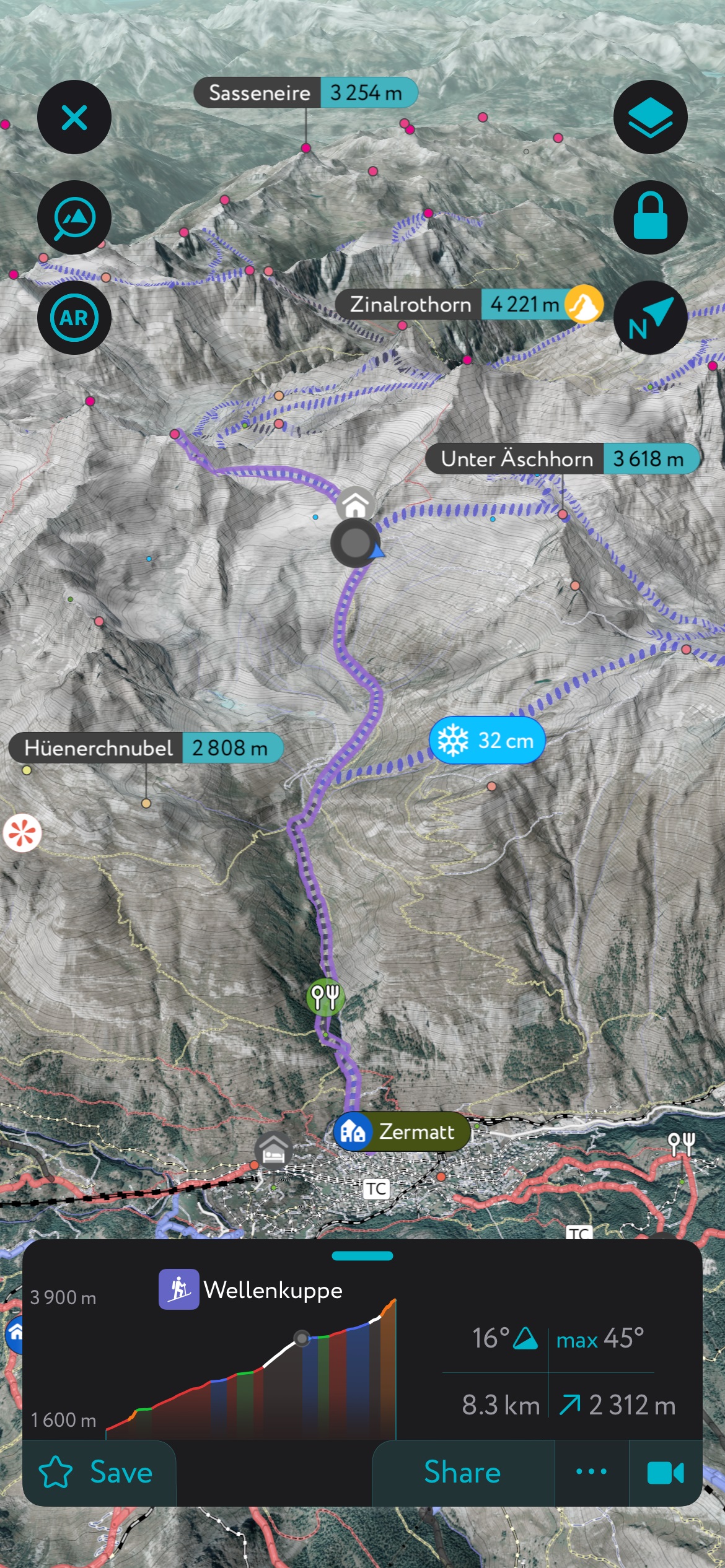
My sidekick during ski missions is always the PeakVisor App. I use the app to track activities, navigate with exquisite 3D maps, and learn the surrounding mountains' names. I’m all for tools that help quicken the pace in the mountains, and the PeakVisor App greatly accelerates things. It’s also critical for planning, whether I’m headed into the backcountry or searching for off-piste goodies at a new ski resort. Read on for a breakdown of some of the app’s best features.
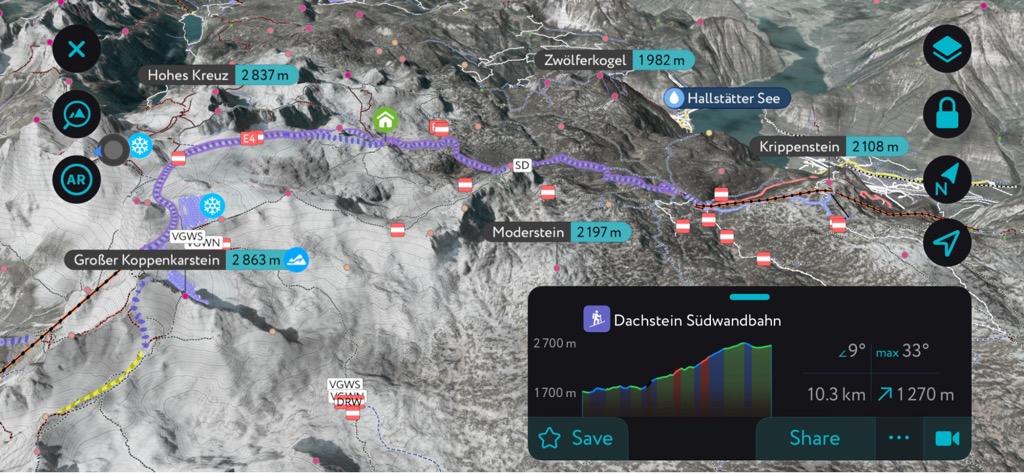
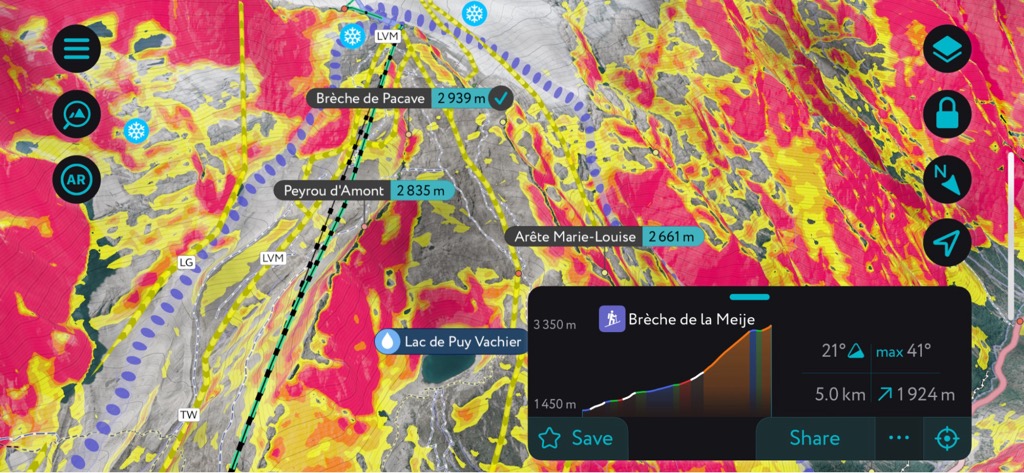
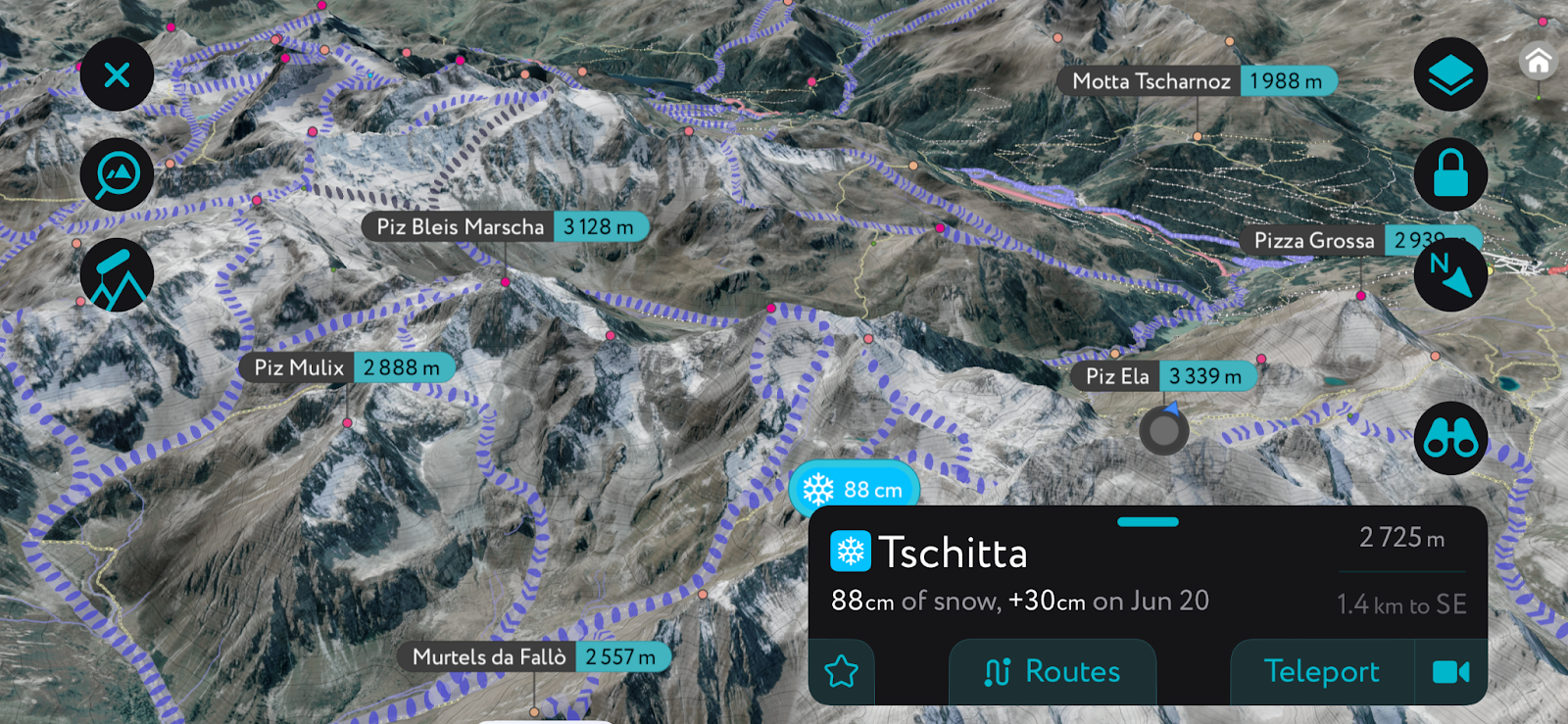
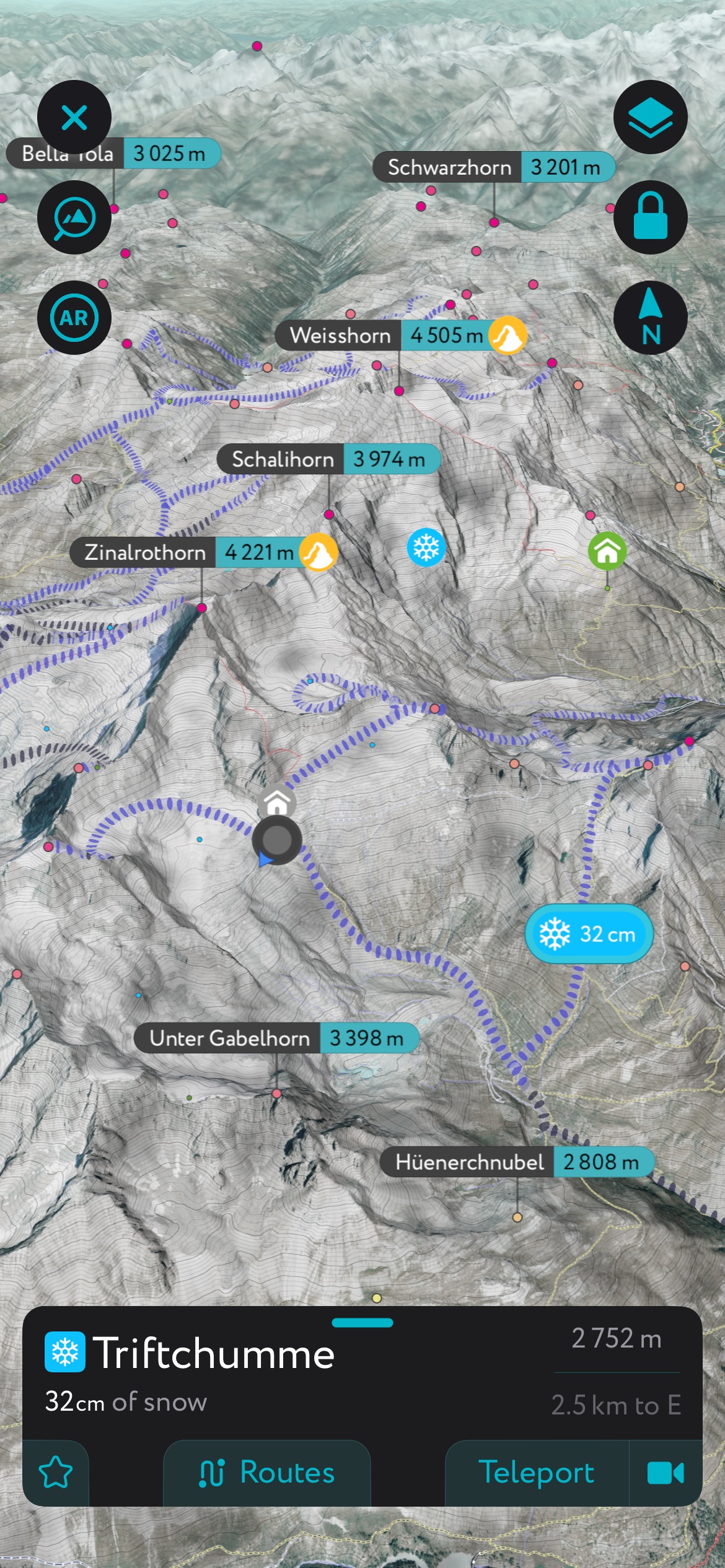
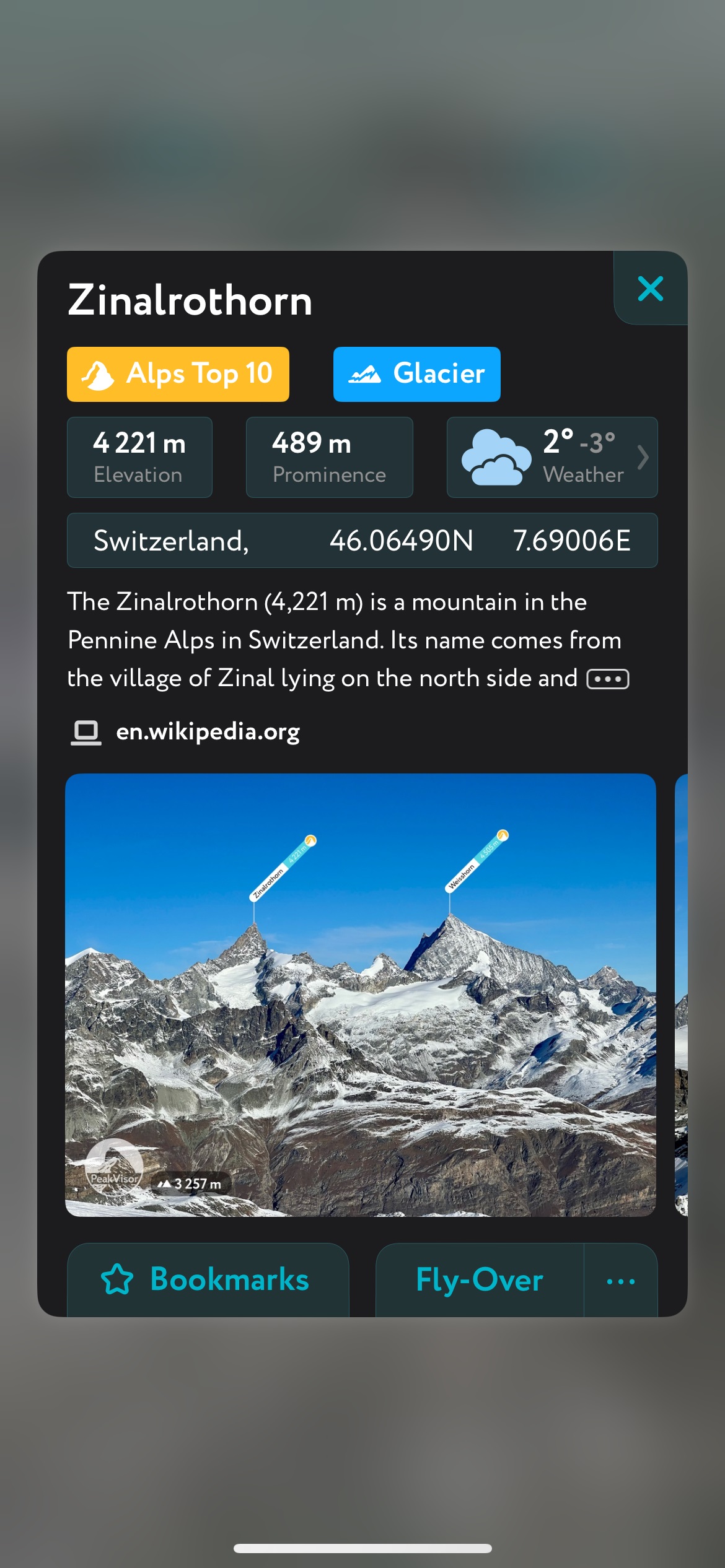
In addition to the visually stunning maps, PeakVisor's advantage is its variety of tools for the backcountry:





.jpg)
.jpg)
.jpg)
.jpg)