
 Living tradition
In the mountains, sound often arrives before its source. A horn carries over a ridge. A coin circles inside a bowl beneath a group of voices. Cowbells turn a returning herd into a moving chord; after the day's work, a prayer travels from an alp towards the valley.
These are not six versions of a generic Alpine soundtrack. They belong to different regions, languages, seasons and communities, and they still depend on people who know when and how to make them. The pins mark strong places to begin listening, not single points of origin.
 On the map All six sounds, across Switzerland →
Alphorn and Büchel
An alphorn can be almost four metres long, yet it has no valves or finger holes. The player's lips select notes from the natural harmonic series. Listen for the “alphorn fa”, an eleventh harmonic that sits between the pitches of a modern piano and gives the instrument one of its most recognisable colours.
The horn grew from pastoral work and long-distance signalling; today it also belongs to concert halls, ensembles and large festivals. The shorter, coiled Büchel is its sharper-voiced Central Swiss relative. Nendaz is our anchor because the Valais village hosts an international festival, while the Pilatus video below shows the same tradition in another Swiss setting.
The 1957 LP Swiss Mountain Music preserves a mid-century commercial portrait of this sound world. Its first medley begins with Alois Lischer's alphorn and cattle bells, then passes into Appenzell yodel, moving coins and dance music. It is an anthology, not a Nendaz field recording; what matters here is the changing texture as one sound hands the listener to the next.
Listen — a 1957 Swiss mountain-music anthology
Watch & listen — alphorns on Mount Pilatus
On the map Nendaz, Valais — the alphorn festival →Ranz des vaches
“Lyôba, lyô-ô-ba” is both refrain and call. The Ranz des vaches belonged to cowherds bringing animals to pasture or back for milking, and the familiar syllables still invite a room or festival crowd to join in.
The melody also entered the history of homesickness. Theodor Zwinger printed a version in 1710 while discussing nostalgia among Swiss soldiers abroad. Rousseau later repeated the more dramatic claim that mercenaries were forbidden to hear it because they might desert. The prohibition is legend; the song's life in Gruyère and at the Fête des Vignerons is not. In the recording, listen for the call widening into a communal answer.
 On the map Gruyères, the Fribourg Alps →
Natural Yodel and Yodel Song
The singers stand in a circle, often with their hands in their pockets, concentrating on one another. A lead voice begins; the others enter with improvised harmony. There are no lyrics. In Appenzell Ausserrhoden this natural yodel is called Zäuerli; in Innerrhoden, the related name is Rugguusseli.
Wordless natural yodel is one branch of the Swiss tradition. The other is the Jodellied, or yodel song: composed verses lead into a yodel refrain, performed by soloists, small groups or choirs, sometimes with accordion. UNESCO inscribed Swiss yodelling on its Representative List in 2025, while stressing that melodies, syllables and vocal colour still vary by region and dialect.
Talerschwingen adds a sound made from an ordinary object. A five-franc coin rolls around the inside of an earthenware bowl; several bowls form a triad-like drone under the voices. Listen for how little is fixed: the lead line, the answering parts and the ringing accompaniment find their balance in the moment. Urnäsch anchors both the practice and field recordings from the region.
Listen — a mid-century popular adaptation
The Swiss Yodelers · Yodeling Slim Clark · Continental C-8063-B, c. 1950 · digitised by George Blood, L.P., via Internet Archive
American popular/country yodel, included as a later adaptation rather than a Swiss field recording.
Listen
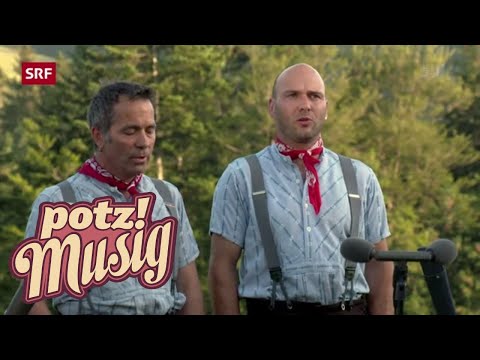 Watch on YouTube · Chlause-Zäuerli, Urnäsch (SRF)
Archive recordings: Zäuerli, Yodel of Appenzell — Smithsonian Folkways (Hugo Zemp field recordings)
Watch — natural and sung yodel across Switzerland
 Watch on YouTube · Yodelling — UNESCO
Official UNESCO heritage entry and nomination film · inscribed 2025
On the map Urnäsch, Appenzell →Betruf
At the end of a working day on a summer alp, the head herdsman chooses a place where his voice will carry. He cups his hands or chants through a wooden milk funnel, asking protection for the people, animals and pasture against the dangers of the night: storms, wolves, thieves and, in some versions, ghosts.
This is the Betruf, or Alpsegen, from the Catholic regions of Central Switzerland. Its earliest evidence within present-day Switzerland comes from the Pilatus alps in the sixteenth century, and the prayer continues by oral transmission. Engelberg is not a festival stand-in: it is the setting of the 1940 working-alp photograph used on the map. Listen for one unaccompanied voice shaping distance into part of the ritual.
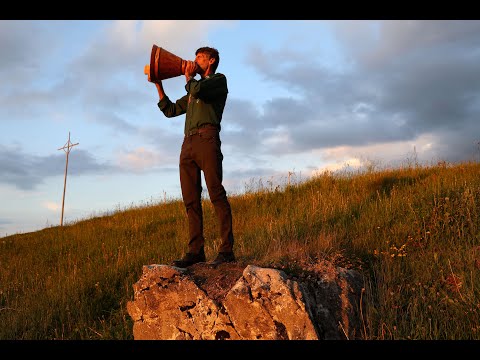 On the map Engelberg, Obwalden →
Chalandamarz
On 1 March, children move through Romansh-speaking villages with bells, whips and songs to ring out winter. They stop at houses, collecting food and money for a shared meal and school activities. The noise is communal, but not uniform: Scuol adds a whip-cracking contest; elsewhere the clothes, route and evening celebration change.
Chalandamarz became widely known through the 1945 picture book Schellen-Ursli by Selina Chönz and Alois Carigiet. The boy's search for a larger bell is set in Guarda, whose houses and culture informed Carigiet's drawings. The book explains the pin's location; it does not make Guarda the origin of a custom practised across several valleys.
 On the map Guarda — the Schellen-Ursli village →
Alpabzug
At the end of the Alpine summer, the herd comes down in an order that makes work visible. Around Säntis, goats and children lead; herders and three cows with heavy bells follow, then the main herd, owners, dogs and a cart carrying the equipment of the alp.
The lead bells are chosen to ring in harmony, a moving drone for the herders' wordless yodel. Urnäsch is one of the documented places where this choreography reaches the village. The Freesound clip was recorded in Eglisau and offers only the bell texture; the video is the closer record of the Urnäsch procession.
Hear it — Swiss cowbells
Field recording in Eglisau, Zürich · Christopher J Astbury (Astounded) · CC0, via Freesound
Watch the descent
 Watch on YouTube · Alpabzug / DésalpeOn the map Urnäsch, Appenzell — the cattle descent →
Listening in Place
Together, the six sounds form a calendar without becoming one uniform tradition. Chalandamarz strikes against village walls in March. Horns, yodel and prayer carry across the summer pasture. Tuned cattle bells mark the return to the valley in autumn.
A map can locate a festival, village or documented photograph, but the sound exists only when people repeat the practice. Dates and routes change, so visitors should check with local organisers before travelling. Then the landscape becomes more than a view: distance, echo, work and season can be heard inside it.
Sources and Further Reading
- Playing the alphorn and the Büchel — Living Traditions of Switzerland
- Ranz des vaches — Living Traditions of Switzerland
- Prayer calls in Central Switzerland (Betruf) — Living Traditions of Switzerland
- Chalandamarz — Living Traditions of Switzerland
- Schellen-Ursli and Guarda — Graubünden Tourism
- Yodeling and Talerschwingen — Appenzellerland Tourismus
- Yodelling in Switzerland — UNESCO Intangible Cultural Heritage
- Zäuerli, Yodel of Appenzell — Smithsonian Folkways
- Alpine processions in Appenzell and Toggenburg — Living Traditions of Switzerland
- Cattle descent from Alpine pastures — MySwitzerland