
 Literature
Lauterbrunnen, October 1779
Between 9 and 11 October 1779, Goethe stayed in the Lauterbrunnen Valley with Duke Karl August of Saxe-Weimar. He was thirty, already famous for The Sorrows of Young Werther, and travelling through Switzerland for the second time.
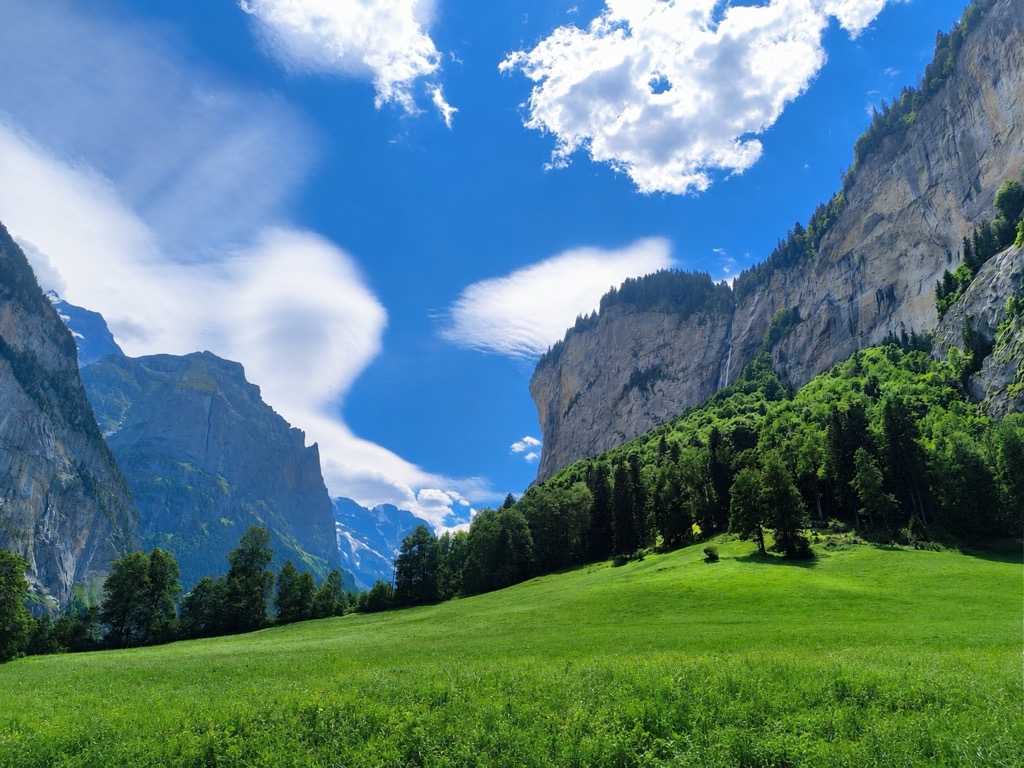
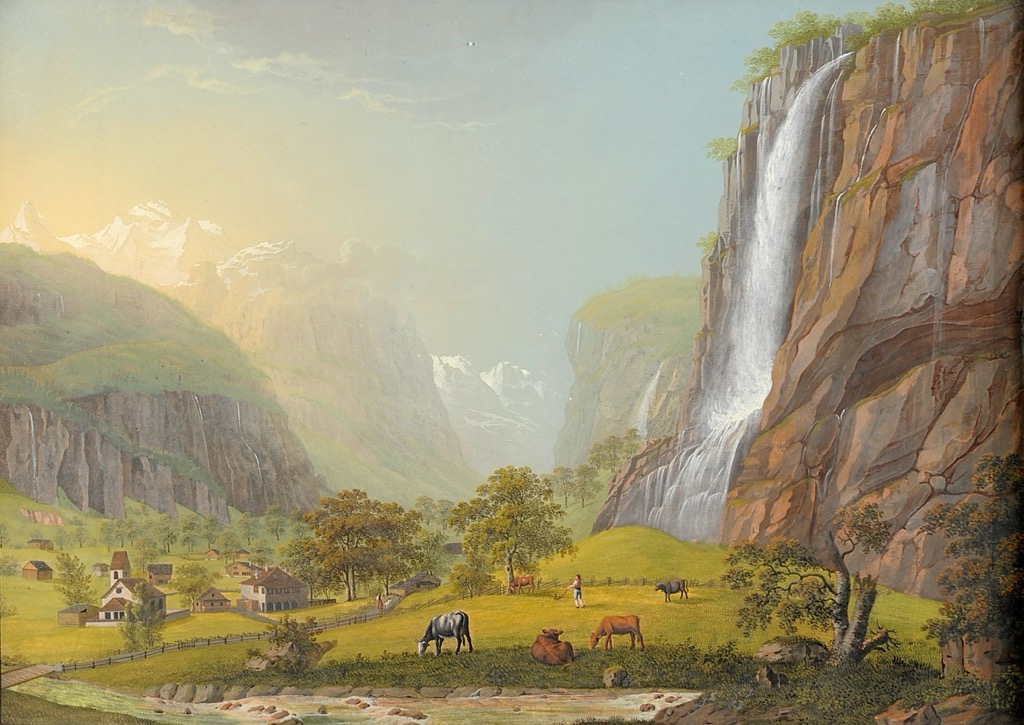
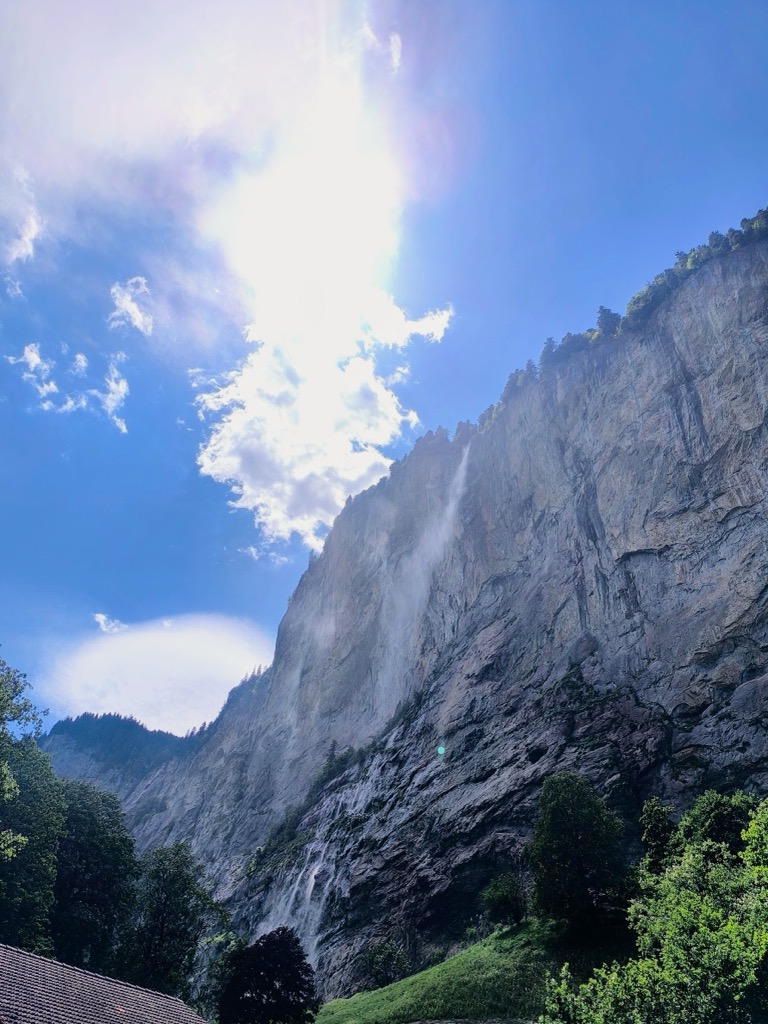
The valley narrows around Lauterbrunnen, with meadows on the floor and near-vertical cliffs on either side. From the western wall, the Staubbach drops almost 300 metres. Its name means “dust stream”: the water begins as a clear shaft, thins into spray in the open air and gathers again below. Wind can push the whole fall away from the cliff.
A Poem Takes Shape
On 14 October, three days after leaving Lauterbrunnen, Goethe wrote to Charlotte von Stein from Thun. He said he had heard further “wondrous stanzas” of a Song of the Spirits. The early text is dated to the days between the party’s arrival in Lauterbrunnen and that letter.
The poem became Gesang der Geister über den Wassern, or “Song of the Spirits over the Waters”. The published version does not name the waterfall, but an early copy by Luise von Göchhausen carries the title Vor’m Staubbach: “Before the Staubbach”.
That distinction matters. No surviving note records Goethe saying that the waterfall caused the poem. The visit is documented, however, and the early title places the poem at the falls rather than relying only on a later resemblance.
Des Menschen Seele
Gleicht dem Wasser:
Vom Himmel kommt es,
Zum Himmel steigt es,
Und wieder nieder
Zur Erde muß es,
Ewig wechselnd.The human soul
is like water:
it comes from heaven,
rises to heaven,
and must descend
to earth again,
forever changing.
Literal English translation by PeakVisor.
The landscape is not merely scenery. Across the poem, a clear stream falls from a high cliff, breaks into veils of spray, runs through the meadow and settles into a lake. Then wind disturbs it. The scale keeps changing, but the water remains part of one cycle; in the final lines, Goethe pairs that changing water with the human soul and the wind with human fate. He revised the text before publishing it under its familiar title in 1789.
.jpg)
From Poem to Music
Schubert returned to Goethe’s poem several times between 1816 and 1821. His final setting, D. 714, is dated February 1821 and written for eight male voices with low strings. The poem that began with water changing form becomes music that passes between divided groups and gathers them into one large ensemble.
Visiting Staubbach Falls
A short path leads from Lauterbrunnen towards the foot of the falls. Wind still decides how visitors encounter it: on a calm day the water drops in a narrow ribbon; in stronger air it reaches the meadow as spray. From farther back, the whole sequence of the poem becomes visible at once — cliff, falling stream, drifting veil and water returning to the valley.
 On the map Staubbach Falls in Lauterbrunnen →