
Scan the QR code and open PeakVisor on your phone
Maldives is home to 10 named mountains.
Maldives is a tropical atoll nation of 1,192 mostly deserted coral islands located southwest of India and Sri Lanka in the Indian Ocean. Officially known as the Republic of Maldives, the country has precisely 10 named mountains, and the highest point on the entire archipelago is on Villingili Island in the Addu Atoll, where a certain, slightly elevated area reaches a measly 2.4 m (7.9 ft) above sea level. There are humans who stand higher above sea level than any point on the Maldives.
This solidly cements the Maldives as the country with the lowest high-point in the world. It is also the single flattest country in the world, averaging just 1.5 m (4.92 ft) above sea level across its sprawling territory. If you are interested in climbing the mountains of Maldives, unfortunately, you are out of luck. However, it is a world-class destination renowned for its countless white sand beaches, hundreds of species of coral, colorful marine life, world-class scuba diving, and eco-luxury resorts that often encompass entire islands. After all, even the most dedicated mountaineer needs some occasional R&R in a tropical paradise devoid of elevation.
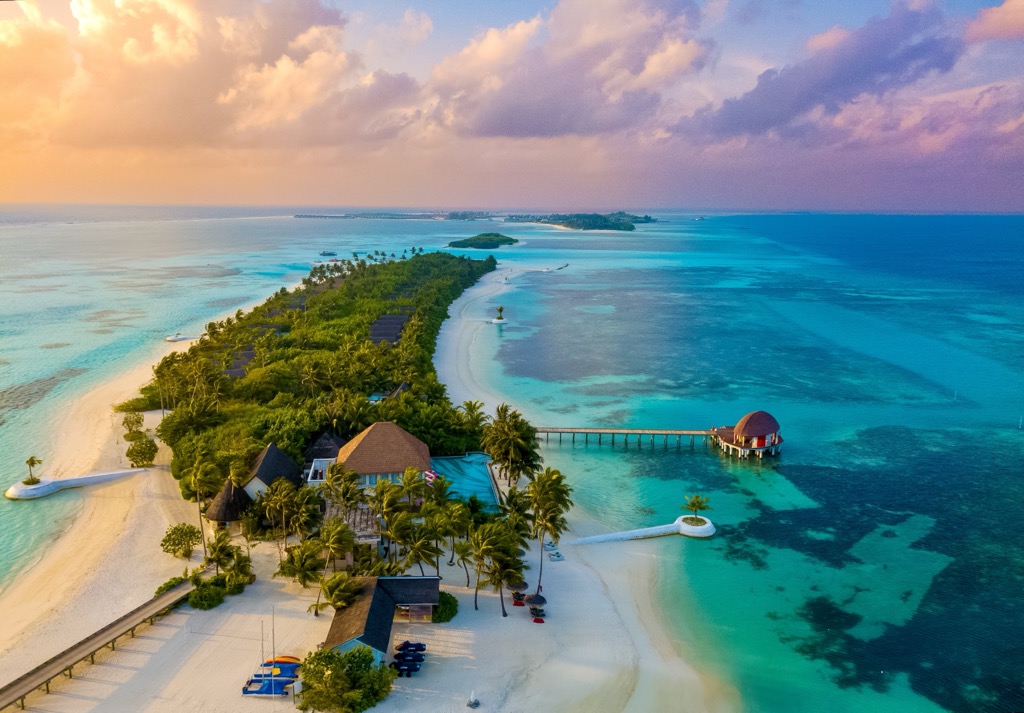
With a total land area of just 298 sq km (115 sq mi), the Maldives ranks as the ninth smallest country on the planet and the smallest in Asia by total land area. It is about 1.7 times the size of Washington, D.C., in the U.S. of A. For what it’s worth, if you include the surrounding ocean in its area, the size of the territory skyrockets to over 90,000 sq km (34,749 sq mi), making the island nation about 99% ocean.
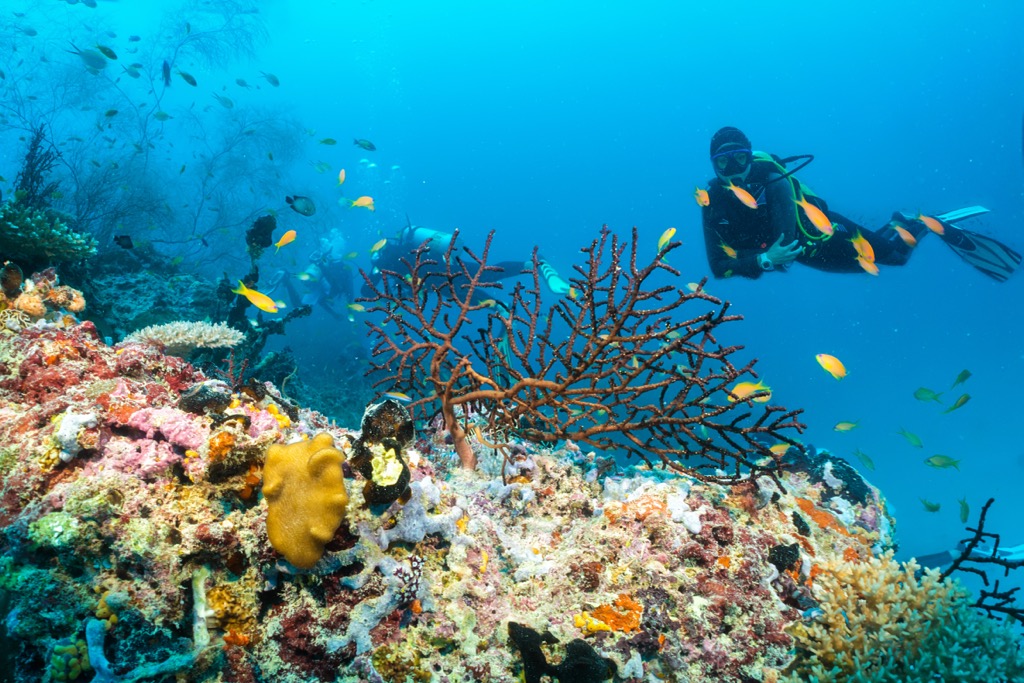
The 26 atolls of Maldives are situated to the south of India, or, more specifically, the southern state of Kerala and Lakshadweep Islands. With latitudes between 7°6′30″N to 0°42′24″S and 72°32′30″E to 73°45′54″E, this is a tropical nation.
The shortest distance to India from the northernmost island of the Maldives is 340 km (211 m). To the west of the Maldives lies the Chagos Archipelago, and further west is the continent of Africa. To the east and south is the open Indian Ocean. The equator crosses through the southernmost part of its territory, passing between Huvadhu Atoll and Addu Atoll in the southern Maldives.
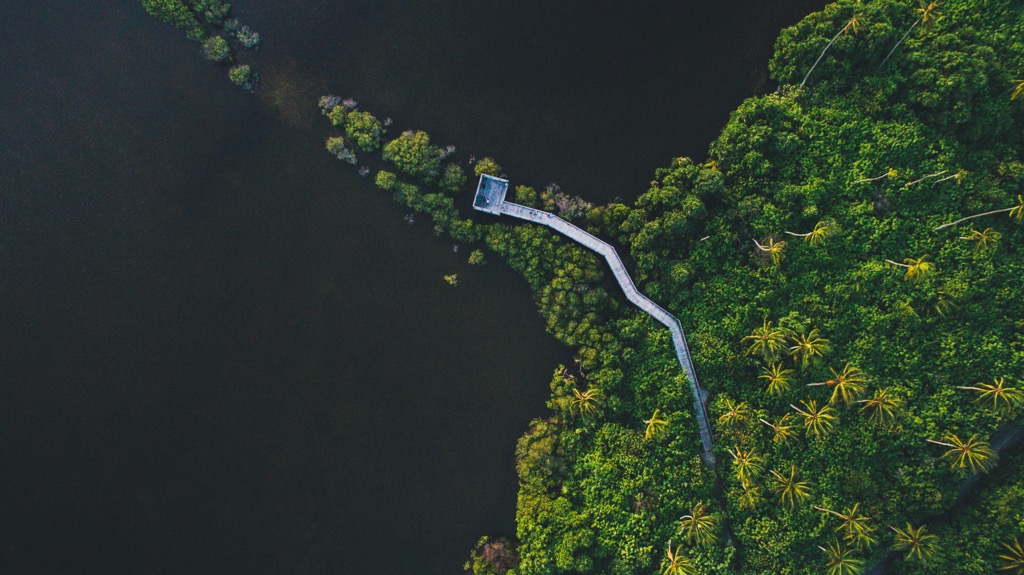
According to the 2022 census, the population of Maldives was 515,132, making it the 2nd least populated Asian country. Due to its limited land mass, it still manages to rank 7th among the most densely populated countries in the world. Most of these inhabitants reside on about 200 of the islands.
Physically, the Maldives islands are part of 26 coral atolls. Still, the government prefers to group the country into 20 so-called “administrative atolls” and a single capital city of Malé, known as “King’s Island.”
One of the world’s most geographically dispersed countries, the islands of Maldives stretch out for nearly 750 km (466 mi) in a north-to-south orientation, intersecting the equator near the most southern point of its territory. It is one of just 13 nations to have land above and below the equator. Since the atolls that form the foundation of Maldives are nearly 100% coral reef, the sandy soil makes agriculture challenging at best. The island has no rivers, and the landscape primarily comprises coastal terrain features, ranging from sandy beaches and lagoons to mangrove forests and seagrass meadows.
Covering approximately 4,500 sq km (1,737 sq mi,) the 2,041 distinct coral reefs that make up Maldives consist of around 3% of the world’s combined coral reef. It is the world’s 7th largest coral reef system. To date, 250 species of coral have been recorded in Maldives.
Maldives is made up of atolls, defined as ring-shaped coral-reef formations with a lagoon in the center. The miniature coral polyps are among the most complex living structures on earth, forming the foundation for incredibly diverse ecosystems. Two of the world’s largest natural atolls are located here: the Thiladhunmathi Atoll, with a total surface area of 3,788 km (1,462 sq mi), and the Huvadhoo Atoll, with a total surface area of 3,278 sq km (1,265 sq mi).
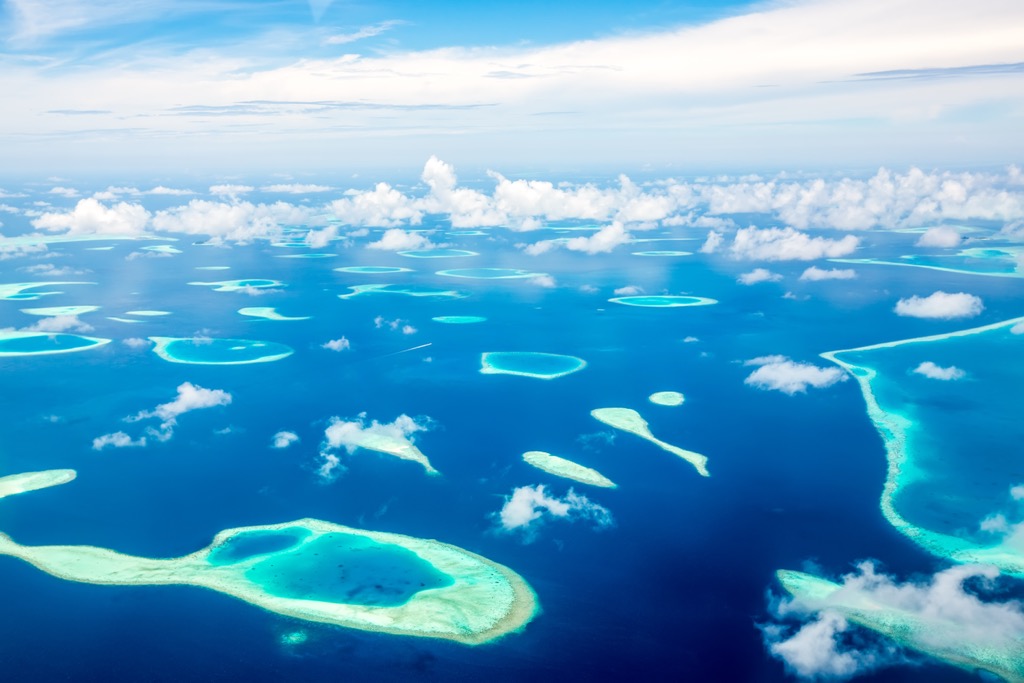
The many pristine beaches surrounded by turquoise waters are among the most popular attractions in the Maldives. What makes these beaches so special is the white sand, made up of crushed coral, which lends it a distinct “soft” feeling between the toes that never gets too hot to the touch.
These shallow, calm waters enclosed by coral reef are naturally protected from ocean currents. Some of the most famous lagoons in the Maldives include Baa Atoll Lagoon, which is stacked with manta rays and whale sharks; Vaadhoo Lagoon, known for the bioluminescent plankton phenomenon, creating the "Sea of Stars" at night; and the Gaafu Alifu Atoll Lagoon, one of the largest and deepest lagoons in the republic.
With an estimated 644 km (400 mi) of coastline, beaches are the main draw for international tourists and local sun seekers. And while it lacks the same level of fanfare, much of the shore is thick with mangroves and seagrass meadows, which is crucial for marine biodiversity.

Freshwater is scarce in the Maldives, as the limited terrain doesn’t support a single stream or river. Some of the larger islands do have freshwater lakes, but more often than not, they are brackish. Historically, locals have relied on both rainwater and a limited number of underground aquifers and aboveground freshwater floats, known as the Ghyben/Herzberg lens, for drinking water. These days, rising sea levels are jeopardizing what little freshwater is available and forcing locals and travelers to become increasingly reliant upon bottled water.
Prior to 1972, the Maldives was virtually unknown as a tourist destination. Much has changed in the last 50 years, as more than 160 resorts have joined the two original hotels. Many of these are so-called “resort islands” because they are exclusively for tourists and workers.
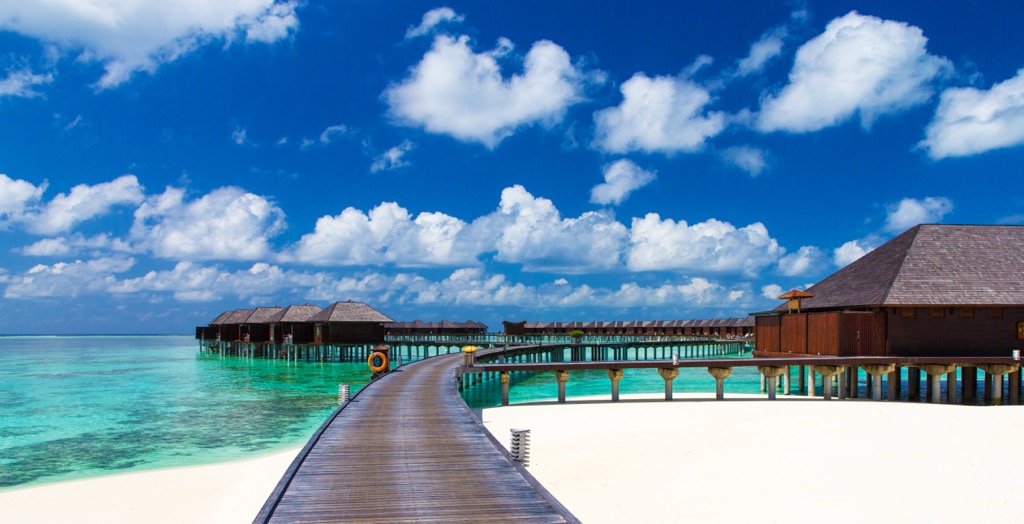
The archipelago's most frequent short-term visitors are from China, followed by India and Italy. Today, tourism accounts for 28% of the country’s GDP and 60% of foreign exchange receipts.
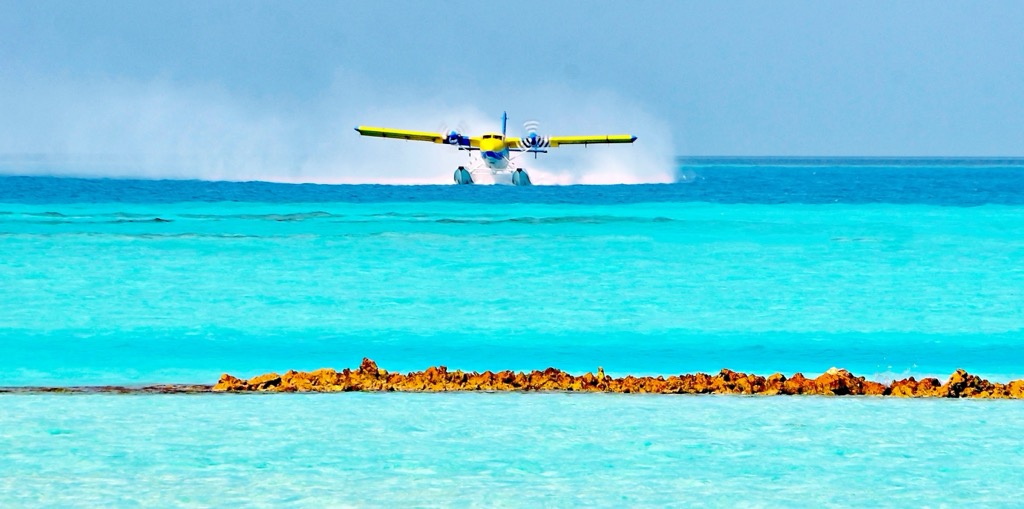
Most visitors to the Maldives arrive via the Velana International Airport, located on Hulhumalé Island near the capital, Malé.

Travelers of all nationalities are issued a free 30-day visa if they possess a valid passport, a return flight, proof of accommodation, or sufficient funds to cover their stay.
The local currency is The Maldivian Rufiyaa (MVR), but all major credit cards are accepted in the country. A 16% Tourism Goods and Service Tax (TGST) is levied at all tourist establishments. In addition, a Green Tax of US $6 per person is added to all guests staying at integrated resorts.
During the Cretaceous period, roughly 70-100 million years ago, the Maldives began as a series of underwater volcanic eruptions beneath the Chagos-Laccadive Ridge. According to Darwin’s Subsidence Theory, as millions of years passed, tectonics pushed the islands northward while at the same time, they began sinking. As the islands further eroded, coral reefs continued to grow upward toward the surface of the ocean and the sunshine, forming ring-shaped atolls around central lagoons.
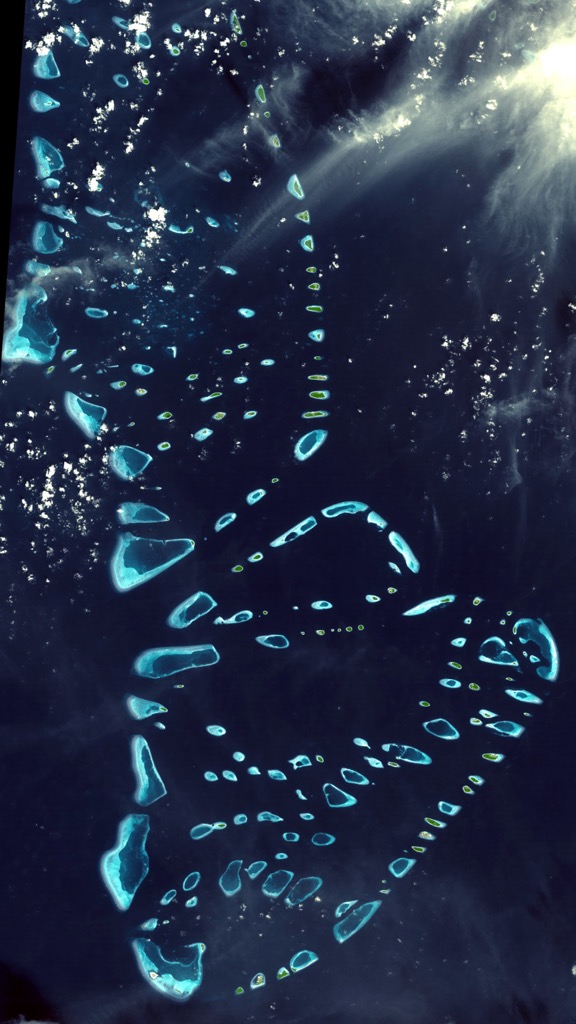
Again, this is a theory, and many questions still surround the ebb and flow of the coral reefs that make up the atolls. Thanks to satellite imagery from Landsat 7, two scientists in Nova Scotia are further unraveling the mystery of how coral reefs grow.
Today, what we now know as Maldives is what’s left of those 26 ancient atolls, plus sand and other sediment accumulated atop the coral reef. It is one of the world's largest and best-preserved examples of atoll formation.
With more than 80% of the coral reefs rising just 1 meter (3.28 ft) above sea level, it goes without saying that the Maldives will be impacted by climate change more swiftly and dramatically than most places. In fact, the harsh reality is that fractions of a meter will decide the very existence of Maldives.
The Maldives government began building an artificial island in 1997 to combat the inevitable and support housing and commercial needs. Reclamation efforts involve removing sand from the bottom of the ocean to create the new island, known as Hulhumalé. As of 2022, it is the fourth-largest island in the Maldives and growing. It is currently home to 92,000 Maldivians; the master plan is to build 36 schools, around 30 institutional facilities, and nearly as many mosques.
Terrestrial diversity is not a strong point regarding these tropical atolls. Due to Maldives’ isolated location in the Indian Ocean, limited landmass, and salty, nutrient-deficient soils, vegetation is sparse, and biodiversity is lacking. Many of the land-based animals in Maldives were introduced by humans. Meanwhile, marine life and coral reef systems are abundant, putting on an impressive display highlighting the powerful effects of the country’s equatorial location and extensive coastline. In fact, Maldives’ coral reef is believed to be the fifth most diverse ecosystem in the world.
The tropical monsoonal climate of the Maldives is characterized by warm and humid weather year-round. Average daytime air temperatures range from 29°C to 31°C (84°F to 88°F), and average water temperatures range from 27°C to 29°C (81°F to 84°F). Humidity is in the 70-80% range throughout the year.
There are two seasons in the Maldives. The dry season, or Northeast Monsoon, lasts from November to April and typically sees clear skies, calm seas, and minimal rainfall. This is considered the prime tourist season. Between May and October is the wet season, or Southwest Monsoon, which involves frequent rain showers, daily storms, and rough seas. The wettest months are typically May, June, and September.
Most plants that grow naturally in the Maldives have overcome their fair share of adversity to thrive in the poor soils, brackish waters, and generally harsh conditions. The national tree of the island republic is the Coconut Palm, and five different species produce fruits ranging in color from red to green. Thirteen different species of mangrove do their part to stave off the effects of erosion and provide protection and crucial shelter from storms.
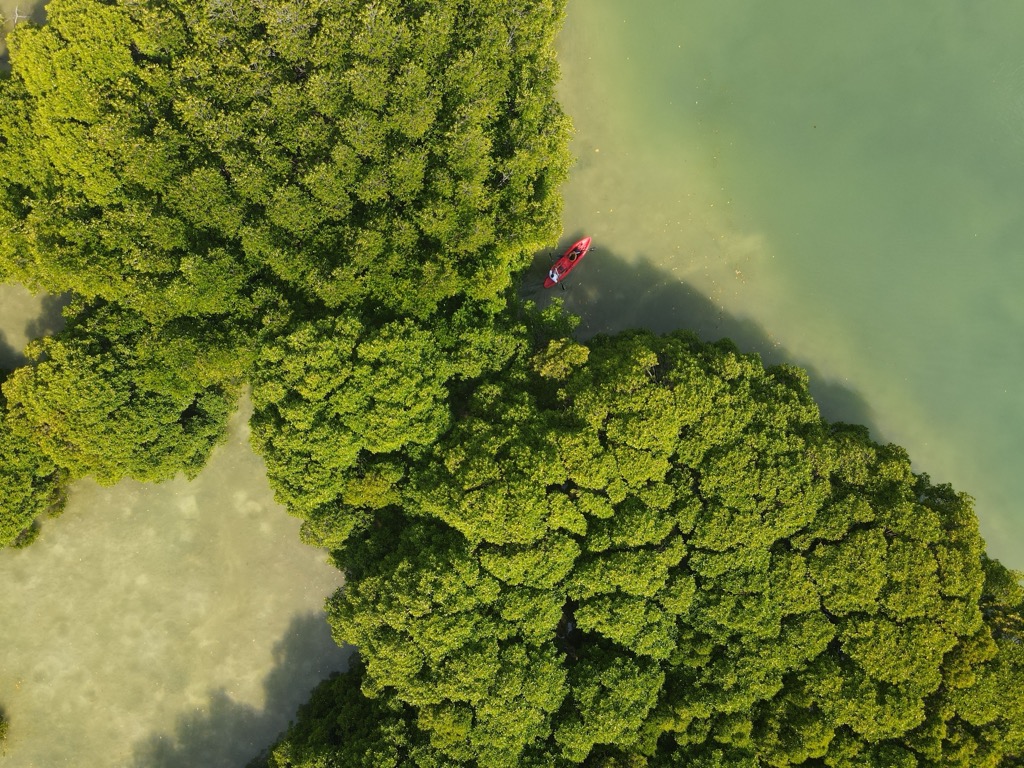
Seagrass meadows are commonly found in lagoons and shallow waters on the islands, where they provide an ideal habitat for fish, turtles, and dugongs.
Coral reefs are the heart of the Maldives’ biodiversity and its most dominant ecosystem. They often grow thousands of meters from the ocean floor. Though many theories date back to the 1800s, the formation and ongoing transformation of the atolls remain largely unsolved.

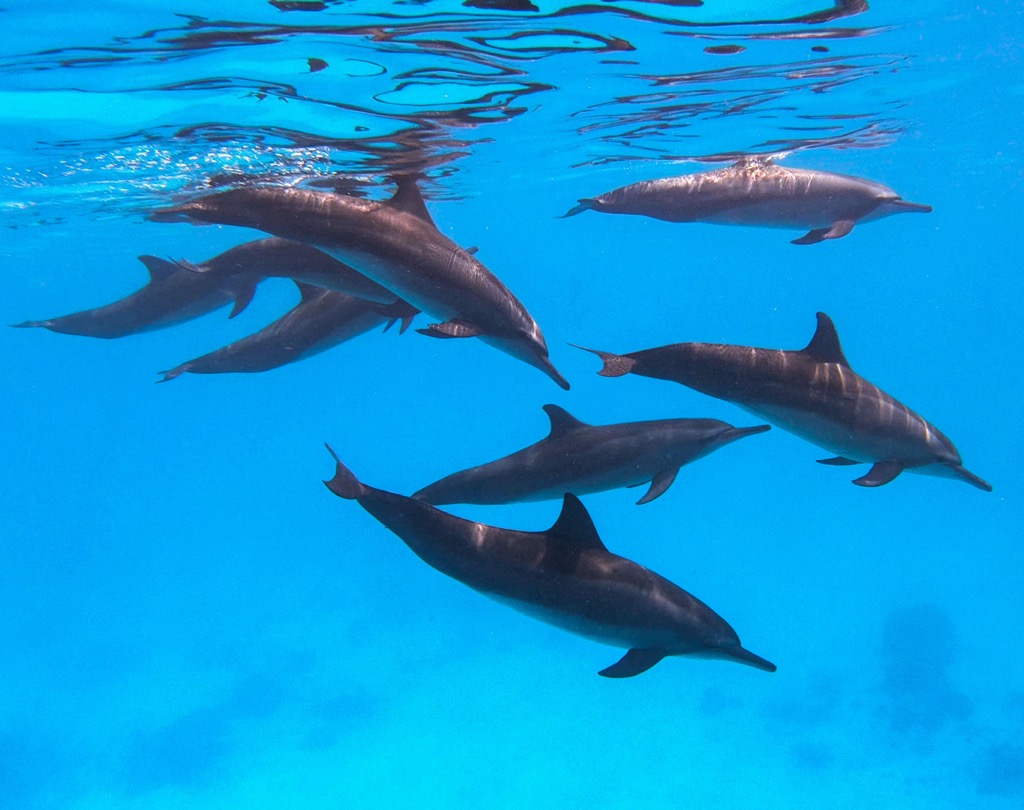
In addition to many species of coral reef, the atoll country is home to thousands of marine animals, including 21 types of whales and dolphins, 4 species of mollusks, 5 species of sea turtles, and 2,000 species of fish, including parrotfish, clownfish, and butterflyfish.
Maldives has the world's largest known population of reef manta rays thanks to the plentiful, nutrient-rich plankton they thrive on. One hundred seventy species of birds, mostly sea birds, and 2 endemic fruit bats also make their home in Maldives.
As one of the lowest countries on the planet, Maldives has prioritized sustainability efforts to help preserve its future. As a major tourist and luxury resort destination, marine conservation is among the republic’s highest priorities, with 42 different Marine Protected Areas and reef restoration projects currently underway.
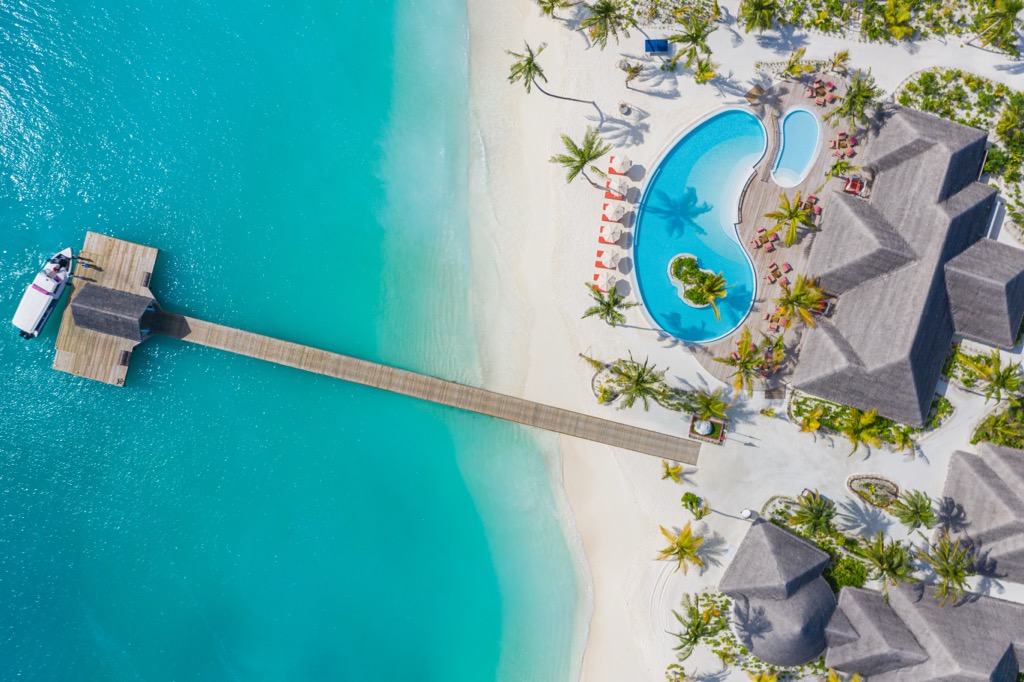
Another important initiative is the enforcement of pole and line tuna fishing and other sustainable fishing methods. The country has pledged to achieve net-zero carbon emissions by 2030, with solar farms on over 150 islands and a national ban on single-use plastics.
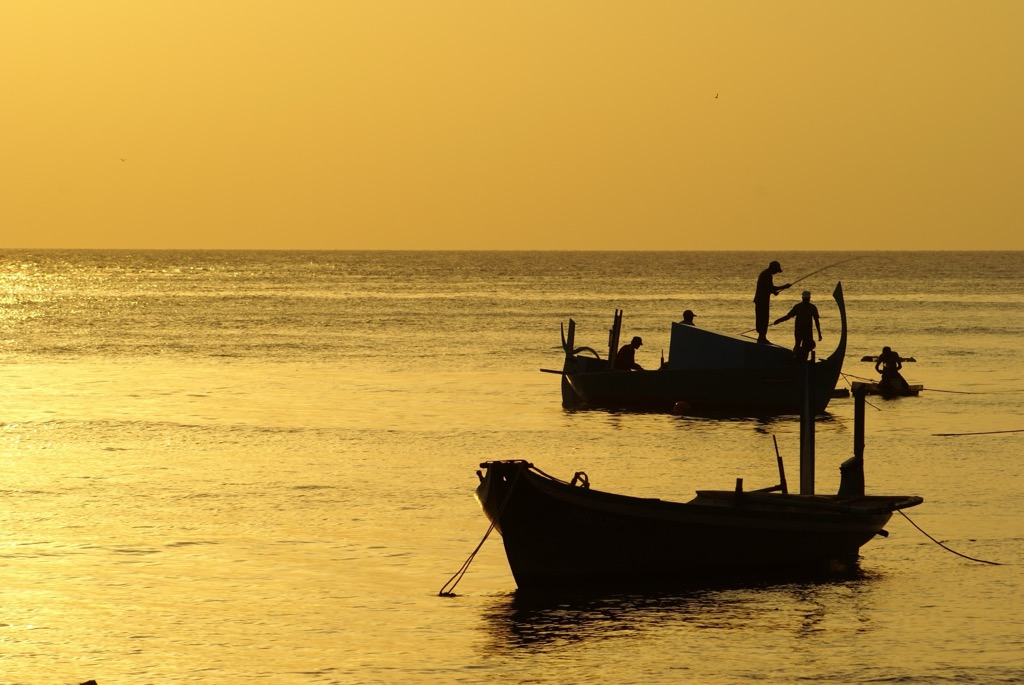
Rather than traditional terrestrial national parks found in most locations worldwide, due to its distinct low-lying terrain, Maldives’ focus is on marine conservation, preserving ecosystems like coral reefs and mangroves. There are 42 different Marine Protected Areas in the territory.
Baa Atoll was declared a UNESCO Biosphere Reserve in 2011 and is believed to have populations of 5000-6000 manta rays accompanied by plentiful whale sharks.
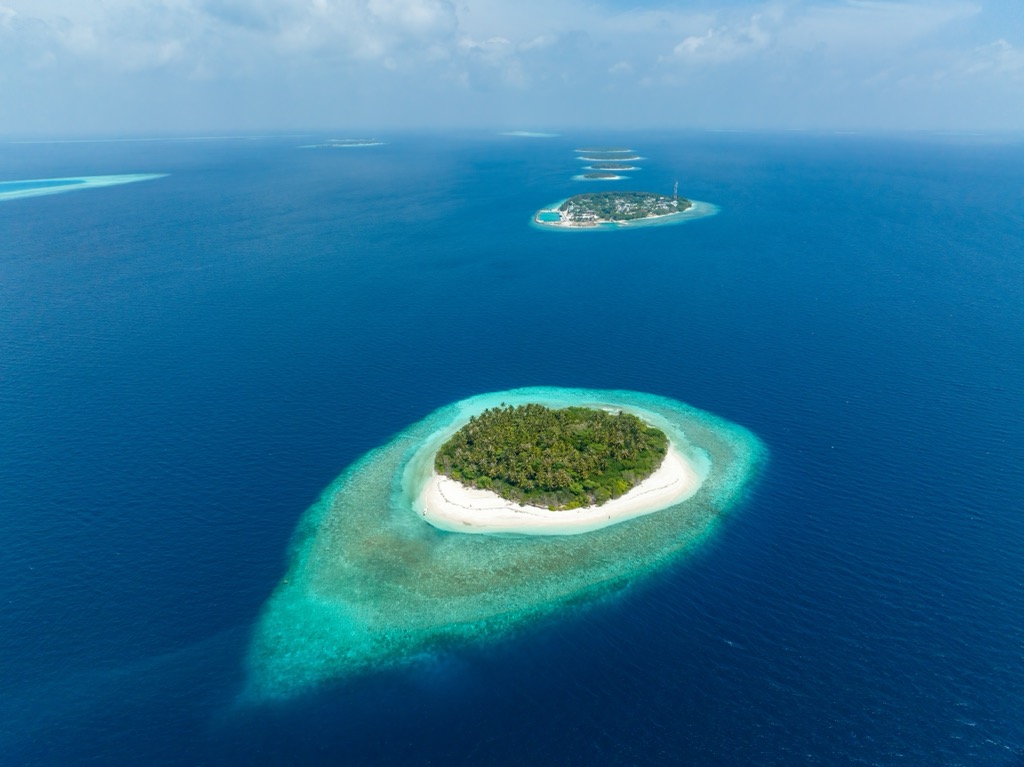
Fuvahmulah Nature Park is a protected wetlands park on the Addu Atoll in the southern Maldives. It features beautiful Eydhigali Kilhi wetlands and mangrove areas, which create habitats for native and migratory birds like herons, waterhens, and egrets.
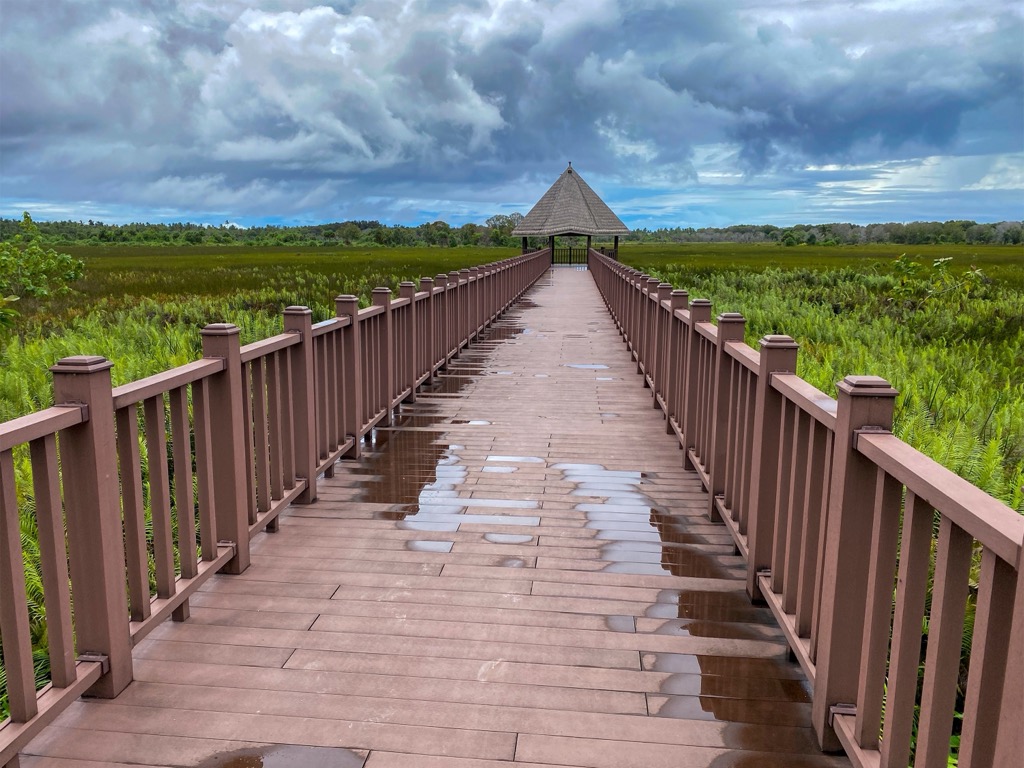
Hulhumalé Central Park, an urban park initiative on the artificial island, was designed as a green urban space to support sustainability and biodiversity. The park’s eco-friendly environment, open lawns, shaded areas, many water features, and tree-lined pathways are the fruits of Hulhumalé’s smart-city vision.
Rasfari Reef is a west-facing dive site located on North Male Atoll and one of the Maldives’ 42 MPAs. It is a top spot for snorkeling and diving, with plentiful hard and soft coral gardens and colorful fish schools. The reef is also the site of ongoing efforts to regrow corals damaged by bleaching events caused by rising sea temperatures. Grey Reef Sharks are plentiful during the Southwest monsoon season, while Manta Rays are common during the Northeast monsoon season.
Ari Atoll is among the most popular destinations in the Maldives. It has something for everyone between its world-renowned Whale Shark Protected Ara, unmatched night diving at Maaya Thila, and some of the most luxurious, expensive resorts in the country, many of which have their own sustainable tourism initiatives.
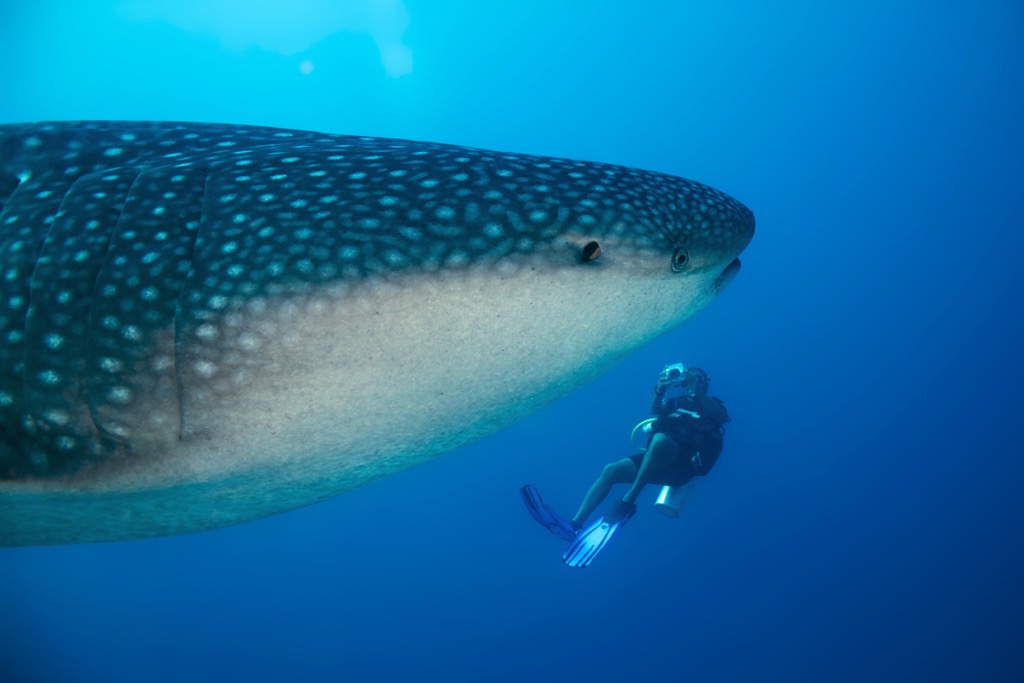
According to archeological evidence, the first settlers in Maldives are believed to be Tamil and Sinhalese people, who arrived around 1500 BCE from India and Sri Lanka. By the 3rd century BCE, Buddhism had spread to the Maldives, becoming the dominant religion for over a thousand years.
Around 947, Arab and Persian travelers first arrived in Maldives. They soon arrived in larger numbers to take advantage of the plentiful pearls, spices, and coconuts, and had a major influence. In 1153, the Maldives officially converted to Islam under King Dhovemi, who adopted the title Sultan Muhammad al-Adil. This was the start of a series of 6 Islamic dynasties that lasted until 1932.
During the colonial period, the Maldives became a British protectorate in 1887. The nation gained complete independence on July 26, 1965, and became a republic in 1968 after abolishing the monarchy, transitioning into a modern nation heavily reliant on tourism and marine resources.
As you may have guessed, the Maldives are not a hiking destination in the traditional sense due to their limited vertical relief and small land area. That said, when you’ve had your fill of scuba diving, snorkeling, and birdwatching, it does have some excellent nature walks, wetland wanders, mangrove forests to get lost in, leisurely coastal strolls, and other opportunities to get your boots sandy. Just don’t expect any long or technically challenging trails, and embrace the unique nature of Maldives for what it is.
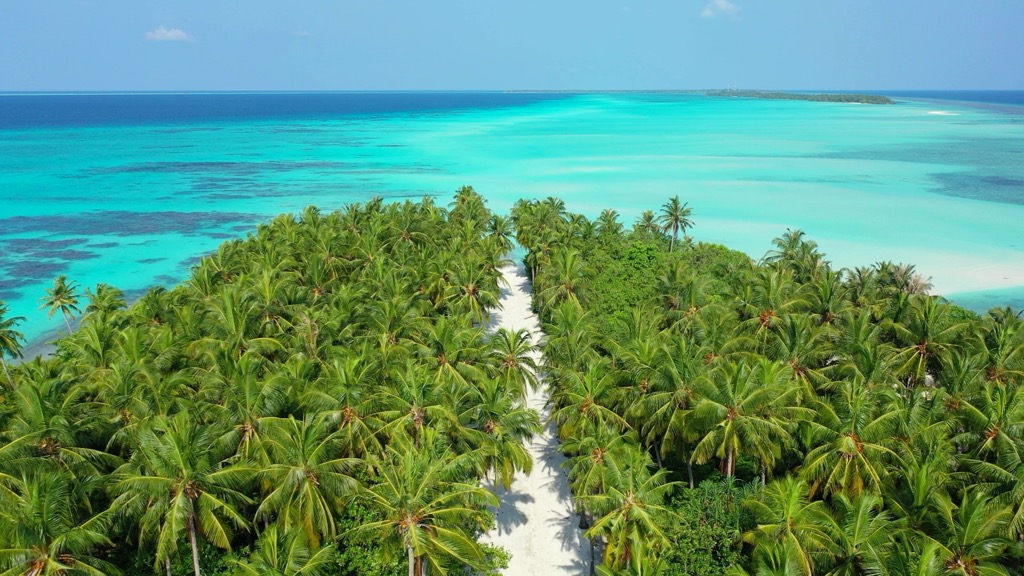
Opened in 2018, Fuvahmulah Nature Park is an eco-tourism initiative designated under the Climate Change Adaptation Project. Known for its freshwater lakes, marshes, and wetlands surrounding Bandaara Kilhi and Dhandimagu Kilhi, the park has a variety of nature trails winding through lush vegetation and mangrove forests. It is also one of the best places on the islands for birdwatchers to break out their binoculars and get a closer view of some exotic avian species.
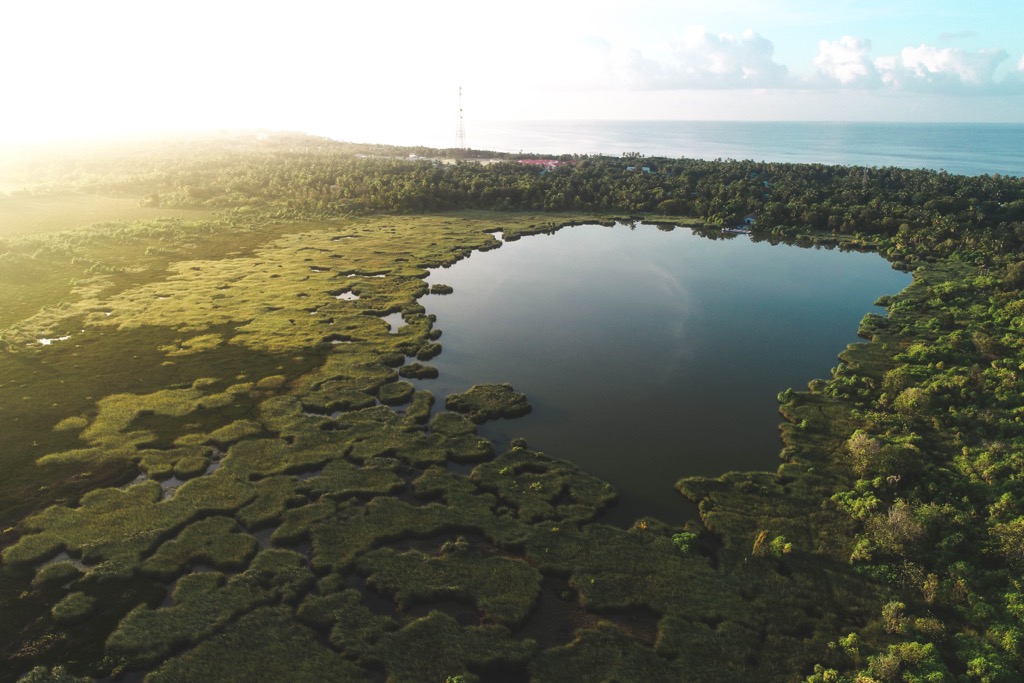
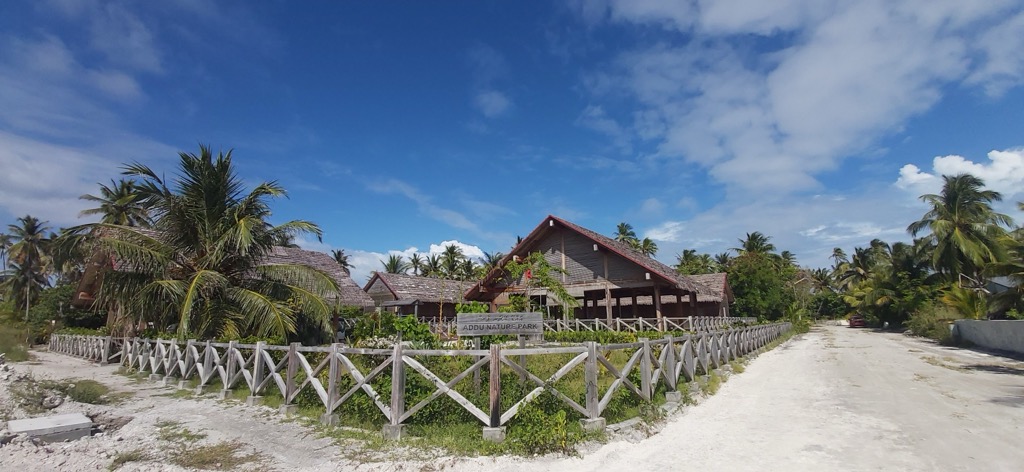
Located on the southernmost atoll of the Maldives, Addu Nature Park features well-maintained trails through the Eydhigali Kilhi wetlands and protected Koattey Beach on Hithadhoo Island. Explore independently or choose a guided nature walk to experience the area on elevated wooden boardwalks.
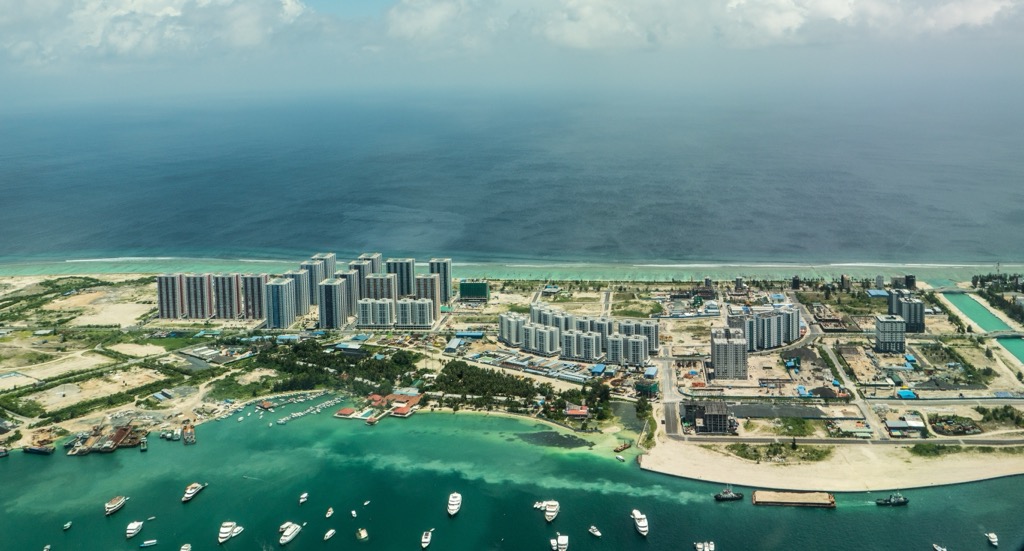
Yes, it’s true that Hulhumalé is an artificial island, but it’s still home to some of the best trails in the country. Opened in 2016, it is just a 10-minute boat ride from the capital. The manicured trails meander through the designated green space,, making it an excellent option for anyone staying near the capital to stretch their legs. This floating island does not allow cars, and the canals are the main infrastructure. Bicycles and bare feet are the preferred conveyance here.
This 1.9-mile loop trail on the Lhaviyani Atoll is the best way to experience the coast of Naifaru on foot. It takes about 30 minutes to complete and gives a perfectly short and simple tour of the island.
The capital city of Malé is located in the southern part of the North Malé Atoll (Kaafu Atoll) and, by some measures, is one of the most densely populated cities in the world. With 211,908 inhabitants as of the 2022 census, “King’s Island” is home to around a third of the country’s population. Malé is the government seat for all of the Maldives, so you’ll find hospitals, government buildings, schools, and tourist centers. In most cases, Malé is walkable, but public transportation, including taxis, ferries, and bus service, is available.
Though many travelers use Malé as a launching point to their chosen resort island, for anyone spending some additional time here, the capital city is known for its colorful houses and narrow streets, as well as a number of historical Mosques and museums worth a visit.

A reclaimed city built up with sand from the sea floor, Hulhumalé was established in October 1997 to address overcrowding in the capital and promote sustainable urbanization. Spanning 4 square kilometers, it is built 2.1 meters above sea level to mitigate risks from sea-level rise and is connected to Malé and Velana International Airport via the Sinamalé Bridge. Designed as a modern, eco-friendly settlement, Hulhumalé will become Maldives' first smart city.
Known as the “Heart of the North,,” Kulhudhuffushi is named after the mangrove. The Saturday Market, held at Bandaara Road, is the hub of the community. Each week, vendors, locals,, and tourists gather to stock up on fresh fish, fruits, vegetables, as well as handicrafts and locally made items like palm mats and baskets. For those staying at luxury resorts, it’s a good opportunity to experience authentic Maldivian culture and community.









Yes. Maldives has 10 named mountains.
Maldives has 10 named mountains.



.jpg)
