Scan the QR code and open PeakVisor on your phone
Les 2 Alpes, abbreviated L2A, is one of Europe's largest and highest-altitude ski resorts. It’s known for its vast pistes, glacier skiing, and party atmosphere in the base village. Over 200 kilometers of slopes and 44 lifts service this massive station, which ranges from 1280 meters (4,200 ft) in Mont-de-Lans to 3,523 meters (11,558 ft) at the summit, for a 2,243-meter vertical drop. It’s the 5th-highest ski station in Europe, trailing only Zermatt/Cervinia, the Aiguille du Midi, Saas-Fee, and La Grave (located on the backside of L2A and accessible from the top). PeakVisor readers will be pleased to learn that L2A also hosts some of Europe’s best off-piste skiing, both in the resort and the surrounding backcountry.
This is our guide to the best of L2A, from off-piste to piste, to snow and weather conditions, to lodging, parking, restaurants, and more. I’ve lived in the area for years, and PeakVisor is not sponsored by L2A, so I’ll offer my honest opinions.
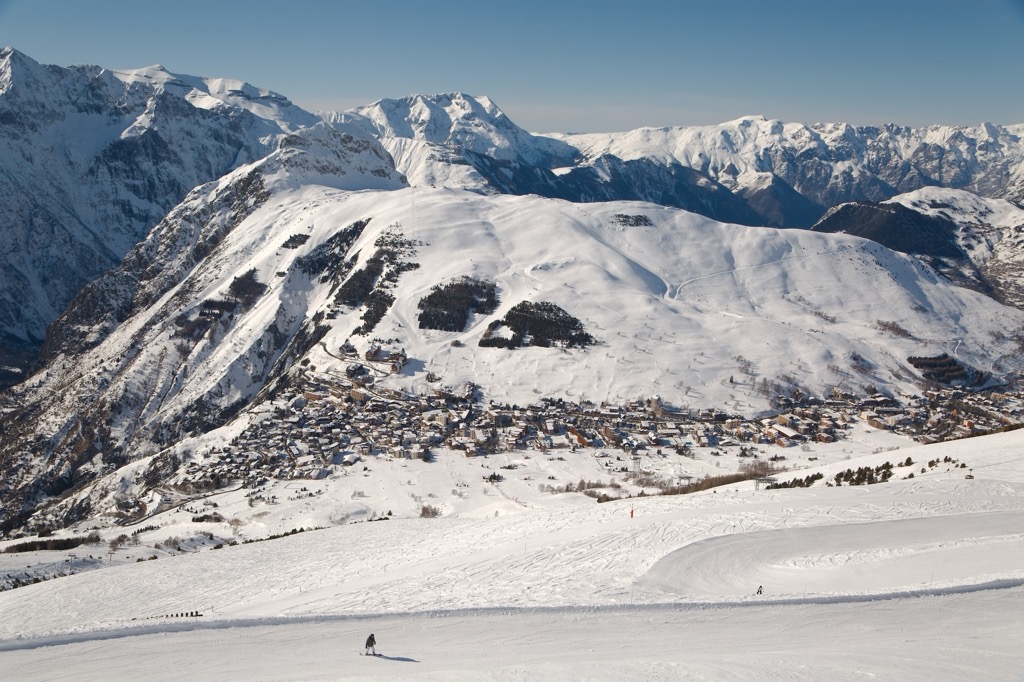
L2A is situated in the Western Alps, in the department of Isère, on the edge of the Massif des Écrins, one of the largest mountain groups in France. It’s 70 kilometers east of Grenoble (capital des Alpes), the nearest major city. The resort shares some boundaries with the Parc National des Écrins, though it’s not a major entryway into the park itself.
The most convenient airport is Grenoble Alpes-Isère (GNB), about 90 minutes away by car (shuttle services available). Lyon-Saint Exupéry Airport (LYS) is another option, approximately two hours away. These are the most convenient airports for visitors from the EU.
International visitors may consider Geneva Airport (GVA). Though it requires a longer drive of over three hours, Geneva has the best flights from international destinations like Canada, the U.S., the Middle East, and Australia, to name just a few.
For those traveling by train, Grenoble's TGV station is a wonder of human ingenuity. The train reaches speeds over 300 km/h, meaning the trip from Paris to Grenoble is just three hours.
The LER55 bus leaves from the Grenoble station (both train and bus) and drops off at the Chambon dam, where you’ll catch a regional bus to the village. Once in L2A, the village features a free shuttle bus system with eight routes.
Driving to Les 2 Alpes is straightforward via the A480 motorway from Grenoble, followed by the RD1091 through Le Bourg-d'Oisans. However, winter driving conditions can be challenging, especially as you near L2A.
Pro-tip: There is no free parking at L2A! It’s annoying, but they try to limit car traffic in the village, and fair enough. There are plenty of buses.
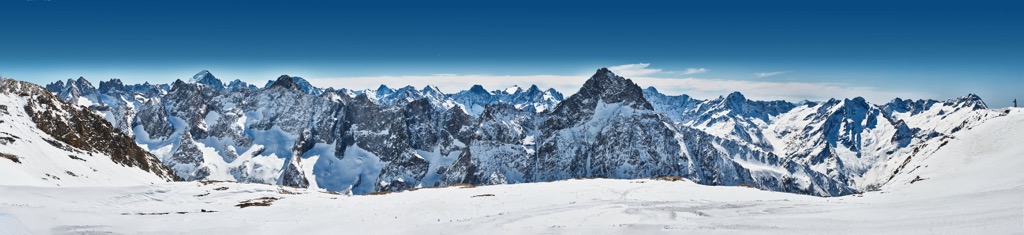
L2A has one of the longest ski seasons anywhere in the world. Once upon a time, the Mont-de-Lans Glacier offered skiing nearly all year round, but the glacier ice has recessed, and more ice is exposed to the surface by the end of the summer.
Each year, L2A opens the first weekend of December. Conditions vary, but the upper mountain often has decent conditions at this time if it’s been a snowy October and November. The snow coverage in the village is usually still thin this time of year.
L2A always closes to season pass holders the first weekend of May. However, the resort remains open during May for a “spring season,” where the upper half of the Jandri, the Signal chair, and the glacier lifts remain open. The regular season pass no longer works, but there is a reduced fare for day tickets (50 euros in 2025).
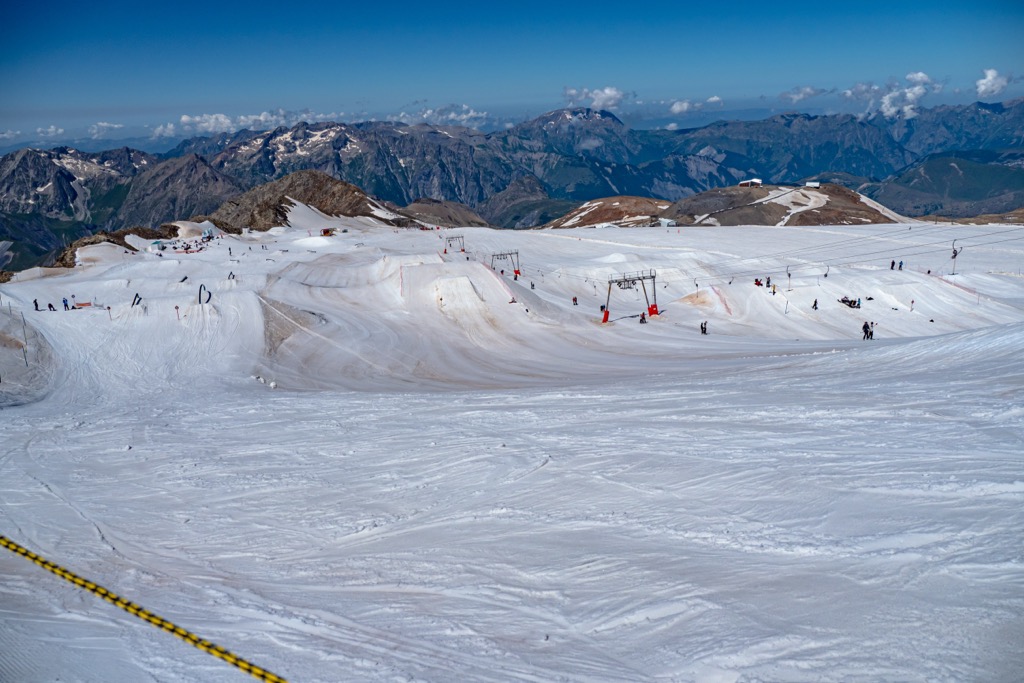
May can offer surprisingly good snow conditions on the glacier, though there is really only a small amount of off-piste to be had between the 3400 station and the signal lift. The summer season is even more limited, with only the low-angle slopes on the glacier remaining open. These seasons attract two primary groups: freestylers training at the snowpark and racers training on the pistes. The lifts generally close around the beginning of July.
L2A is a mixed bag when it comes to snow and weather. The resort generally receives ample snowfall, especially up high. There are also plenty of beautiful sunny days, thanks to the proximity to the Mediterranean. Often, the sun will poke out the day after a big snowfall; you get a fair number of bluebird powder days here.
On the flip side, L2A is west-facing, which means it’s subject to relentless winds as weather tracks from west to east across the globe. Another issue at L2A is visibility; there are no trees on the upper mountain, and it can become incredibly foggy. You can expect a couple of low-visibility days if you come for a week-long vacation.
As I mentioned above, L2A receives a decent amount of snowfall. It’s not the snowiest resort in Europe, but it’s one of the most snow-sure because of its elevation.
Generally, you can expect the base depth at the summit to exceed 3 meters (10 feet), though the base at the village rarely exceeds 1 meter (40 inches). Moreover, the village frontside skiing usually melts out by April, especially in the warmth of recent seasons. It’s a shame, because the terrain here is excellent.
You can expect dozens of powder days each season, but they have a caveat. The snow is often wind-affected, sometimes severely. I’ve shown up expecting insane powder only to find an unskiable windcrust. The snow is almost always at least partially wind-affected. Occasionally, you get a snow that falls with less wind and will have light, fluffy powder. This tends to happen more in the spring.
If it hasn’t snowed in a while, the conditions at L2A can deteriorate fast. That’s because the resort is mainly south- and west-facing and gets sun in the afternoon. The result is icy pistes, especially on the lower mountain. There is also some north-facing terrain on the upper mountain—you can often find the best snow here. More on that below in the Lifts and Slopes section.
On sunny days from February onwards, you can get excellent soft, slushy conditions on the lower mountain—the upper mountain transitions to spring skiing in April and May. Overall, L2A can offer great spring skiing. If you like skiing in warm sun and slushy pistes, consider coming later in the season to save on accommodation.
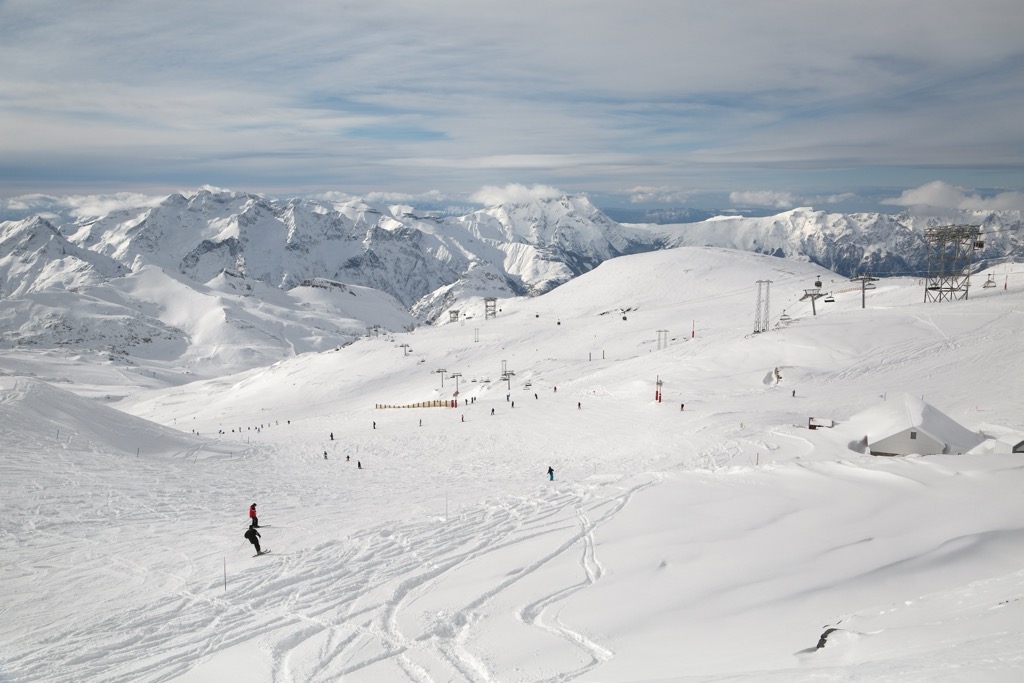
The weather at L2A is all over the place due to the variety of aspects and the mind-blowing vertical drop. One minute, you can be freezing at the top of the glacier. Twenty minutes later, you’re drenched in sweat at the base village. Here’s what to expect and how to prepare yourself for it.
L2A has massive temperature variations between the glacier and the base village. You’ll want to be prepared with plenty of layers. If it’s cold enough to snow at the base, you can expect it to be below -10℃ (14℉) on the glacier, with added wind chill. Though it rarely gets below -20℃ (-4℉) at the top, the wind chill can make it feel much colder.
When it’s cold, snowing, and blowing, you want to ski with a buff to protect your face. I usually don't ski with a buff, but at L2A, it doesn’t take long to get frostbite on the tip of your nose or cheek.
As I mentioned earlier, L2A can get extraordinarily foggy. Remember to pack your low-light goggle lenses along with the high-light ones; it can be sunny and foggy intermittently on the same day.
Heavy snow, wind, and massive drops in altitude can make skiing at L2A a wet endeavor. Be sure to have waterproof outerwear if you plan on skiing on snowy days. I find it hard to stay dry because snow accumulates on you at the top of the mountain and then melts as you reach the lower mountain. Then the wind makes you cold again at the top.
With no trees outside the lower mountain and a variety of sunny aspects, the sun exposure at L2A is intense. Always remember to wear sunscreen, even in mid-winter. You’ll see people in the lift line who clearly forgot to put it on, and it’s embarrassing.
L2A is so big that there’s almost always some good snow to be found somewhere on the mountain. But not all months are created equal. Overall, January and March are the best months to ski here. February is the French vacation, and though L2A is always crowded, it’s particularly awful around this time, especially on the pistes.
L2A usually opens on the first weekend of December. It’s hit or miss, depending on how much early-season snow there has been, but you can sometimes find excellent snow conditions during this time.
The sun angle is low and the air is cold, so the snow stays soft for days after a storm in December, which is not something you can say about April, March, or even February. However, L2A faces west, so it always receives some afternoon sun, one of the reasons it’s so popular.
I recommend sticking mainly to the pistes in December. You can find good snow off-piste, but there are so many rocks that if you don’t break your leg, you’ll surely damage your skis.
January is a magical time in the French Alps. The sun is low, the snow is cold, and the holiday crowds have departed on their merry way. All it takes is one big storm on top of a consolidated base for the off-piste to start filling in. Meanwhile, the pistes are generally in good condition and not nearly as crowded as during Christmas, February, and March.
Overall, February is an ideal time to visit L2A, except for the fact that it’s the French vacation. That means exceptional crowds. Fortunately, L2A is a megaresort built to handle the masses, so everything still runs efficiently. One of the best things about L2A is that you rarely wait in lift lines because there’s so much capacity. The off-piste tends to be in great shape in February, with more of the lower mountain itineraries opening up.
However, although the lift lines aren’t bad, the pistes get excessively crowded. You have a lot of young kids skiing out of control and icy pistes from the snow getting scraped off by too many skiers. There are many injuries on the mountain; the helicopter is a continual presence in the skies during this period. The mountain is like a giant skiing factory, churning out the rental skis and piste laps. Sadly, this is the culmination of most people’s ski experience these days.
To top it all off, this is also the season (Feb-April) when busloads of university students begin arriving for week-long stays. Watch out for drunkenness on the mountain.
March is well-known as the month to come to the Alps for off-piste skiers. Overall, it’s a good balance of snowpack and coverage, with regular storms bringing fresh snow. I’ve seen a lot of dry months in the Alps over the years, but I’ve never seen a bad March.
For piste skiers, it can be icy on the upper mountain from the sun's effect and nightly refreeze. The lower mountain is usually slushy goodness at this time, however.
April tends to be limited to the upper mountain, with variable snow conditions. Depending on the day, it can be spring skiing, ice, or powder. You can have some incredible days in April and some lackluster days.
When it does snow on the upper mountain, it’s often quite good. Upper mountain snowpack is peaking around this time, and the rocks are covered, with new lines opening up.
The mountain closes to season pass holders after the first weekend of May, but the top lifts stay open for a spring season of glacier skiing. The lift pass is slightly less expensive. There is limited terrain, but the spring skiing can be excellent. Don’t expect many crowds. And don’t forget your sunscreen!
L2A is a vast ski area that will take time to learn. The layout of the mountain isn’t the easiest to understand. The mountain ascends a long, ramping plateau from west to east. There are several cat tracks and traverses between areas. The whole mountain is not always open; various lifts and zones will be closed depending on the weather or season.
The Jandri is the resort’s main artery and forms the central backbone of the ski terrain. It’s one of Earth’s most impressive cable cars, opened for the 24-25 winter season. Manufactured by the French company Poma in two segments, the Jandri ascends 1,600 vertical meters (5,300 ft) in about 14 minutes using a 3S tricable setup, depositing 3,000 people per hour onto the upper mountain.
From the 2nd Jandri, the glacier sector features three rope tows and a funicular tram, ascending an additional 320 meters from the 3200 station. The Signal drops off to the left. Meanwhile, you ascend a small magic carpet (or walk up a small hill) to the far left to access the Pierre Grosse zone.
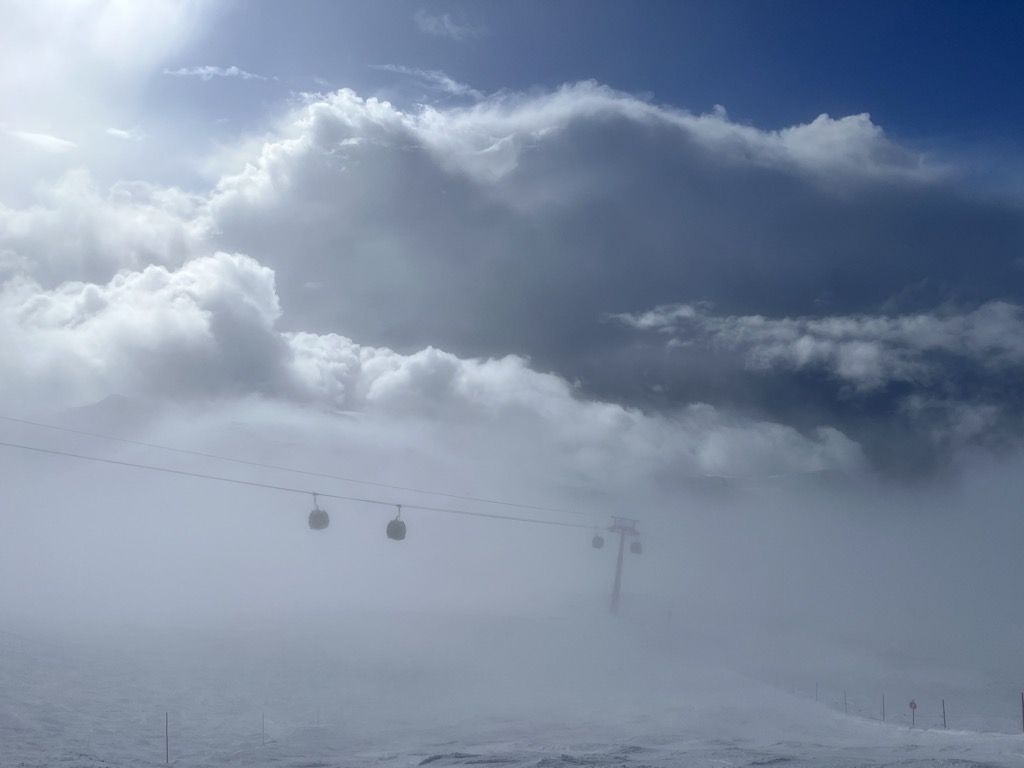
Lower down, the Toura and Bellecombe lifts head up from the Jandri on the looker’s right, while the Fee and Thuit descend on the looker’s left.
The frontside of the L2A base station is serviced by the Belle Etoile and Diable lifts. These reach the Crêtes and Super Diable, servicing the lower mid-mountain.
Also from the L2A base station, on the opposite side of the valley, is the Vallée Blanche, a collection of grassy meadows and easy/intermediate pistes.
L2A is also connected by lift to the villages of Venosc and Mont-de-Lans.
Obviously, this explanation isn’t going to help you that much when you’re actually skiing. For a detailed pocket map of L2A, check out the PeakVisor app. We’ve got all the pistes and lift openings/schedules live in real-time, all embedded onto the best 3D Maps out there.
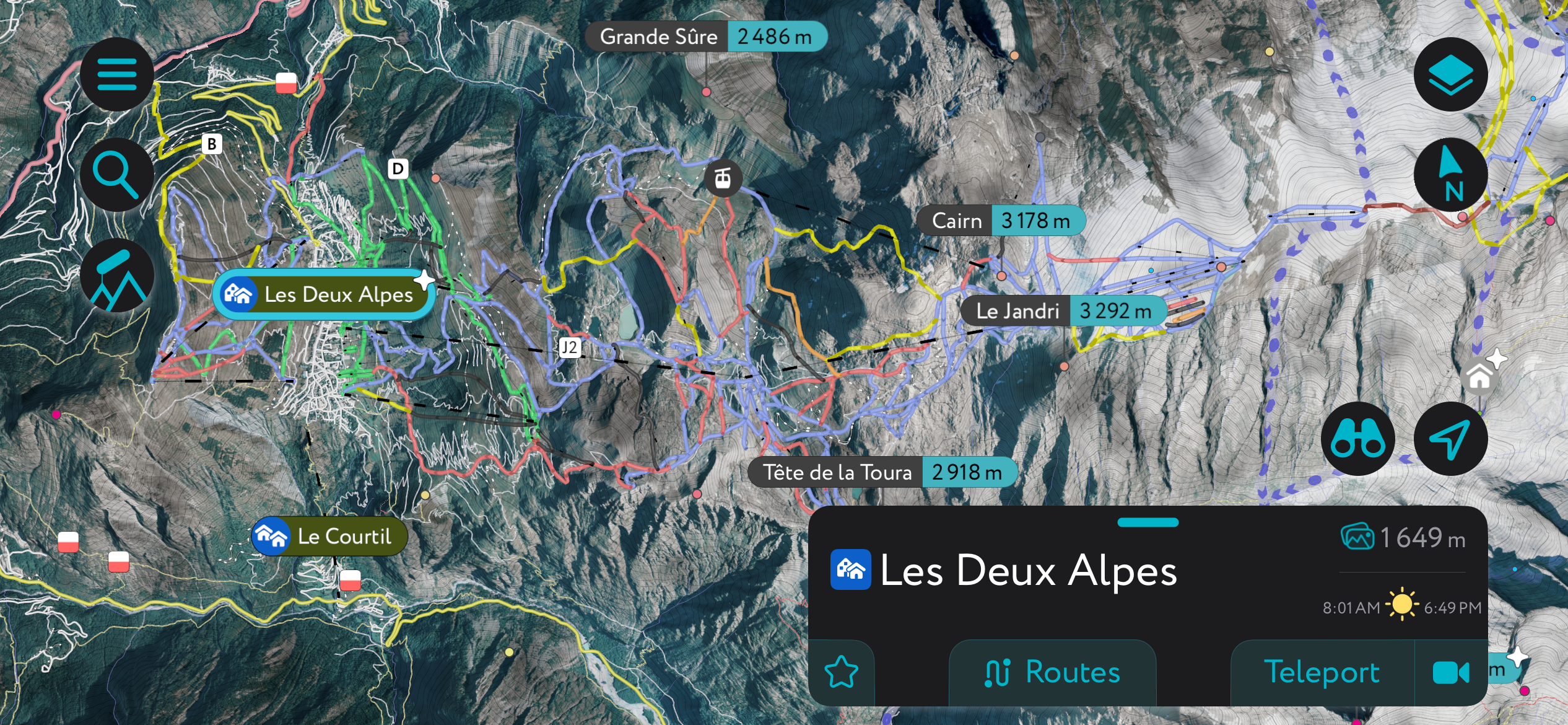
L2A is as diverse as you can get from a single ski resort. The place is massive; it covers every aspect across a range of elevations, so you can always find good snow if you know where to look.
Overall, despite there being over 200 km of them, the pistes are too crowded for my liking at L2A. With 10,000 skiers on the mountain during the non-busy times (20,000 in February), even 200 km isn’t enough real estate. Fortunately, few of these people ever venture off-piste, which means plenty of fresh tracks and great snow.
You don’t have to race to the top: some of L2A’s best pistes and terrain are on the lower mountain.
The Vallée Blanche, not to be confused with Chamonix, is the best place for beginners at L2A. It’s on the opposite side of the base village from the main ski area, so it can get passed over. Three lifts serve this side, so you can access it from either end of town. Whereas the beginner trails on the main side are merely cat tracks, these are actual slopes.
Better yet, the Vallée Blanche is east-facing, so it gets morning sun. Start here in the morning for some warm-up laps on the piste before heading to the other side.
The lower front side is loads of fun on both stormy and sunny days. The Belle Etoile and the Diable lifts are the two main lifts that service this area. There are also several short surface lifts for beginners starting from the village.
When it’s nuking snow, this is the only place where you can see anything. There are a few patches of forest that provide visibility. In between are the alpine meadows, which have been used for summer grazing for centuries. One of the best things about this zone is the relative lack of rocks, meaning you can ski off-piste without too much of a base. The forest under the Belle Etoile and the meadows below the Diable lift are the two best zones to explore for freshies.
My favorite pistes are the Vallons de Diable, from the Diable, and the Valentin, a black piste from the Belle Etoile.
A third piste, the one descending to Mont-de-Lans, is also incredible. Nobody ever comes down here! You can have this zone to yourself.
The Crêtes chair is great for intermediate piste skiers. The lift basically serves one wide piste. It’s popular but one of the widest pistes on the mountain, like a football pitch. There’s often good snow to be found here.
The Bellecombe lift ascends a steep north-facing headwall, offering some of the best in-bounds off-piste terrain at L2A. The snow here is often much better than elsewhere on the resort, because it’s north-facing and protected from both sun and wind.
Take a right off the Bellecombe, and a black ungroomed piste heads under the lift, usually a mass of large moguls. Further down, a traverse above this piste takes you across a shallow ridge to a large bowl with a few fun chutes. The snow here is soft and deep; if only it were a longer run. This zone deposits skiers near the bottom of the Bellecombe lift.
Take a left off the Bellecombe, and you can access the Jandri mid-station and the Toura sector.
The Pierre Grosse is home to L2A’s best in-bounds off-piste terrain. You can scope everything out from the gondola. It’s all right below the lift. Here’s the route.
I love this zone. It’s steep, varied, northwest-facing, long, and easy to pound out laps on. Best of all, there are two giant gazex machines and a bombline for avalanche control. Many people ski here without a backpack or beacon, but I recommend both. I always ski with mine.
Once you exit the gondola, there are a couple of ways to enter. You can ski to the top of the Signal and duck the rope beside the piste, but the top is usually rocky. The best is to find the official gate down the hill. You’ll see the beacon checkpoint.
The top is a series of shallow couloirs emptying into a large bowl. After the bowl, trend left to avoid the cliffs on the skier's right. This is followed by the best pitch, a vast bowl where you can get plenty of powder turns before exiting through a series of chutes back to the piste and then the gondola.
With the uplift on the Pierre Grosse gondola taking all of 10 minutes, you can lap the Chalence all day, and many do. But beware, it’s somewhat of a labyrinth, and you don’t want to go back here in low light if you don’t know your way around.
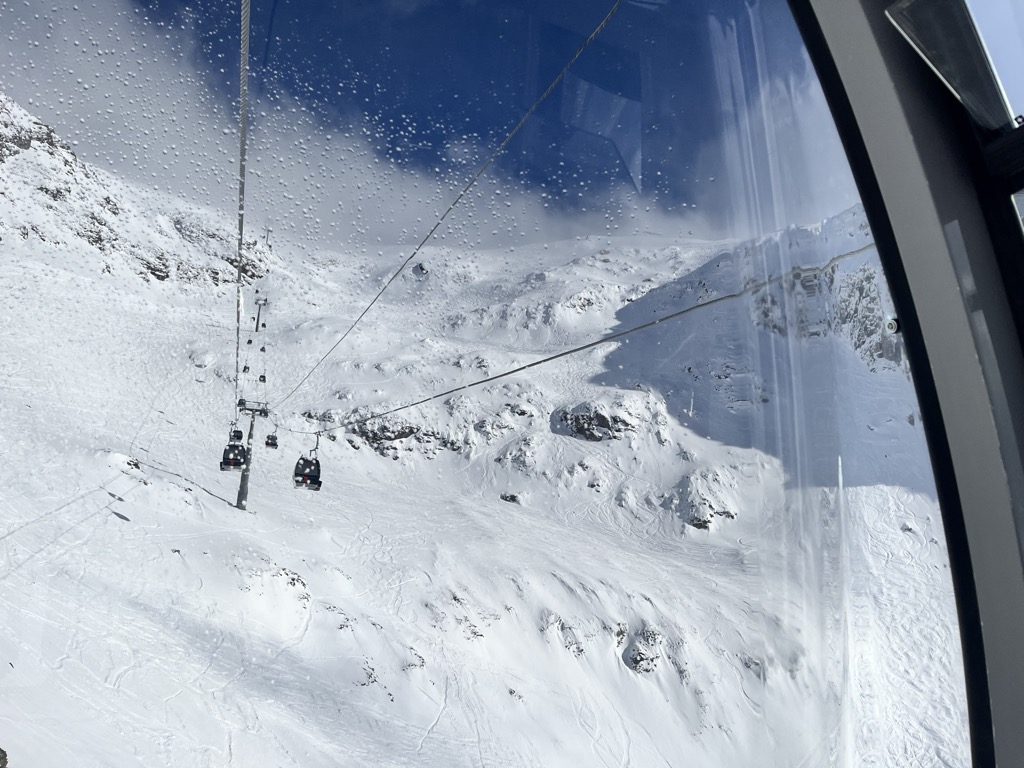
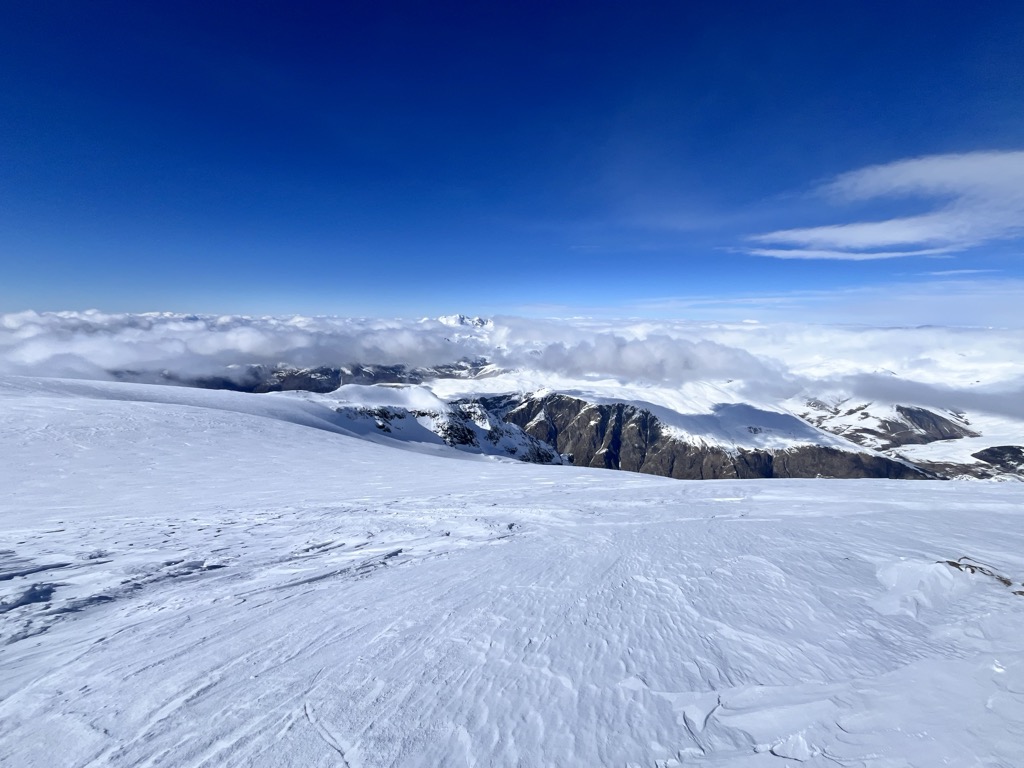
The glacier has two t-bars and a funicular reaching 3,400 meters, and a third t-bar, Lauze, reaching 3,523 meters. From the 3,400 station, you can head north (left) over the Glacier de Mantel and down to the Signal lift. It’s a fun off-piste run that requires a bit of route-finding through rocks at the bottom, as well as a traverse back to the lift. There will likely be tracks to follow.
Otherwise, you’ve got a few standard pistes. These hold good snow conditions due to the glacier, but they’re fairly short.
The Fee and Thuit are fun, less-popular zones on the left as you head up the Jandri. Expect to find a variety of pistes and off-pistes. There’s good terrain here, but it’s south-facing, so you’ll often find poor snow conditions, either icy or sticky. But this could be the spot if you’re looking for afternoon sun in an uncrowded setting.
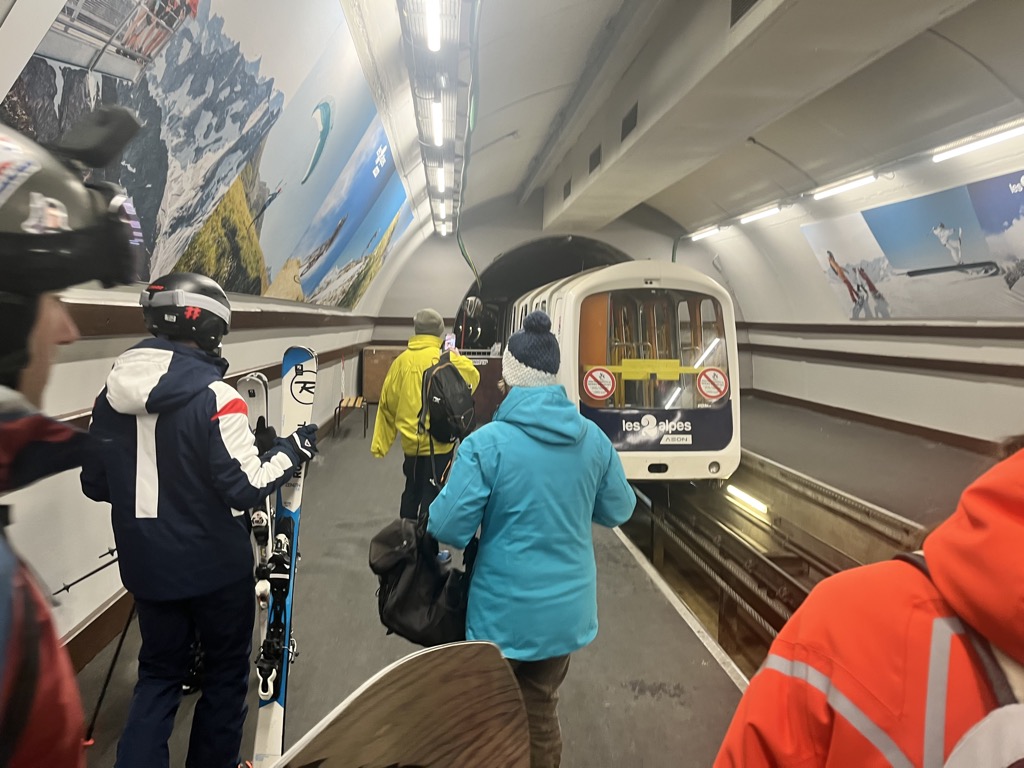
The Vallons de Diable is the perfect place to start exploring the backcountry surrounding L2A ski resort. It’s just outside the resort boundary—you dip out and return to the resort without hiking—and it’s less avalanche-prone than any other L2A backcountry objectives.
Start by taking the Super Diable (continues above the Diable) and head down the piste below the lift. Stay left, sticking to the red piste rather than the black. This piste is also called the Vallons de Diable! Just before you reach the bottom of the Super Diable lift, there is a big, sweeping turn back skier’s right. On the left is a small backcountry gate.
The first section is a bit steep, but it mellows out into an alpine meadow. The Vallons de Diable piste trail is to your right. I usually ski until about 2000 meters, then traverse back to the resort. You get about 450 meters of excellent untracked powder skiing.
I love this run because it’s easy to lap. It’s not a secret; it usually has a bunch of tracks by the end of the day, which is no surprise because it’s fantastic and so easy to access. But it gets tracked out much slower than anything at the resort.
Here’s a link to the location of the entrance on the PeakVisor desktop ski touring map.
The Combe Interdit (English: forbidden bowl) is excellent if you know the route. However, it’s a total maze back here. You often have to stop and check to make sure you’re going the right direction. There are several variations; some of them are quite prone to avalanches.
Most variations involve a short hike or ski tour back to either the Pierre Grosse or, if you go further down, the Fee lift.
The easiest route down the Combe Interdit is not difficult from a skiing standpoint; it’s the route-finding and avalanche awareness that make this a committing excursion. You should always have full ski touring gear for the exit, or in case you need to turn around.
The Combe Interdit is between the Pierre Grosse gondola and the Signal chair. Here’s a link to the location of the entrance on the PeakVisor desktop ski touring map.
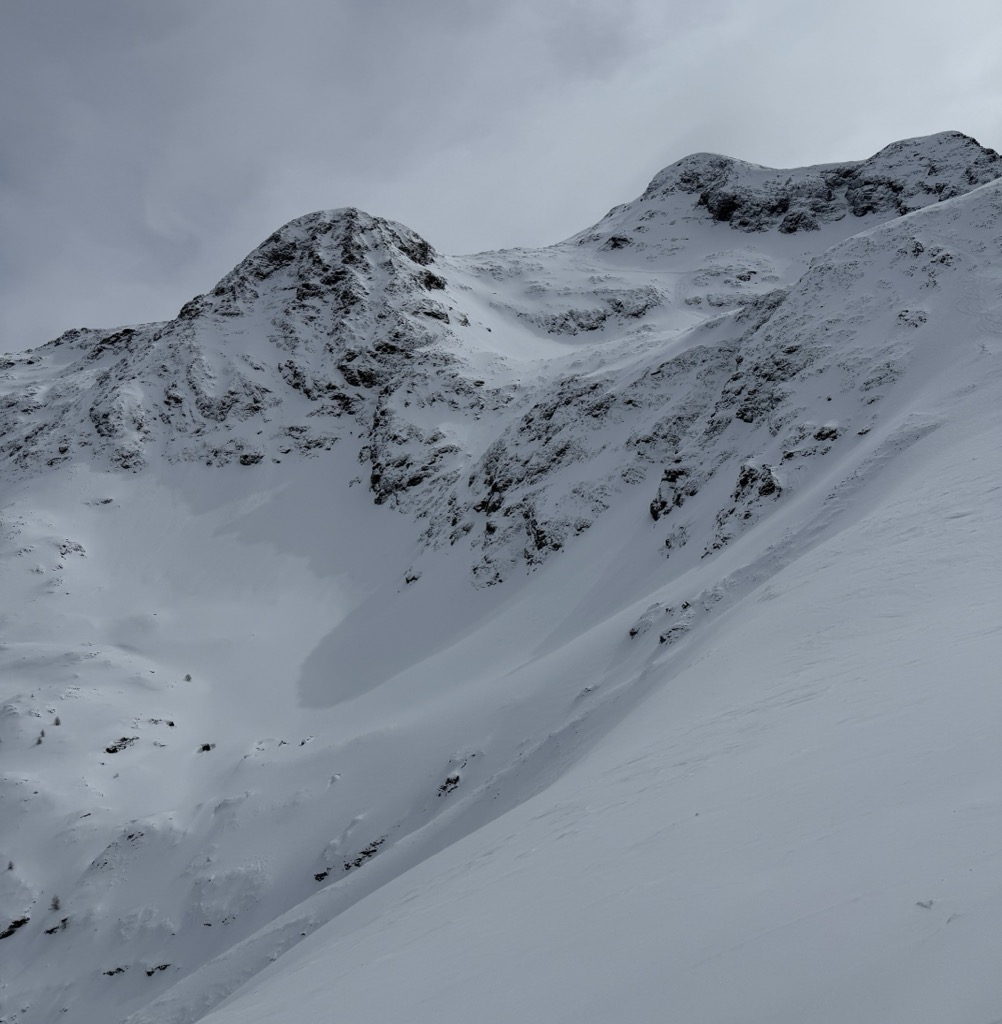
These two couloirs—the Rama and the Olympic—descend almost directly off the resort from the 3,400-meter station (the large white tower at the top of the glacier funicular). They’re probably the most popular guided route at L2A (and nearby La Grave). These couloirs are followed by a traverse to the village of St. Christoph, where you’ll have to find a way back to the lift at Venosc (about 8 km). Check out the route here.
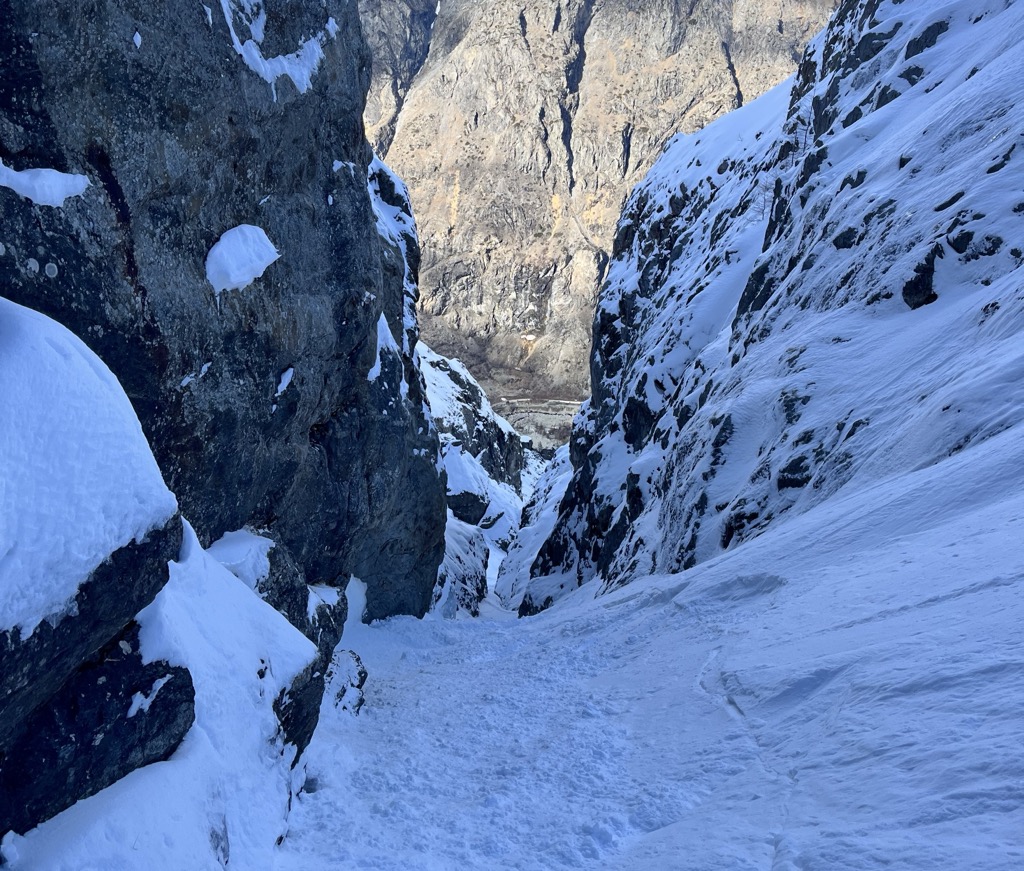
Once you reach the white tower at 3,400 meters, turn right, headed south. Both couloirs begin in a large bowl that slowly drops off the mountain and then becomes steep (35-40 degrees). The Rama is to the skier’s right and is the more obvious line. It’s wide at the top but becomes very narrow at the bottom.
On the other hand, the Olympic is steep and narrow at the top and wide at the bottom. Many people do the top of Rama and the bottom of Olympic; that’s the best link-up for casual corn skiing. The Olympic is harder to find; it’s to the skier’s left of the Rama.
Did I mention corn skiing? That’s what you’ll find here. These south-facing couloirs are the local kings of corn. It can start getting good as early as January, but February is the best time. March is already a bit late.
It’s hard to time the entire thing in good condition because the top is so much higher than the bottom. But around noon to 1 p.m. on the average February day is what most people aim for.
The traverse out takes an hour if you’re moving at a good pace. Often, there is not enough snow to ski the whole way. Then you’ve got to have a way back to Venosc. You can really only do one of these laps in a day.
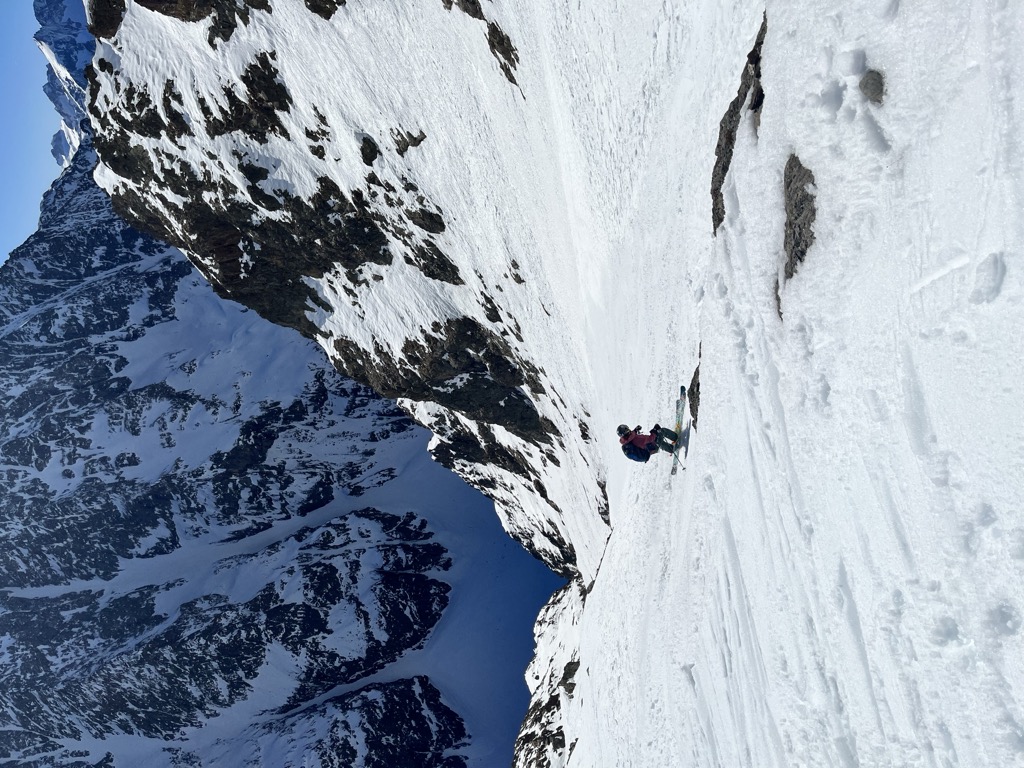
A third option is the Mounier couloir, which starts about 300 meters east of the Rama, closer to the Dome de la Lauze. The best way to get there is to take the Lauze t-bar all the way to the top and then head right, straight down the mountain. In my opinion, it’s the best descent down to St. Christoph, but it’s also the most extreme.
First, the couloir is hard to find. Once you find the right one, you’re not sure the line goes. It rolls over steeply into the abyss. I tracked and recorded the route on PeakVisor, linked here. You can see in our tracks the we were circling, trying to be sure of the right entrance.
Once you commit, you’re in a steep, tight couloir. With the slope possibly reaching 50°, a fall would be catastropic. But these trials are short-lived. It’s only steep for maybe 400 vertical meters.
The couloir then doglegs to the right with a lower slope angle, before opening into a massive bowl.
After this bowl, you can head right or left through mellow exit couloirs, before popping out at the bottom just up-valley from the Rama and Olympic.
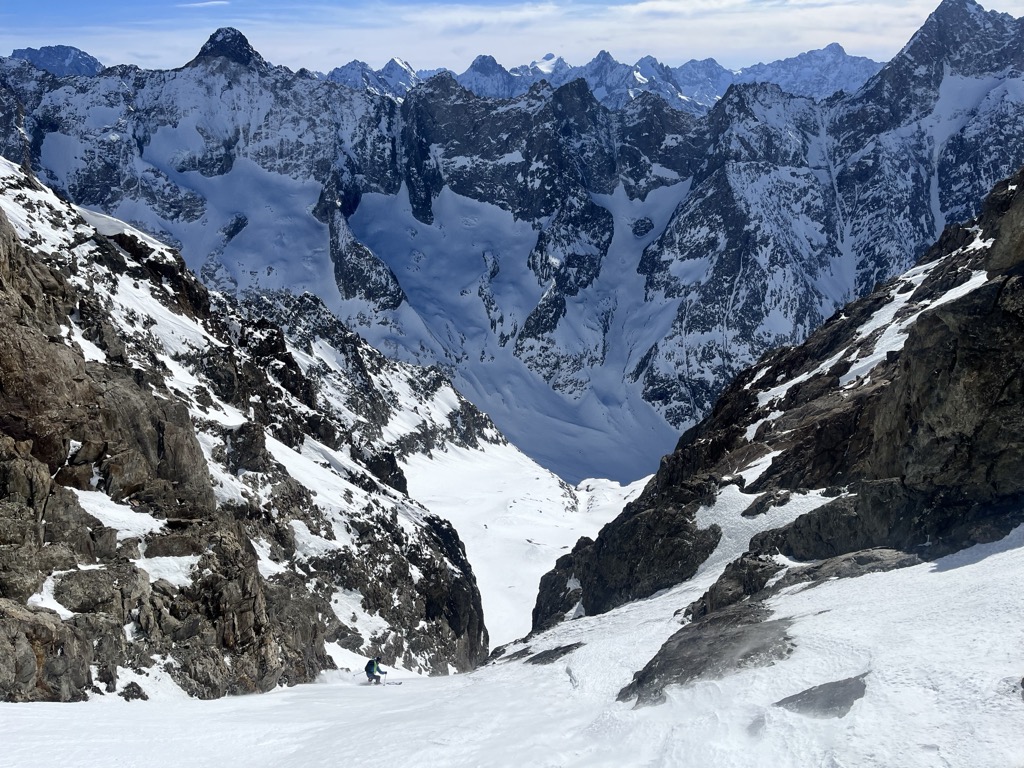
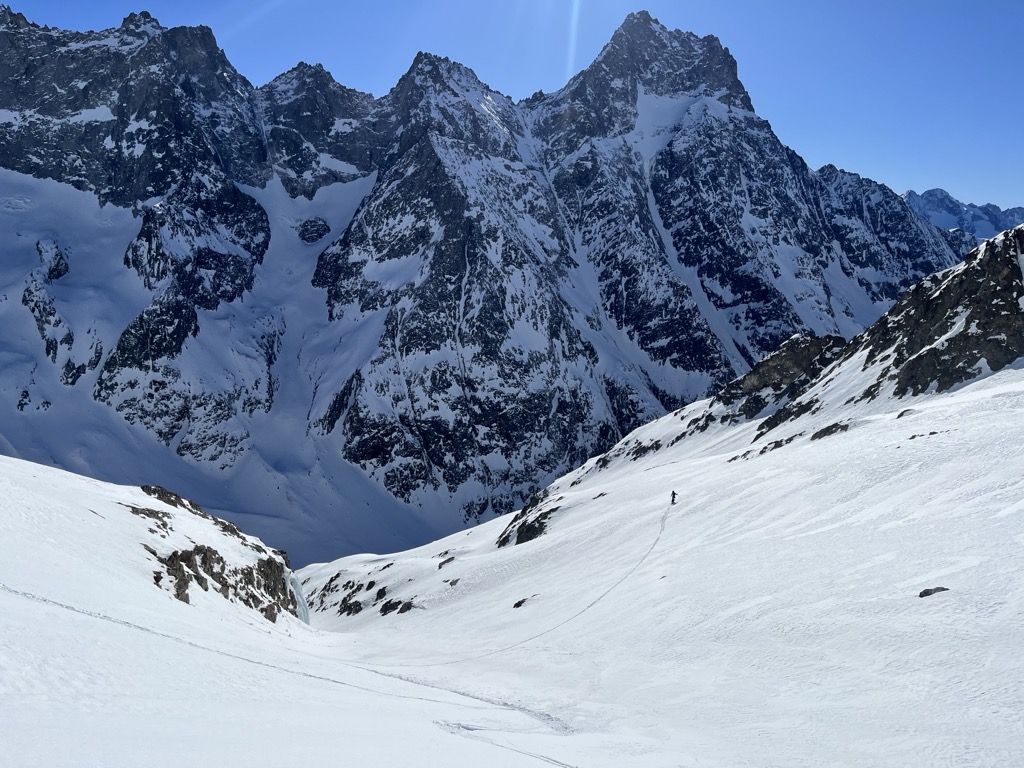
Chirouze is a classic. It’s the longest run you can do, starting at 3,550 meters and ending at 1,250, for 2,300 meters of vertical descent. It starts at the very top of L2A, off the Lauze t-bar on the glacier, and heads north down to the D1091 road. People hitchhike, leave a car, or organize a pick-up at the bottom.
Once upon a time, this run was coveted by guides and freeriders alike. There would be hundreds of tracks after a storm. These days, the snowline has risen so much that it requires a 45-minute hike to the road over slippery boulders. Most people just ski the top glacier part and then skin back up.
The top section is beautiful glacier skiing. It’s a worthy mission on its own. It will take an hour to skin back to L2A or 30 minutes to skin to the surface lift at La Grave, which you can then take up to L2A. Many people ski down to the La Grave mid-station or the very bottom—this is a great option if you’ve purchased the Galaxie pass, which works at both resorts.
The terrain becomes far more technical if you head down past the glacier. There are three options: left, right, and center. All require a rappel. For the last several years, they’ve also required a long hike out at the bottom. There is a lot of route-finding, so I highly recommend going with a guide if you want to experience one of these descents. Check out the route here (centre).
L2A’s ski pass pricing is middle-of-the-road as far as large French resorts go. It’s cheaper than Switzerland, Austria, and Germany, but slightly more expensive than an equivalent Italian resort.
The pricing for a day pass in 2025 was around 60 euros, generally increasing by 1-2 euros each year. There are also options for pietons, those sightseeing on foot, to go up the lift once for about 20 euros.
Season passes are around 1000 euros, and you can buy a season pass for L2A, Alpe d’Huez, and La Grave, with several free days at other resorts, for 1,150 euros.
L2A is not included on the IKON, Epic, or any other multi-mountain pass.
Like all good French villages, L2A has a great office de tourisme to answer additional questions you may have. Don’t worry, they’ll be fluent in English as well.
Office des Tourisme des 2 Alpes
4 Place des 2 Alpes
38860 Les Deux Alpes
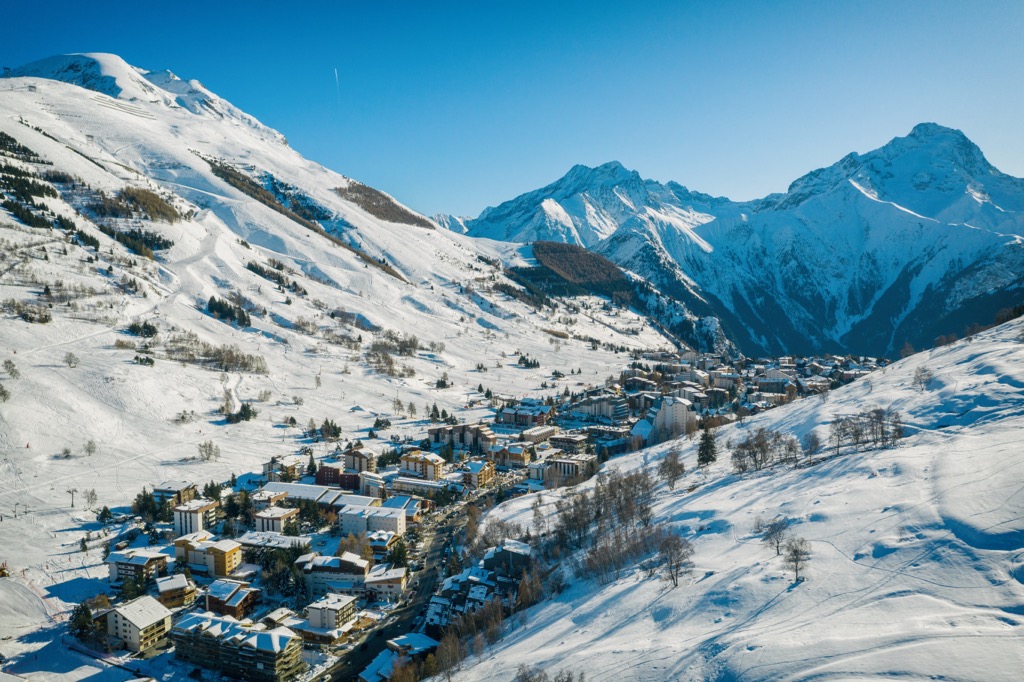
One day last winter, I was hitchhiking to L2A with my girlfriend. A local French dude picked us up with his adorable toddler in the back. We started talking about skiing, and it turned out he’d grown up in L2A. In fact, his family had always lived there, even before the ski resort.
His grandparents founded Les Lutins in 1959. It’s a restaurant and hotel, and it’s right on the main street, even with the Jandri. They also have a small outdoor food truck that serves food on the patio at après ski, which has become our new hangout spot. Check out the house-made Nutella!
The patio is great, but the restaurant itself is also super charming, with a simple menu of fresh, local ingredients and regional traditional dishes. When I first came to L2A, I hadn’t expected to find a place like this (I thought the whole village was built in the 70s).
Normally, I wouldn’t recommend a fast-food-style restaurant like this, but the French are so good at American-style fast food, and it’s perfect for a break on the slopes. You can build your own burgers, in addition to fries (chips), tapas, grilled specialties, and a range of desserts. Not to mention live music nights and a sunny terrace.
TriBeCa is located on Route de Champamé, just steps from the bottom of the Belle Etoile (the closest to the lifts of the three restaurants on this list). The decor makes it worthy, with a warm fireplace and a lovely patio. The food is standard French bistro fare, with a bunch of pizzas on the menu as well. It’s far better and cheaper than anything you can get on the mountain, and nearly as convenient.
I’m no expert at après ski in L2A or anywhere else. For all the days I’ve skied at L2A, I don’t think I’ve ever consumed a drop of alcohol on the mountain. But there’s a huge scene, so here’s the basics.
These two on-mountain establishments keep the party going all day, every day, from December to May. Every time you ski past, you can hear the music bumping. Both bars are situated so you can walk to the lift; you don’t have to have skis.
The Couer de Diable is just between the Diable and Super Diable lifts. It’s got an umbrella bar and an indoor space and is always pumping loud music.
The Pano Bar is just down from the Jandri mid-station. There’s almost always a live DJ and a crowd of people.
Both bars seem great if you’re into that kind of thing.
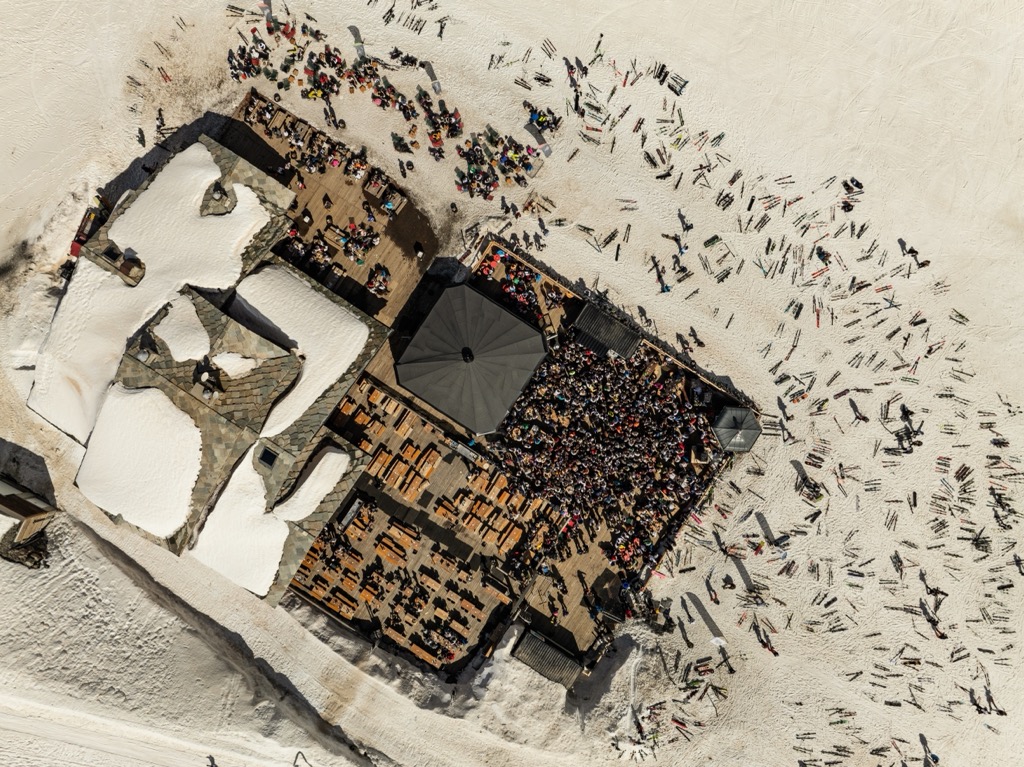
This is one of the village's biggest, if not the biggest, bars. It’s a nightclub vibe at night, with a DJ most nights during the season. By the time you check out, some people will already be buckling up their ski boots in the morning.
On warm days, the terrace overflows with revelers still in their ski boots. Expect a younger crowd and a lot of drunkenness.
The Grotte is located near the base of the Diable, so it’s a bit of a walk if you finish your day at the Jandri base area (though there are plenty of buses).
Situated on the main street in L2A, the Polar Bear Pub is less of a “shots” vibe and more of a “beer-drinking” vibe. I guess that makes it like any other pub. It’s dark, cozy, and they often have live music and sports on TV.
There are two celebrated ski resorts 30 minutes in either direction from L2A. Alpe d’Huez is even bigger than L2A, while La Grave has just one lift but infinite off-piste possibilities.
They are both worth checking out in addition to L2A, though La Grave is accessible only to advanced skiers familiar with off-piste ski technique and route-finding. You can buy a pass that allows you access to all three.
Alpe d’Huez is a sprawling French ski resort located on the Grandes Rousses Massif in the Western Alps. The ski area, which has gradually expanded from the original purpose-built village of Alpe d’Huez, is now one of the world’s largest, with 249 km (155 mi) of pistes and an astonishing 236 square km (91 sq mi) of total skiable terrain.
The off-piste terrain at Alpe d’Huez has always been legendary, even early in its history. However, the resort's southern exposure and mellow lower mountain feature scores of kilometers of easy and intermediate pistes, making it a popular getaway for those learning how to ski. Indeed, Alpe d’Huez is one of the world’s most versatile ski areas, where absolute beginners and the most daring extreme skiers can ride up the lift in the morning. Even the base villages, which range from the lively, purpose-built Alpe d’Huez village to the chic, ancient hamlet of Vaujany, are distinct and varied.
Meanwhile, the off-piste is top-notch. The infamous Pic Blanc cable car brings you to the tippy top of the Pic Blanc, where you’ve got some of the best descents in the Alps at your fingertips. The Grandes-Rousses cable car reaches 2,800 meters on the Vaujany side of the mountain, accessing a vast zone of steep chutes and bowls.
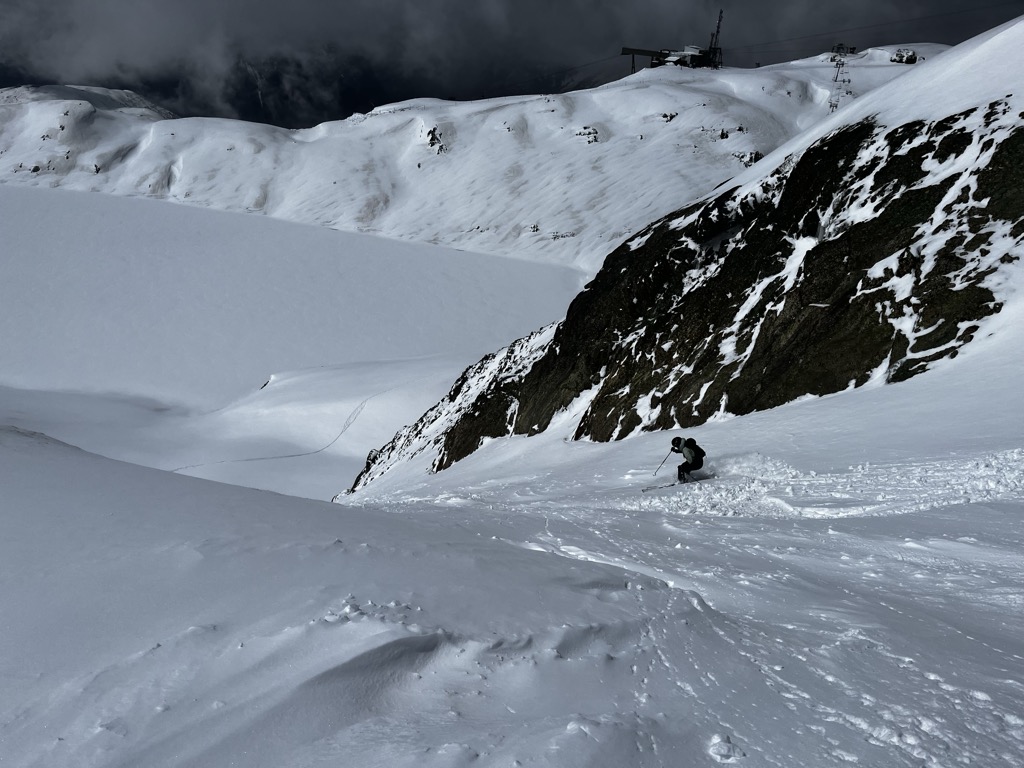
The sleepy cluster of villages known as La Grave is perched in a deep valley that demarcates the north end of the Parc National des Écrins. It’s not just on the opposite side of the mountain as L2A; it also seems to oppose L2A in every other way imaginable.
There is one lift, ‘the Téléphérique,’ to 3200 m (10,500 ft), and another drag lift to 3600 m (11,811 ft). No trails exist on the mountain; every descent is off-piste and requires a high level of skiing and route-finding. Here, we trade groomed, manufactured runs for natural features such as couloirs, bowls, and faces.
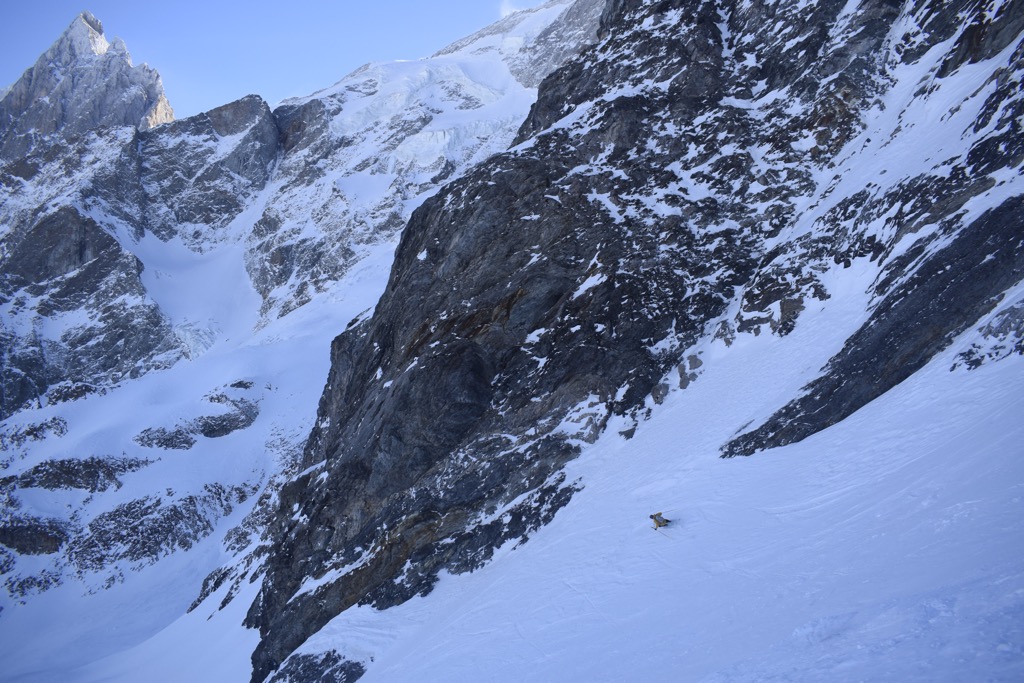
La Grave is a land of extremes. First, there's the ski terrain, much of which could be considered extreme. However, I believe the spectrum of possible experiences here defines La Grave’s extreme-ness. At a ski area that has less than 100 skiers most days, you might wait in line for hours at the inefficient lift on a March powder day. While temperatures on the glacier can often threaten frostbite in minutes, I’ve never sweated so hard while skiing as I do while threading my way down 2000 vertical meters of off-piste. I’ve skied the best and worst terrain of my life and had the best and worst snow conditions of my life (sometimes on the same run). Most of the time, La Meije shows us her infinite love. But sometimes, she is trying to kill us.
No luxury accommodations exist in La Grave. There are no nightclubs or cinemas. The village offers but a few restaurants, gear shops, hotels, and a small market. Even the slightest injury on the mountain necessitates a helicopter rescue if you cannot ski down. It’s not everybody’s cup of tea, but this place rules for those serious about their skiing.
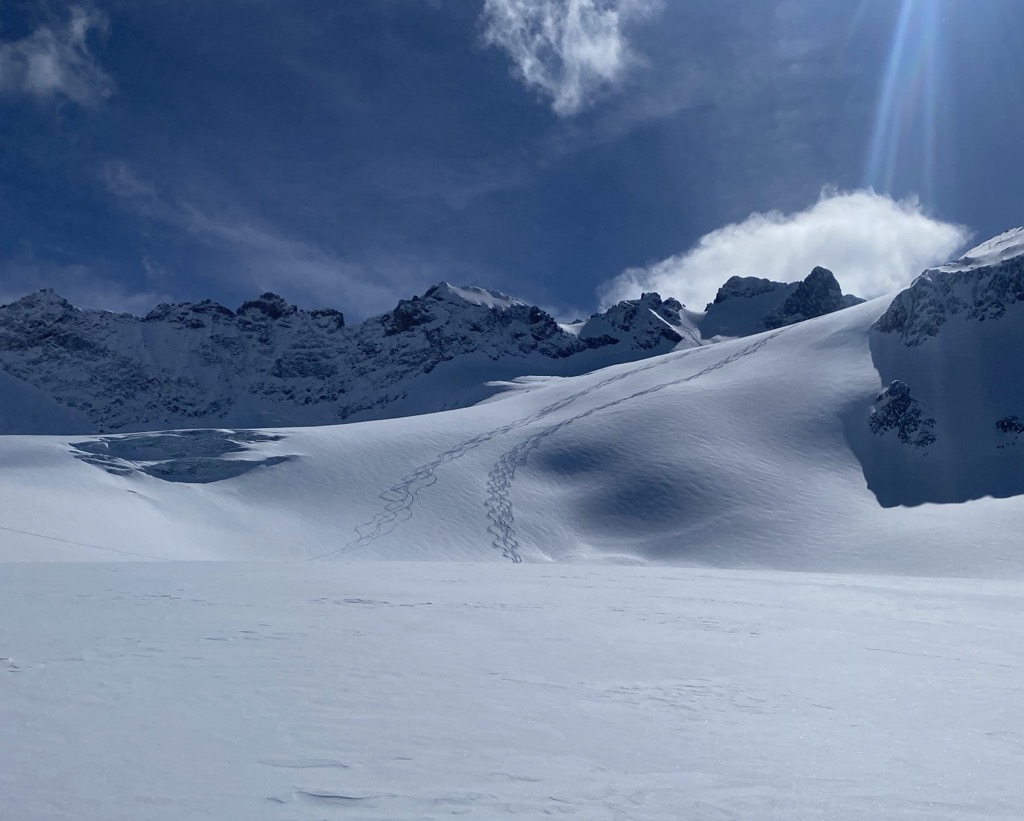
If you liked this guide, you should know that it was brought to you by the one and only PeakVisor App.
PeakVisor is a leader in the augmented reality 3D mapping space; we’re the product of nearly a decade of effort from a small software studio smack dab in the middle of the Alps.
My sidekick during ski missions is always the PeakVisor App. I use the app to track activities, navigate with exquisite 3D maps, and learn the surrounding mountains' names. I’m all for tools that help quicken the pace in the mountains, and the PeakVisor App greatly accelerates things. It’s also critical for planning, whether I’m headed into the backcountry or searching for off-piste goodies at a new ski resort. Read on for a breakdown of some of the app’s best features.
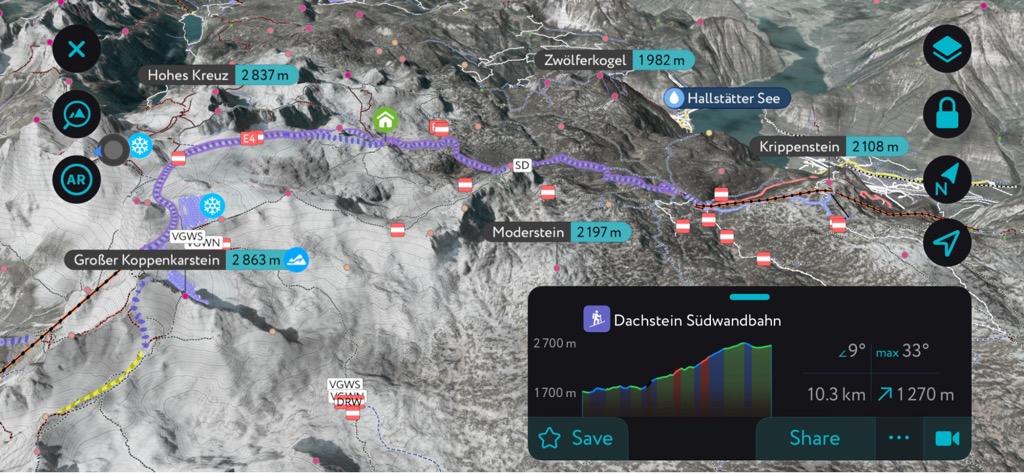
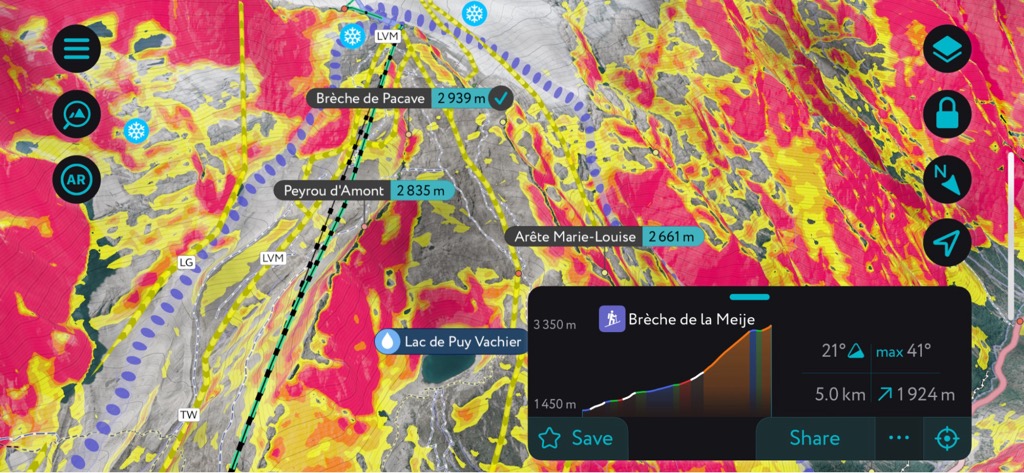
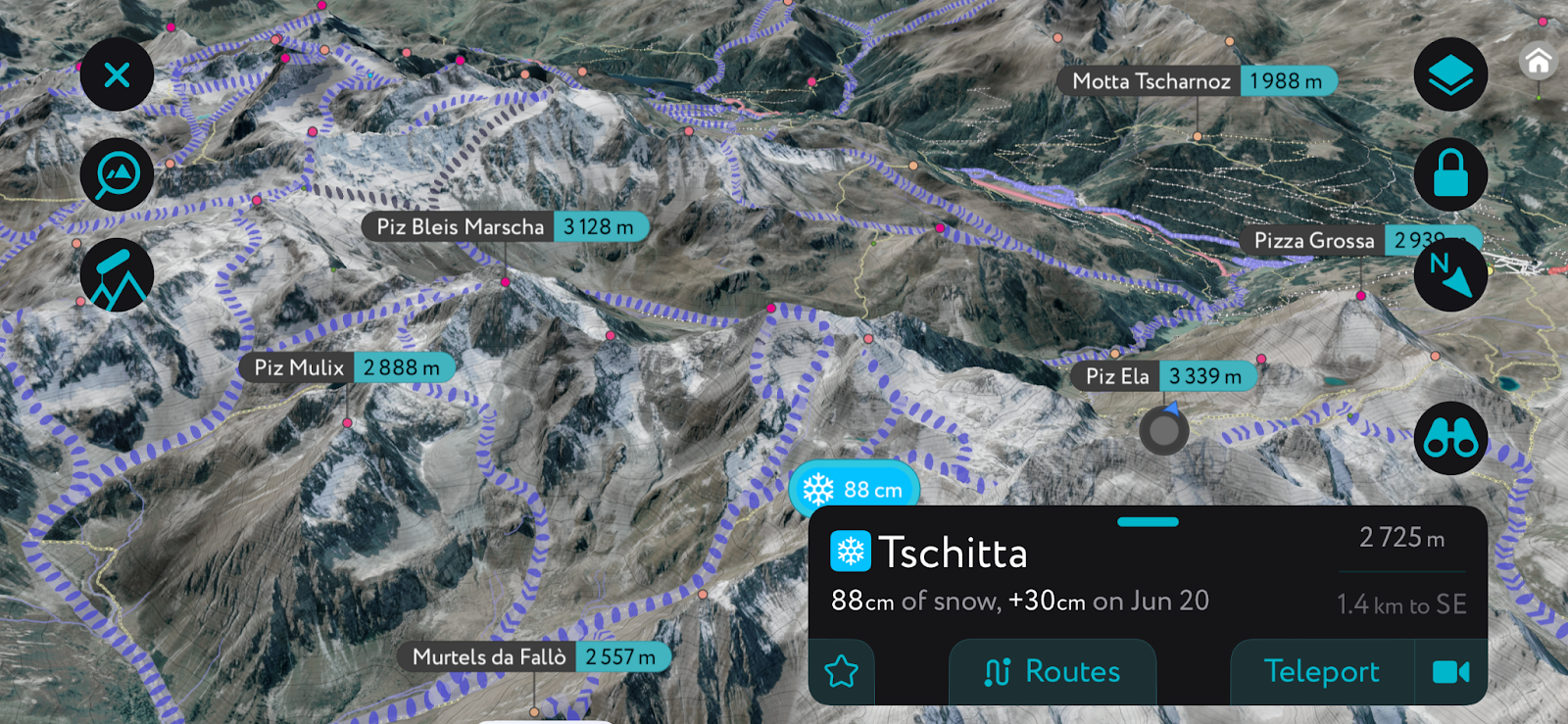
In addition to the visually stunning maps, PeakVisor's advantage is its variety of tools for the backcountry: