Scan the QR code and open PeakVisor on your phone
The Grands Montets (GM) is one of five major ski stations in the legendary Chamonix Mont-Blanc Valley. The resort is located about 8 km up-valley from Chamonix, in the smaller village of Argentière. Since the iconic 1969 Drew Barrymore film Last of the Ski Bums, the Grands Montets has held a spot on the bucket list of countless skiers spanning multiple generations. Fifty years later, the glaciers have shrunk and the fresh tracks are harder to come by, but the Grands Montets is still a magnet for ski bums and vacationers alike.
The mountain is shaped like a giant pyramid, with mostly north-facing off-piste terrain across an astonishing 2,050 meters (6,725 ft) of vertical drop. A 2018 fire tragically destroyed the top cable car, but a new and improved Doppelmayr 3S lift is scheduled to open in December 2026.
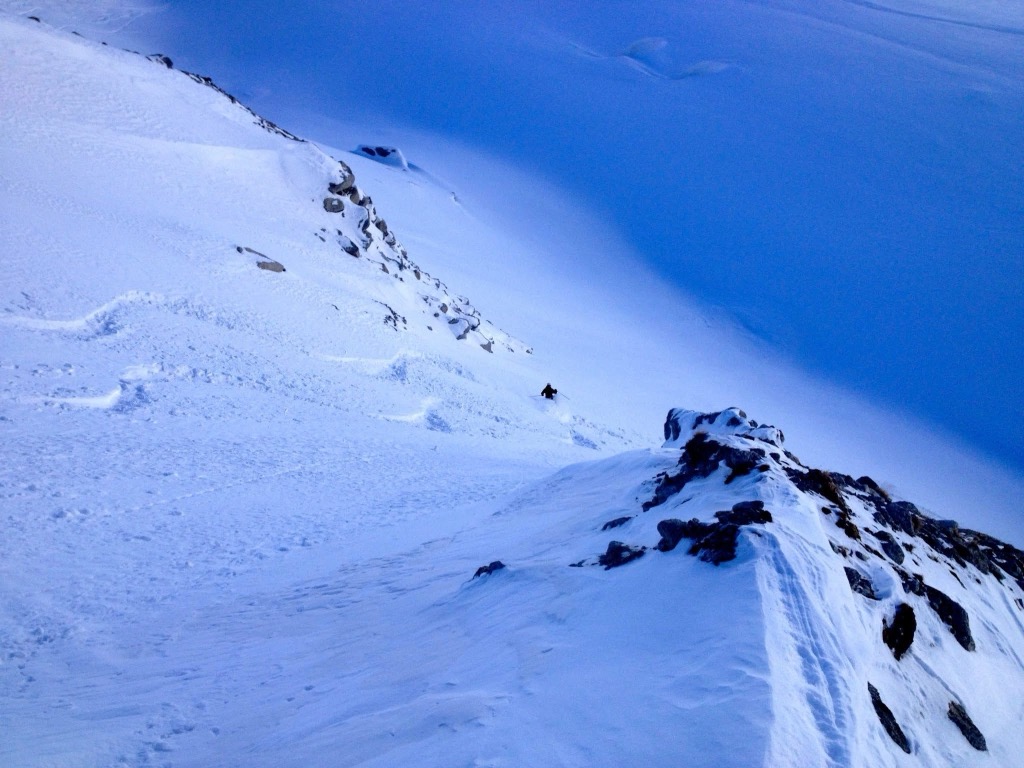
The ski terrain is a mix of low-angle glacier skiing, alpine bowl skiing, and magical tree skiing in the forests above Argentière. The ski area is fabled for long powder descents on steep, playful slopes. Although there are only a handful of pistes, they are never-ending; you can ski piste continually from the top of the Bochard lift (2,765 m / 9,072 ft) to the Plan Joran base in Argentière (1,241 m / 4,072 ft) for a mind-blowing 1,500-meter plunge.
I’ve spent a lot of time over the years skiing at the Grands Montets. You’re about to get an insightful, local’s take on the mountain that, as far as I can tell, you can’t find anywhere else. PeakVisor is not sponsored in any way by the Compagnie du Mont Blanc, which operates the GM (as well as the other ski areas in Chamonix), so I’m happy to share both the good and the bad.
Whether you’re headed for a day trip, a long weekend, a few weeks, or an entire season, stay tuned for all the juicy details that will make your ski experience here the best it can be.
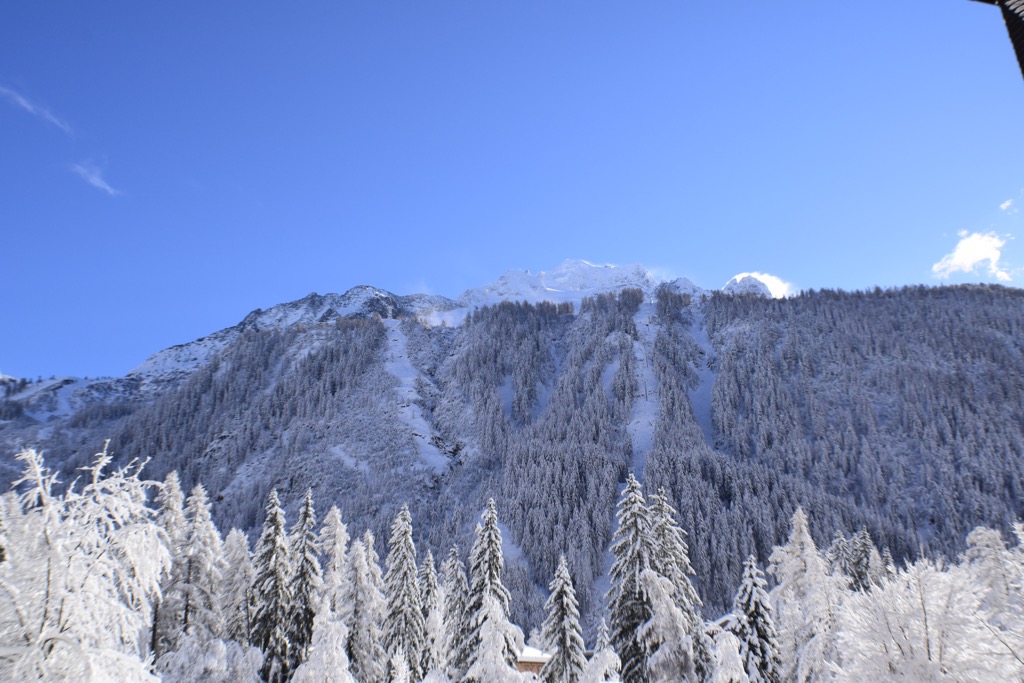
The Grands Montets is located in the northwestern French Alps, specifically in the Mont Blanc Massif of the Haute-Savoie region. It’s just a few kilometers as the crow flies from both Italy and Switzerland.
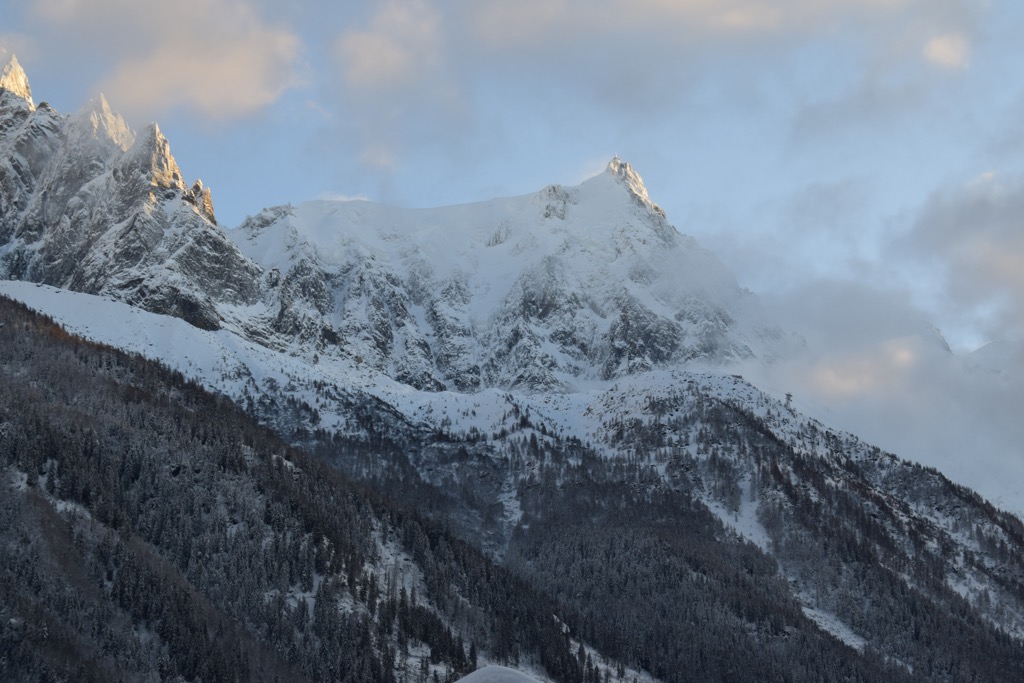
Even more specifically, the GM is on the northern flanks of the Aiguille Verte (4,122 m / 13,523 ft), one of the prominent peaks of the Mont Blanc Massif.
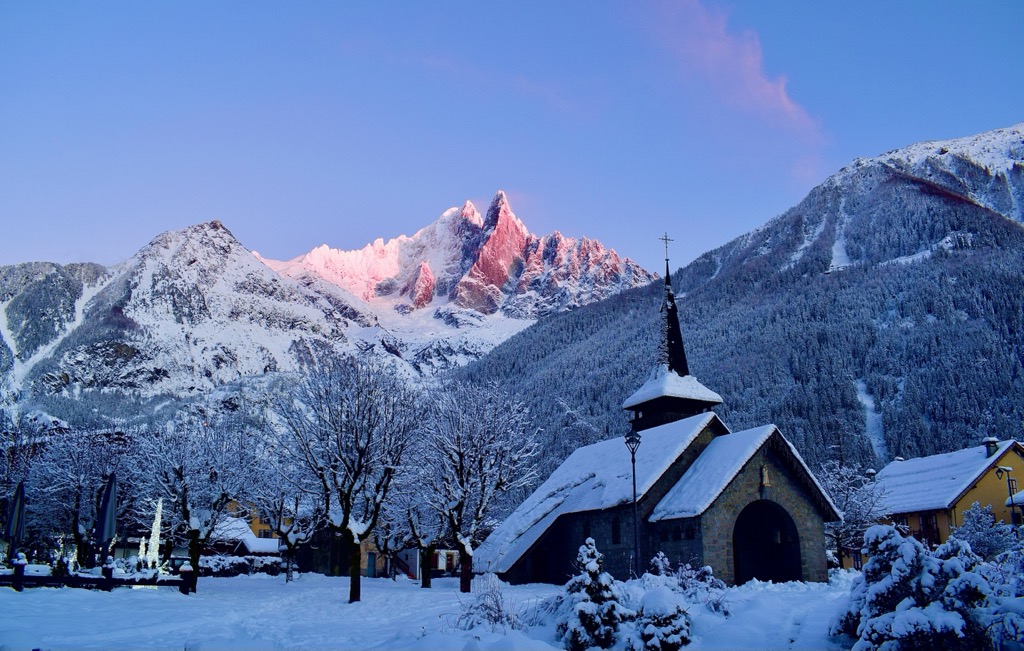
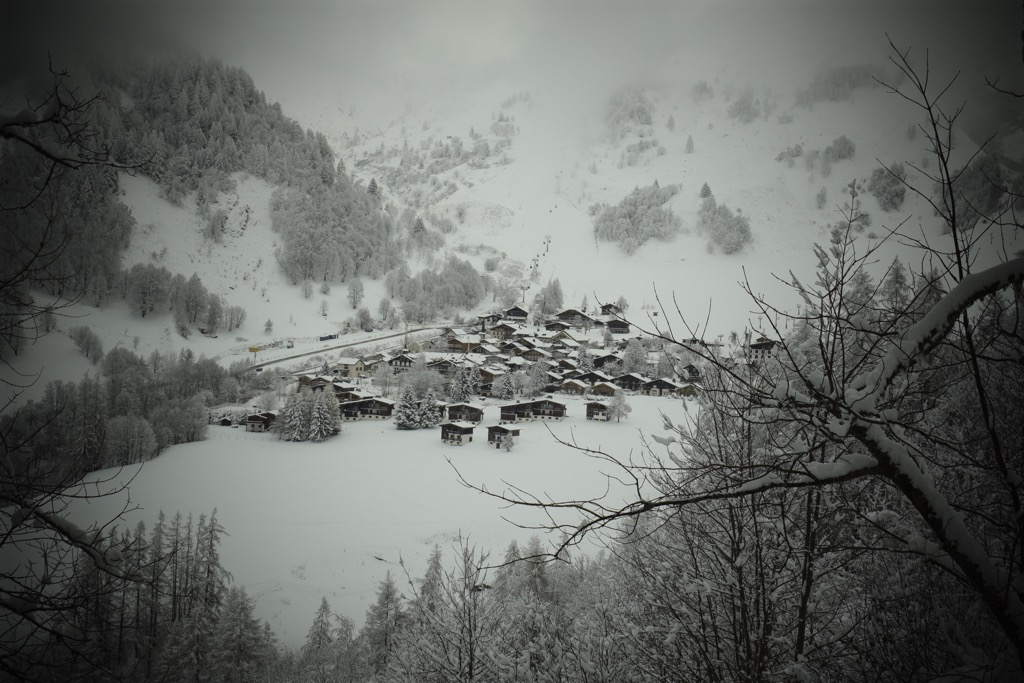
At the base of the mountain is the lovely village of Argentière, which offers a respite from the hubbub of Chamonix.
There is a large parking lot at the base of the GM, though it often fills up. The Chamonix Valley is prone to temperature inversions, which can trap harmful pollutants in the car. As a result, all patrons are encouraged to either take the bus or the train.
The bus is incredibly convenient, more so than driving. The fare is free with your ski pass, or otherwise 2 euros. There are stops throughout the Valley, and guests are dropped off directly at the Plan Joran base station.
The train is much more comfortable than the bus, but requires a 10-minute walk from the station to the Plan Joran.
For international travelers, the nearest airport is Geneva. It’s convenient, with an impressive number of direct flights from around the world, and relatively low fares. If you’re flying in the east, the view of the Mont Blanc Massif is unbelievable.
Several shuttle companies offer services from the airport directly to your lodging, anywhere in the Chamonix Valley from Les Houches up to Vallorcine. It’s about an hour and fifteen minutes' drive and runs about 100€ per person for a shared shuttle round-trip. Even more economical is the bus, which leaves directly from the airport and drops you off at the Chamonix center for 10-25€ one way.
Both Chamonix and Argentière are also accessible by train. Europe and France have an excellent train network that could save you time, money, and a big carbon footprint.
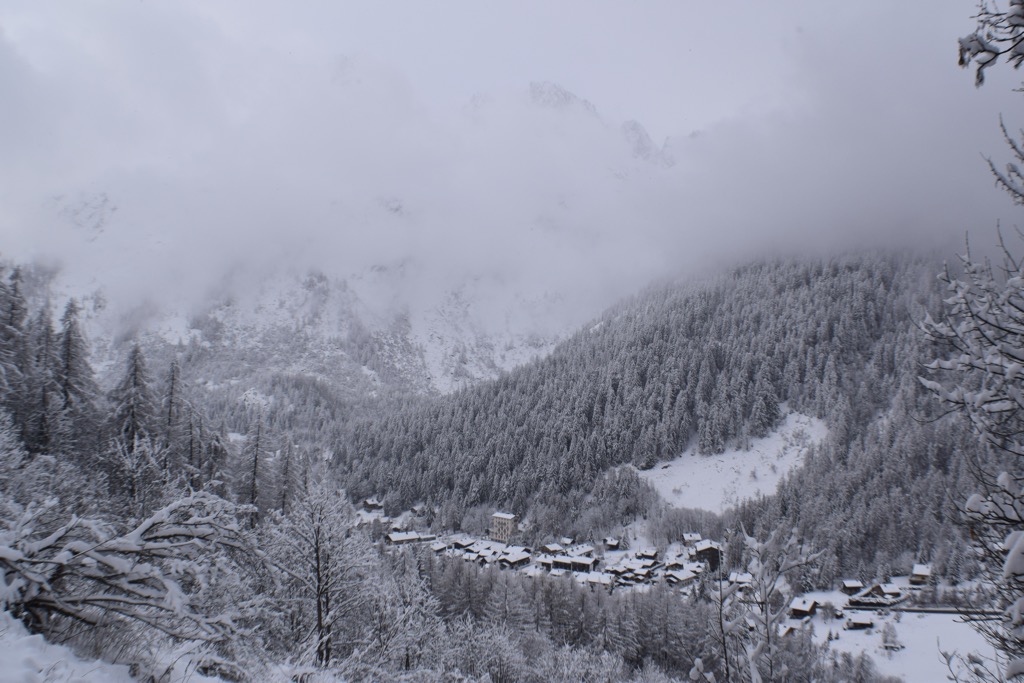
The ski season at the Grands Montets generally runs from the 1st or 2nd weekend of December to the 1st weekend of May.
Because of altitude and geographic advantage, the GM usually has enough snow for some decent skiing by the time it opens, with the obvious caveats (rocks, roots, etc.). Artificial snowmaking on the lower mountain ensures you can ski down to the Plan Joran base on the 2.9 km Pierre à Ric piste.
Conversely, the lower slopes melt out later in the season, while the upper mountain reaches its peak snowpack.
Snow conditions and weather are all over the place at the GM. You can have the worst skiing of your life, with one snowy night bringing all-time conditions the next day. Overall, because of elevation and altitude, snow coverage is quite good. You can usually ski the whole upper mountain from opening day to closing without hitting rocks or falling into crevasses on the main glacier runs. Snow conditions are decent, with plenty of big powder days throughout the year on an average season.
On the other hand, the overall weather is just ok. There’s a lot of wind and clouds, and it’s hard to ski the GM without visibility because there are no trees on the upper mountain.
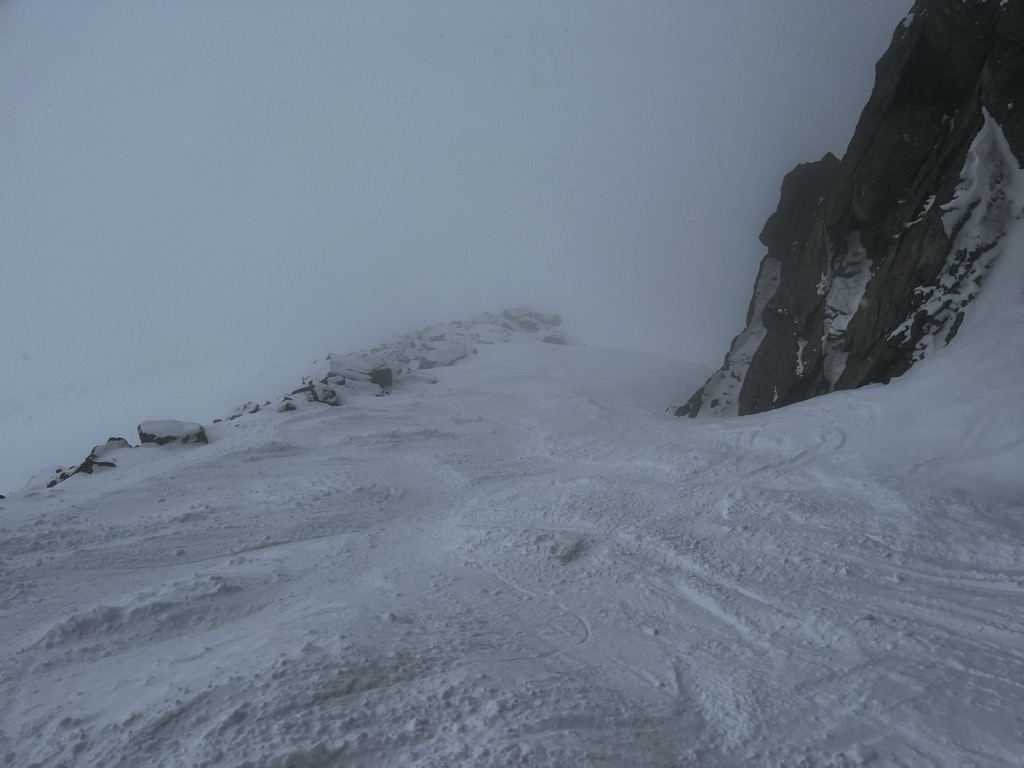
Snow conditions matter at the GM more than at other ski resorts because most skiing is off-piste, and there is relatively little grooming.
One thing is for sure: the snow used to be much better, especially at the bottom of the mountain. Once upon a time, the tree skiing below the mid-station was skiable for much of the winter. Nowadays, that season has shrunk to maybe a month, significantly decreasing the GM skiable acreage.
Still, the upper mountain receives plenty of snow. The snowfall is a function of both geographic location and altitude. The Mont Blanc Massif catches storms from the southwest all the way to the northeast, with the best direction being the northwest. The GM can get absolutely shacked when a big storm blows in from the northwest. Altitude also plays a part; the Mont Blanc Massif is the highest thing around, and squeezes plenty of moisture out of storms. Moreover, it rarely rains above the mid-station (~2,000 m), though the valley increasingly sees rain during storms.
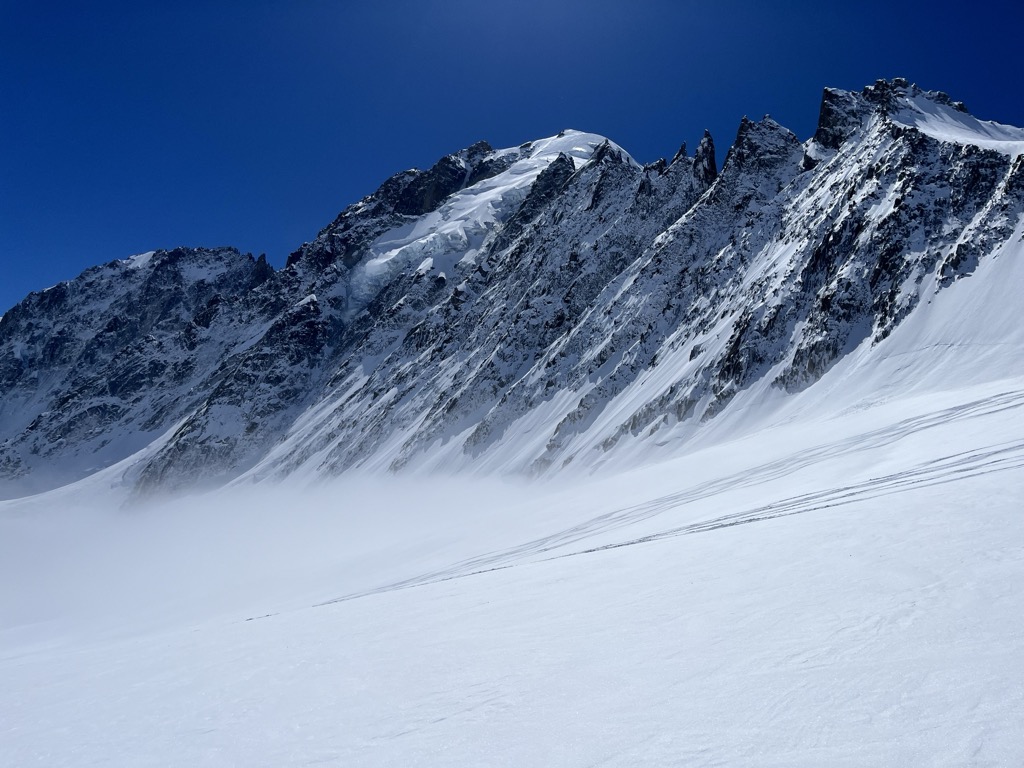
By far, the best snow is found on the glaciers flowing from the top of the mountain. There are three main glaciers: the Pendant, Lognon, and Rognons. These runs are normally accessible from the top station, but now you have to ski tour up. It’s more effort, but the powder lasts far longer.
You’d be unwise to expect the sort of powder that you’ll find in the western U.S. and Canada. The GM receives a lot of wind, and powder days usually involve skiing on snow that has been at least slightly wind-affected.
Even if it hasn’t snowed in a while, cold, dry weather keeps the slopes in excellent chalky form. On these days, you won’t feel the pressure of a powder day but can still have great snow.
If it gets too warm and sunny between snowfalls, the snow can turn to garbage quickly. All it takes is one warm day during mid-winter to turn the mountain into a brick that doesn’t disappear until the next snowfall. I’ve also seen windstorms take a meter of snow off the mountain, no exaggeration. But it’s unlikely that will happen on your trip.
Every five or six years, there’s a good season. If you’re lucky enough to live in Cham during a good year, it’s a life-changing experience.
Snow conditions are always a gamble, though, especially in 2025. Overall, if you stay for a couple of weeks, you’ll probably have a decent powder day.
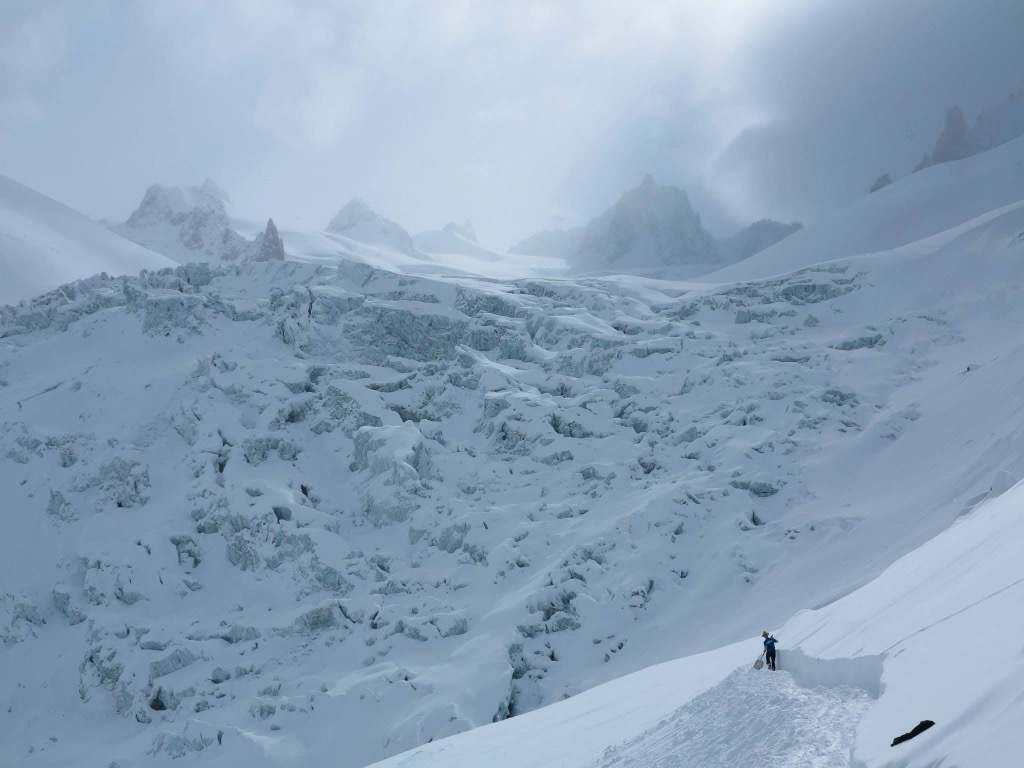
The GM is no stranger to storms, which can bring extreme wind and temperatures. The mountain is exposed and takes these storms head-on. It can be great skiing if your gear is tight and you wrap your face up.
Unfortunately, the GM (and Chamonix in general) gets a lot of clouds. Even during sunny, high-pressure days, a fog layer can build up as a result of a valley inversion. Unfortunately, these inversions trap pollutants in the valley, contributing to some of Europe’s worst air quality on certain days. Mornings and late afternoons are the best times to avoid the inversion fog. It’s all about taking advantage of your windows.
As it’s north-facing and home to large glaciers, the GM can be cold. At 3,300 meters, the temperature is often around -20℃ in mid-winter. Plan accordingly.
Of course, there are bluebird days, too. And they are all the more glorious in their scarcity.
December: The GM opens the first or second weekend of December, and you can find excellent conditions on the mountain during this time. December tends to see decent winter storms rolling through. The sun is low in the sky, and it’s cold, so the snow stays cold. Moreover, the crowds are pretty thin by GM standards during the first couple of weeks before Christmas. Once Christmas hits, though, it’s full-on tourist season.
The major downside is that the coverage is usually not great by this time, and you might be hitting a lot of rocks. If you book a vacation way in advance and can’t cancel, you might get totally skunked if it’s a dry early season—being stuck skiing only pistes, for example. These are the main reasons the prices are discounted for the first couple of weeks.
January: There’s nothing like a good January in the French Alps. The sun is low, the snow is cold, and the mountain is beginning to get covered up. The big crowds haven’t arrived yet, and you’ve got a magical vibe of anticipation and hope for the season.
February: Beware. February is notorious in French ski resorts because it’s the month of the French vacation. All the different cities are slotted in, so you’ll have everybody from Paris one week and then Marseille the next, for example.
Not only do you have the crowds, but you tend to have drier weather in February. This is when the GM often gets those annoying inversions I wrote about above.
On the plus side, it’s still cold, but you’re starting to get the sun hitting the mountain, which most people enjoy—even though it ruins the powder.
March: March is famous for being the month to come to the French Alps. It’s the perfect balance of snowpack and fresh powder falling from the sky. The rocks are covered, and there always seems to be more snow in March than in any other month.
For the big mountain skiers among you, avalanche danger tends to be lower in March. Plus, the sun lights up the whole mountain for part of the day, so you can actually see where you’re going, instead of being wrapped in a shadow all day.
At the GM, you won’t be avoiding the crowds in March. There are a lot of folks with the same idea as you. You also won’t be finding any discounts on your accommodation.
April-May: Spring is such an underrated time in the Alps. You can get fantastic spring skiing one day and 50 cm of powder snow overnight. There is less wind in spring, and you can get fantastic powder skiing on the glaciers. Plus, the crowds are much thinner, meaning fresh tracks last for more than one run.
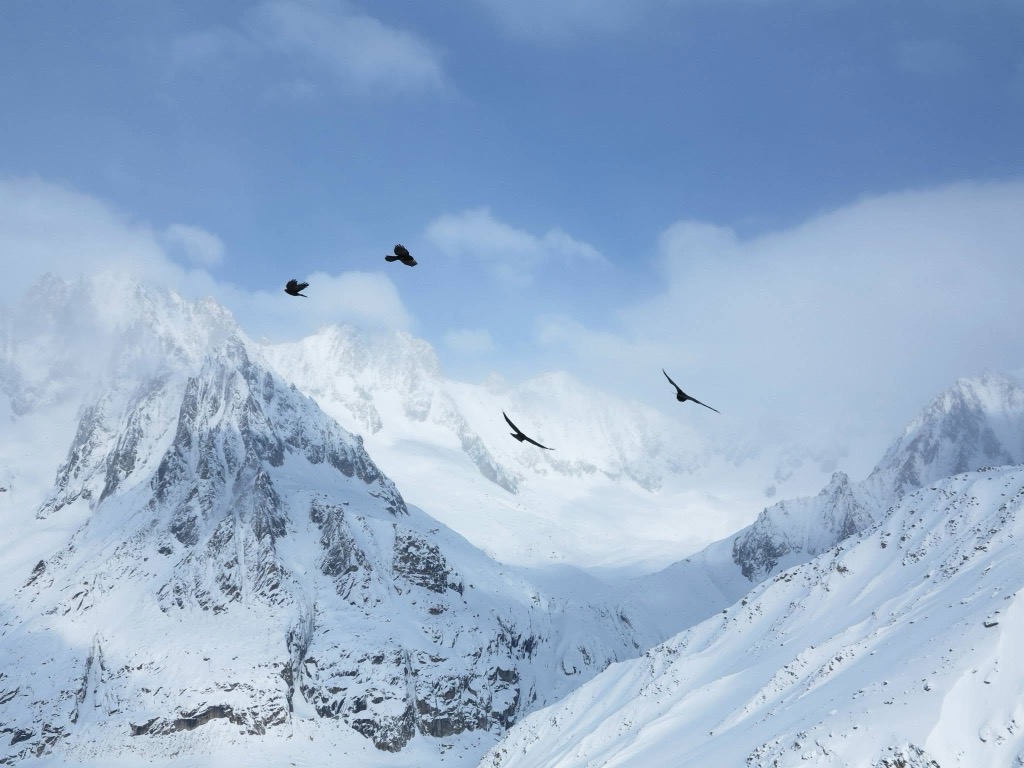
The GM is vast, but incredibly simple to navigate. You’ll learn the basics in a day or two, but there are a lifetime of nooks and crannies to explore.
The Plan Joran 10-person gondola serves as your shuttle from the base of the mountain. Once at the top, you’ve got the Bochard gondola and the Herse 6-pack accessing the upper mountain. The top cable car will open in December 2026, accessing 3,300 m and all the glacier skiing at the GM. Until then, you must skin up from the top of the Bochard lift. The Retour Pendant lift brings skiers back after they do the Lavancher run.
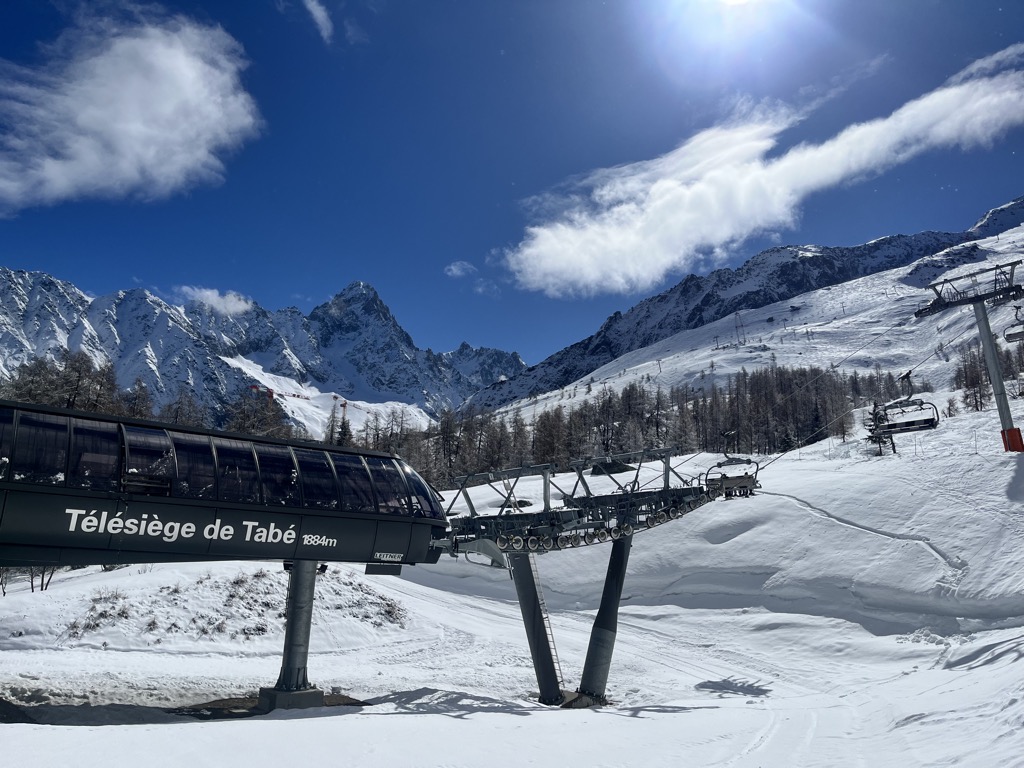
The Tabé quad and a small surface lift service a small beginner area near the mid-station.
The important lifts at the GM are all high-speed and efficient. You won’t be waiting in too many lines, even in the high season.
Unfortunately for those looking for fresh tracks, the GM isn’t Valhalla. There are more frothing powderhounds in Cham than anywhere else in the world, and most of the terrain is tracked out in a couple of hours.
In fact, the closure of the top lift has made powder skiing much easier. Because not as many people bother—or have the gear — to skin up, you can find freshies well into the afternoon.
The Bochard is the best lift at the GM now that the cable car is out of action.
The piste from the top is a blast. Get here first thing in the morning to ski 1500 meters of fall-line corduroy piste all the way back to the base.
Skier’s right is the start of the skin to the top and a good way to enter the off-piste under the Pendant Glacier. It’s moderately pitched bowl skiing down to the mid-station.
Skier’s left is the Lavencher side. There are two main bowls here. I believe the first is also called Pendant. It’s a more direct route, and you can reach the Bochard by traversing the Tabé lift instead of the Retour Pendant. Lavencher is a better, longer run; just traverse right at the end to catch the Retour Pendant.
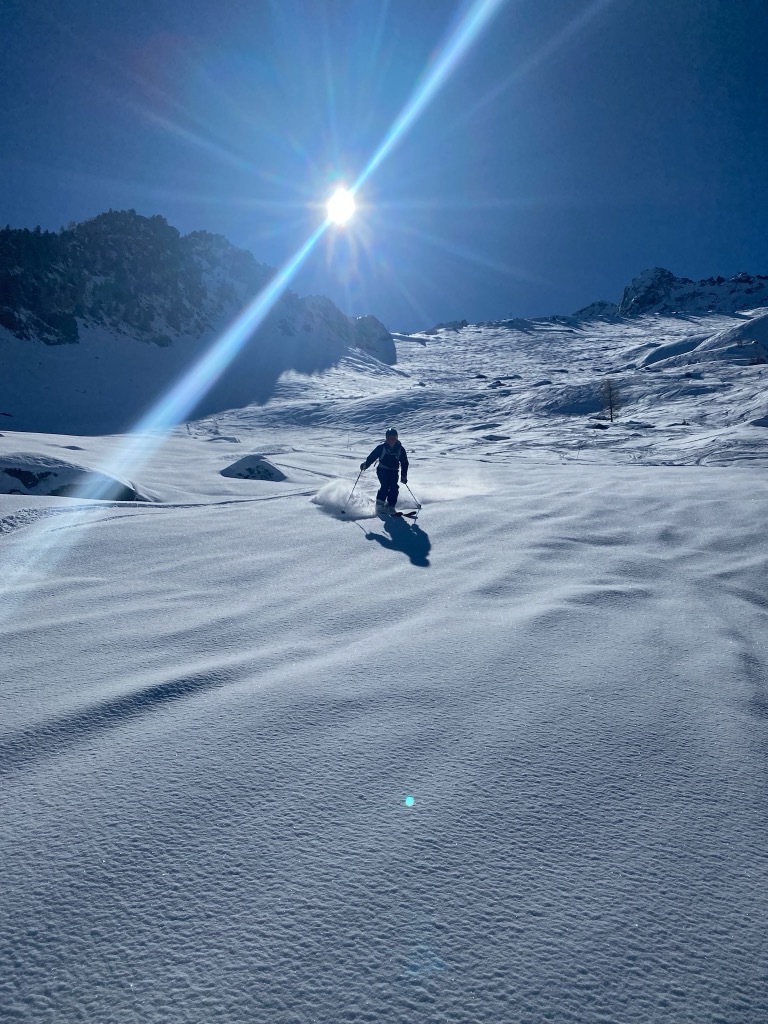
This lift takes you back up to where you can traverse back to the Bochard after skiing the Lavancher area. It’s a slow triple—by the time you get back up after your first lap, Lavencher is all tracked up.
There’s a small forest to the skier’s right of the Retour Pendant. People used to call it the enchanted forest, and it certainly has its moments. A great place to check out if the visibility is bad.
The Herse is the most efficient lift at the GM. It scoots up 600 meters in no time at all, and there’s never a line. The terrain is excellent. Skier’s right is the Italian Bowl, and skier’s left, after crossing the piste, is the Canadian Bowl. They’re both spectacular.
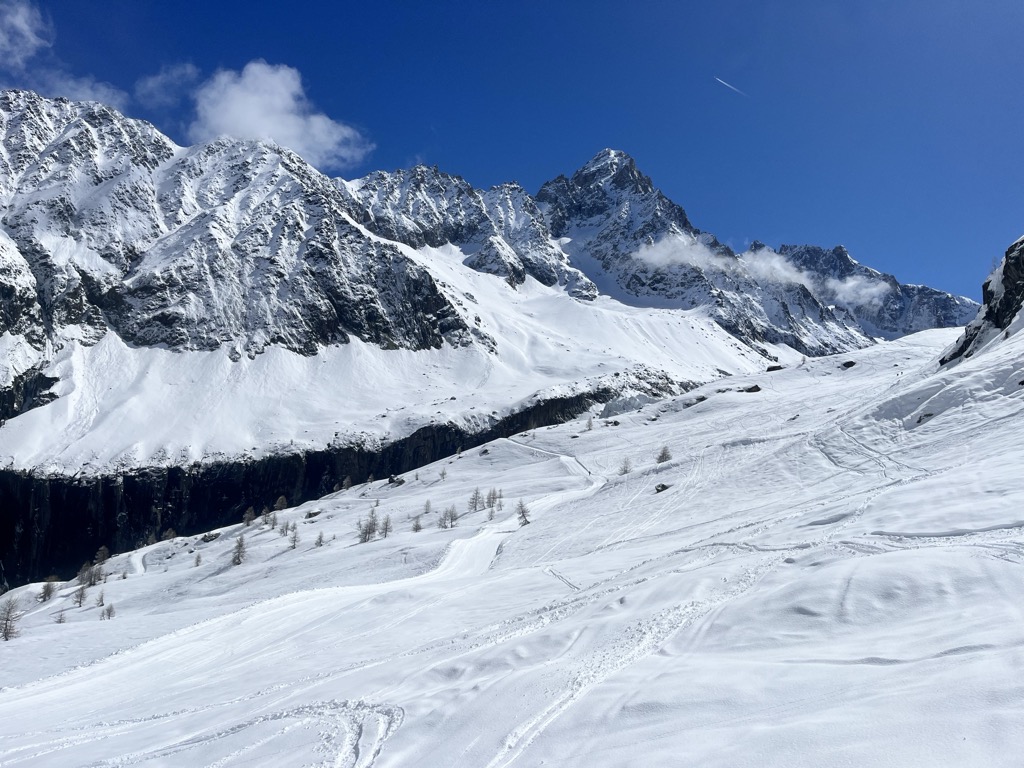
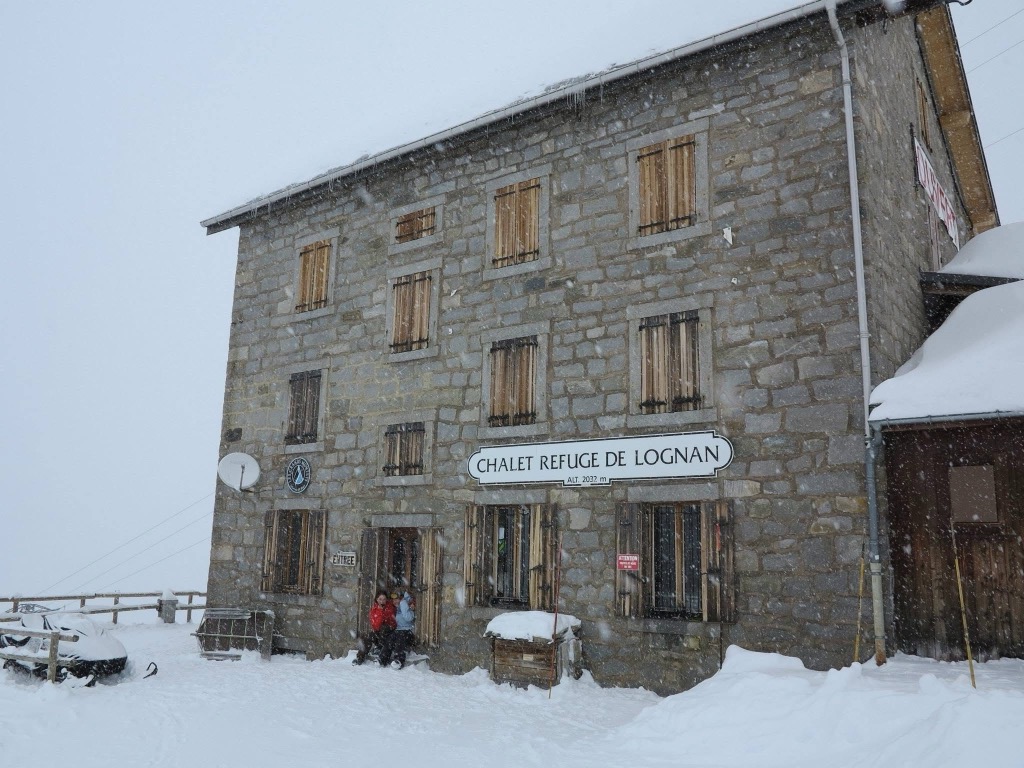
All the way skier’s right is the Chalet Refuge de Lognon, which I recommend for lunch on the mountain. It offers an incredible view of the Argentière Glacier, and they have delicious traditional food and drinks.
A lesser-skied forest section is below and slightly skier’s left of the refuge. It dumps you out on the Pierre à Ric run to the base. It’s a powder stash when all the upper mountain terrain is hammered, and it’s also great on storm days. Heads up for avalanche hazard, though.
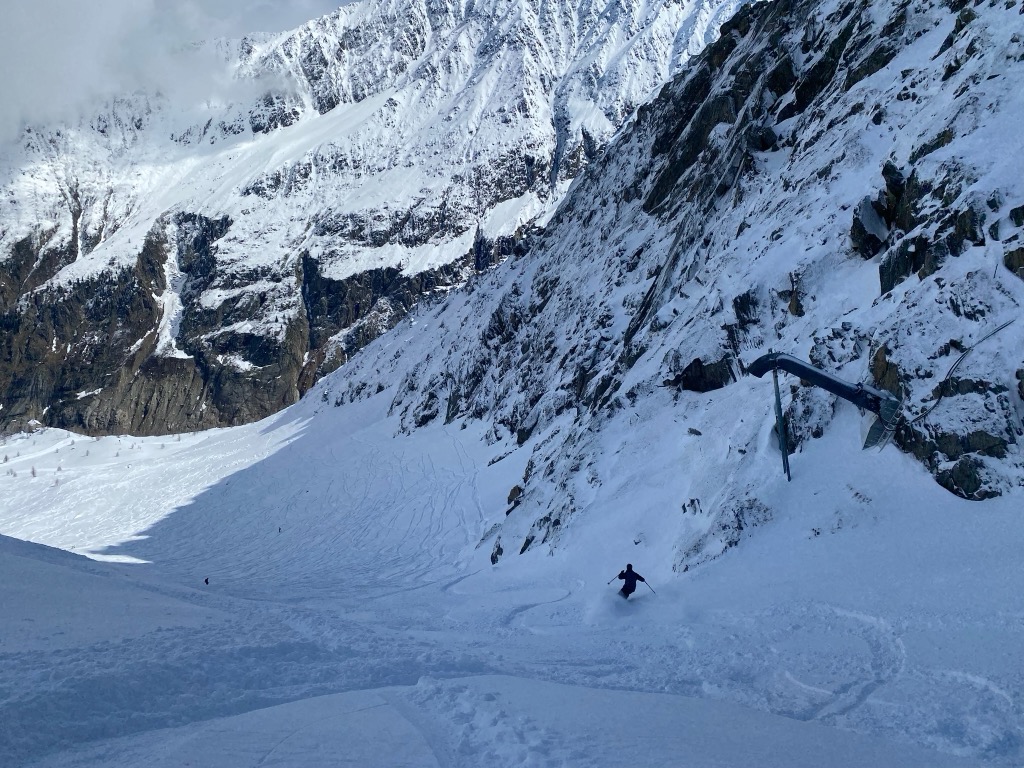
The cable car midstation burned down in the summer of 2018, and the new cable car will open in December 2026. Without the cable car, you can still have great, human-powered skiing by skinning up from the top of the Bochard lift, and there’s a lot less traffic.
Every descent in this zone involves skiing on a glacier. But it’s not all that difficult. There’s a marked trail heading to the bottom (a black), which is manageable if you’re a decent skier.
First, we’ll focus on the backside of the mountain. When the lift opens, you’ll walk down the stairs from the station and turn left, skiing down a narrow, icy col to a large open expanse of glacier. The far skier’s right of the Rognons glacier is heavily crevassed, but offers some insane powder skiing for those who dare. There’s a large rock in the middle of the glacier; if you go right of this rock, you’re in the heavily crevassed area.
Heading skier’s left of the rock, you’re in safe territory. It’s dreamy, low-angle glacier skiing the whole way down until you reach the moraine above the Argentière Glacier. At this point, you need to take either a passage on the right or left; there are some cliffs in the middle that you can’t ski down.
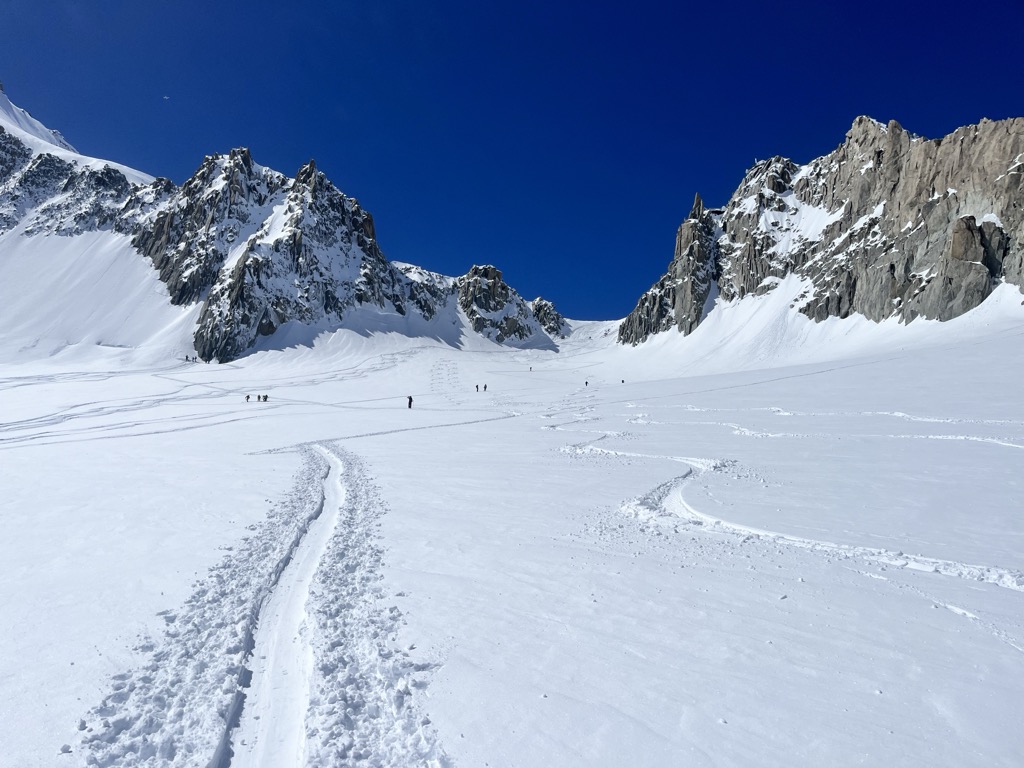
Heading all the way skiers left but still staying on the backside of the mountain is the easiest to navigate. There’s a marked trail and fewer hazards overall. There’s also a lot more tracks here.
The front side of the mountain is known as the face, even my French friends call it that. It follows the perfectly-pitched Glacier de Lognon to the top of the Herse if you stay right against the cliffs, or the Canadian Bowl if you stay left.
There’s a large rock to the skier’s left. On the other side of this rock is the Glacier de Pendant. It’s a bit more crevassed and less often skied, but the powder turns are unreal.
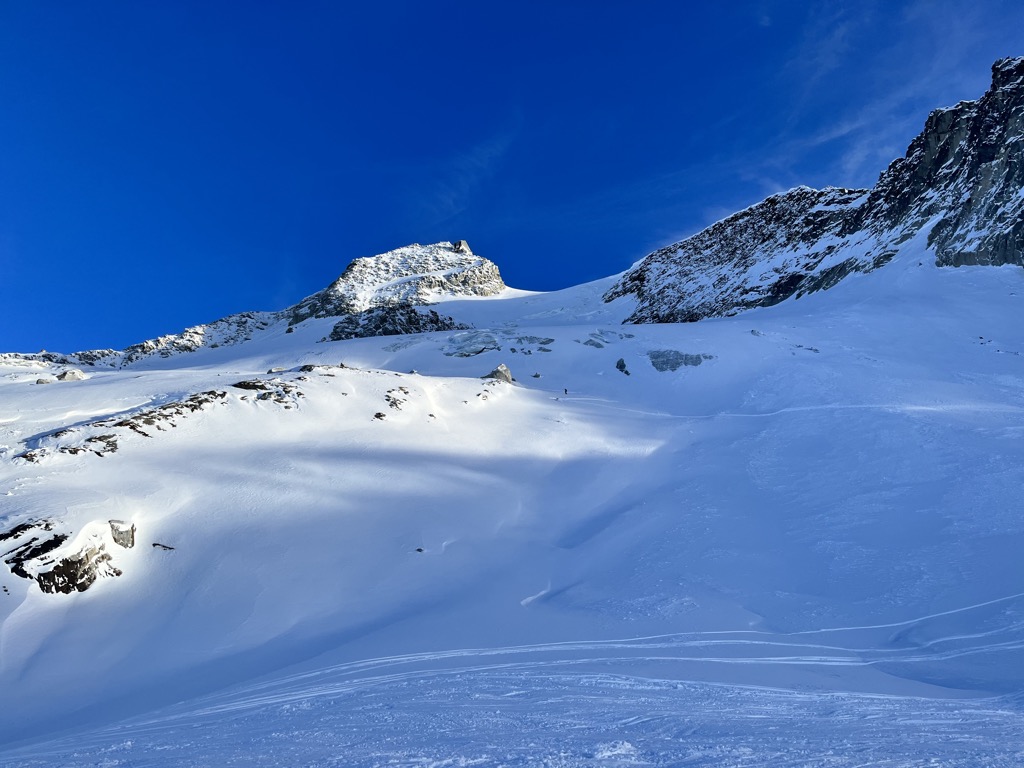
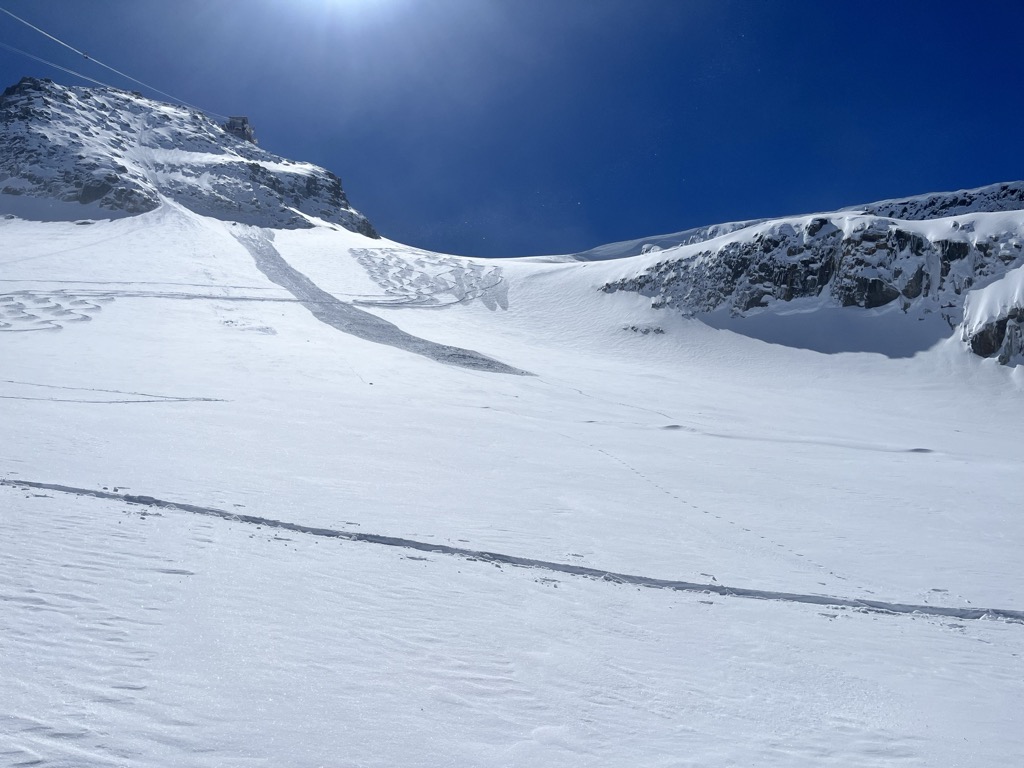
Chamonix is one of the world’s most happening backcountry ski hubs, so it’s impossible to touch upon everything here. Also, the line between “ski resort” and “backcountry” is less defined in France. Everywhere you look from the GM, there are ski and mountaineering routes.
The best route off the GM was always the Pas de Chèvre, the goat path, but the Mer du Glace has melted out so much that the bottom moraine is no longer skiable. You now have to fly (speedriding or paragliding), which most people can’t do.
Here are four great backcountry missions starting from the GM. You’ll want some sort of map in addition to my descriptions here; these are serious routes, do your own research. We always recommend the PeakVisor, our 3D mapping and peak identification app, tailored to help you explore the high peaks.
The Col du Passon is a classic ski mountaineering route on the other side of the Glacier d’Argentière. You ski down the Rognon Glacier from the top, head toward the toe of the Argentière glacier, then cross it. You may want to rope up for this. You start your ascent heading up a broad cirque, then trend left toward the saddle, the Col du Passon (Col is “mountain pass” in French). The last headwall up the saddle can be a bit steep; some folks use crampons and an ice axe.
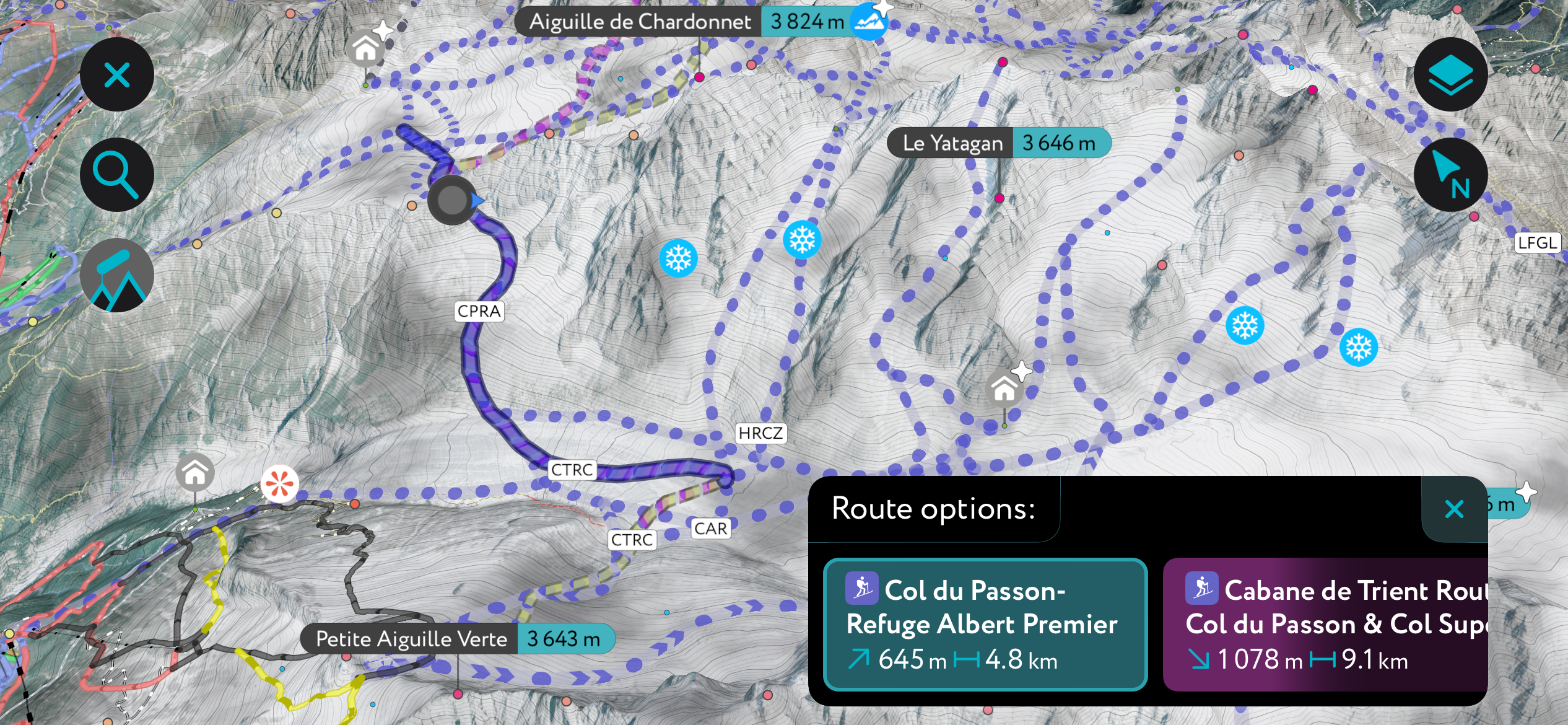
There are many options for the descent. The top section, at 3,000 meters, is heavily glaciated. You head down right to the base of Le Tour ski area. You have to keep to the left or right of the big serac fall in the middle of the glacier. Various couloirs meander their way through the rocks—the only part that can be difficult, depending on snow cover—down to snow fields pocked with small trees for the finish.
The Col du Passon is one of Chamonix's most popular ski tours. It was the first ski tour of my life (besides practicing skinning on the piste at the GM), so it holds special significance. You’ll encounter a lot of people on the way up. There may even be a lemming line on the final headwall. But there’s plenty of room to score fresh snow on the descent.
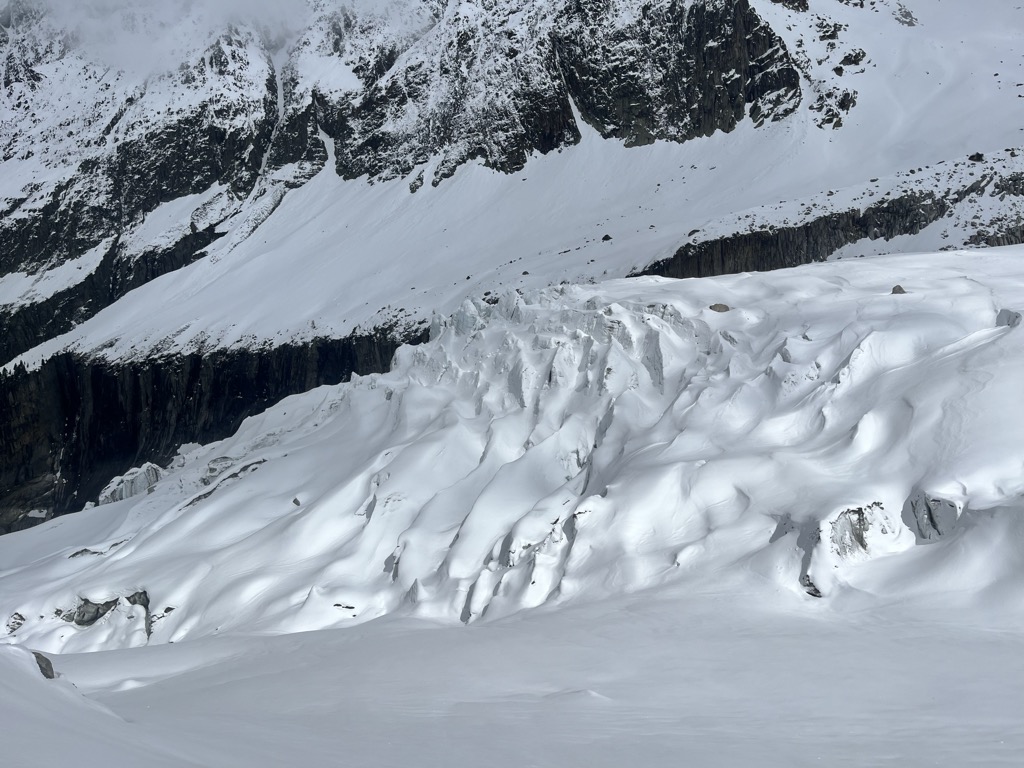
Col du Passon was the first, and this was my second ski tour ever. From the top, you head down the Rognons glacier to the Argentière glacier, the same as the Col du Passon. Then, instead of turning left, you head right, up the valley.
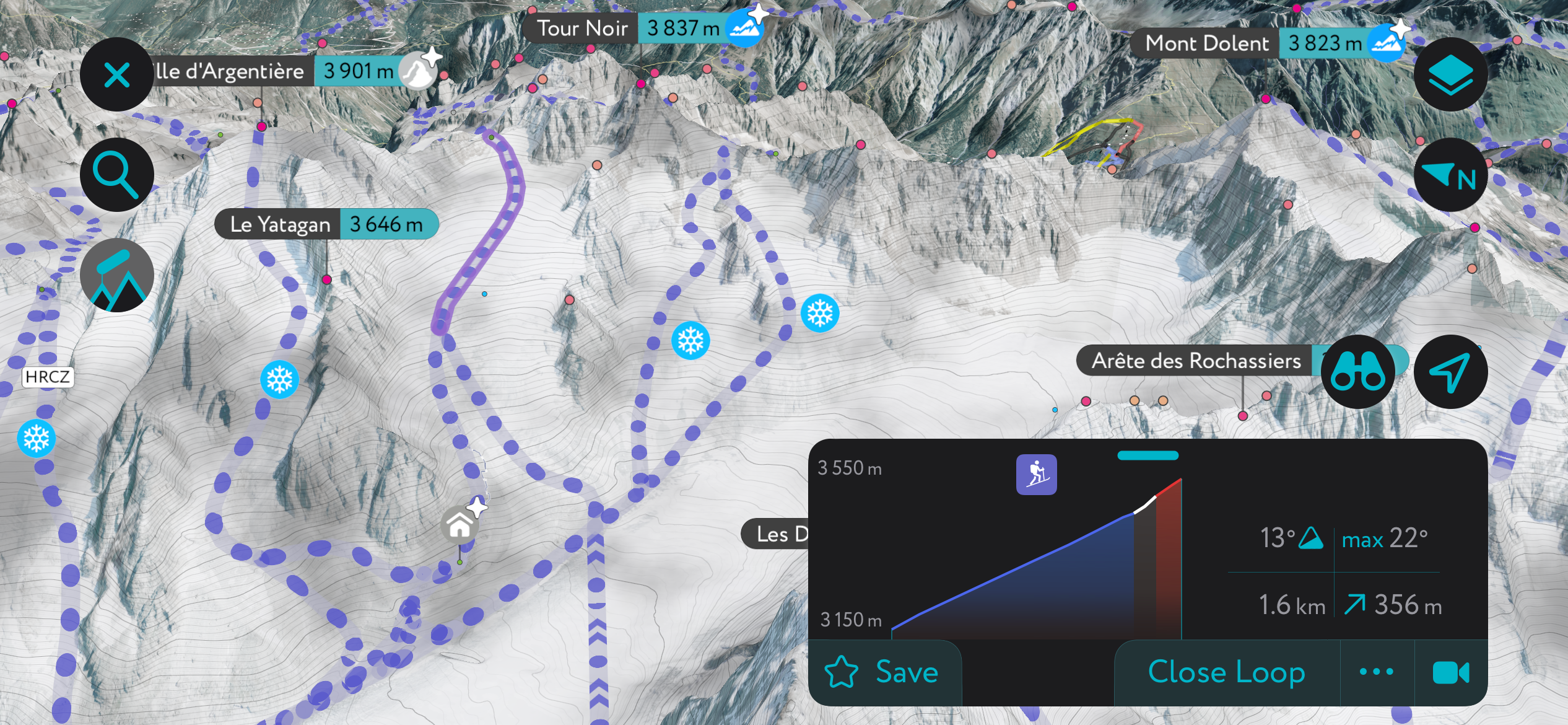
To your left is the Aiguille d’Argentiere. You’ll also see the Refuge d’Argentière. In front of you is the Tour Noir. Several glaciers flow down this mountain into the Glacier d’Argentière. You can skin these up to their terminal cols or turn them around when you please. Most of the slopes are between 20 and 30°, so it’s easy, non-technical skinning, even though you’re in the midst of larger-than-life mountains. It’s a spectacular tour.
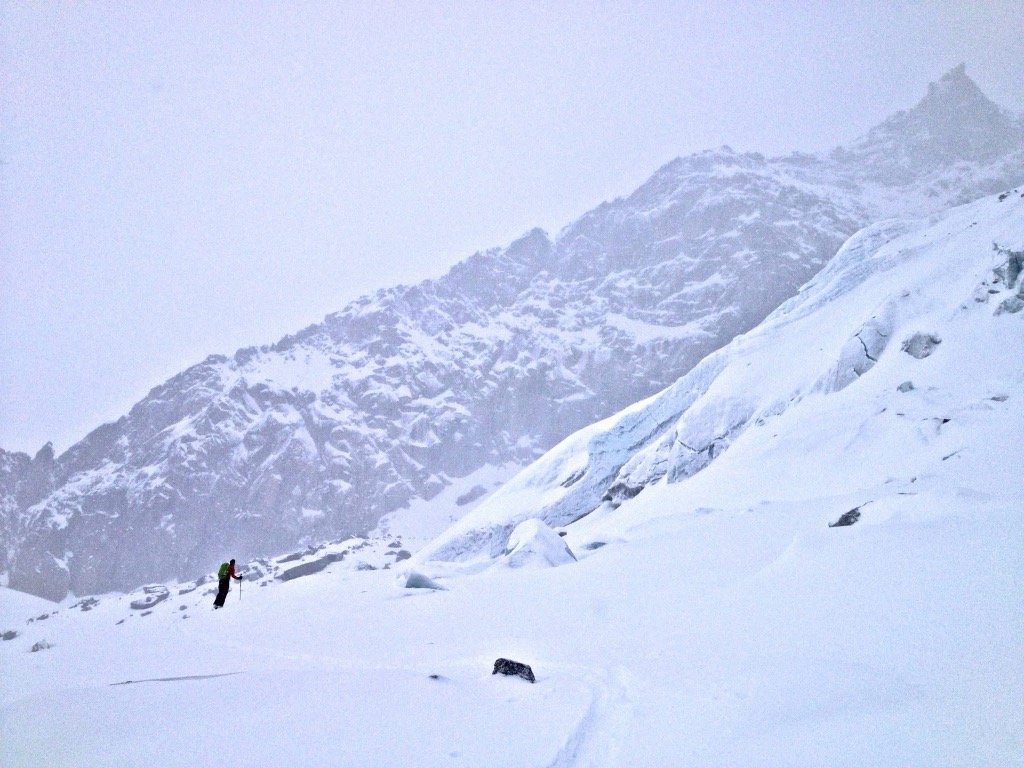
Ski down Lavencher Bowl and continue past the rope that marks the ski boundary. You head straight down to the valley, usually ending up in the hameux of Le Lavencher or just past it.
This run used to be more legendary back when there was more snow. Also, since the resort now does avalanche control, there are no massive avalanches to clear out the trees, so the forest is very tight with many small trees. It’s not the best skiing, in my opinion.
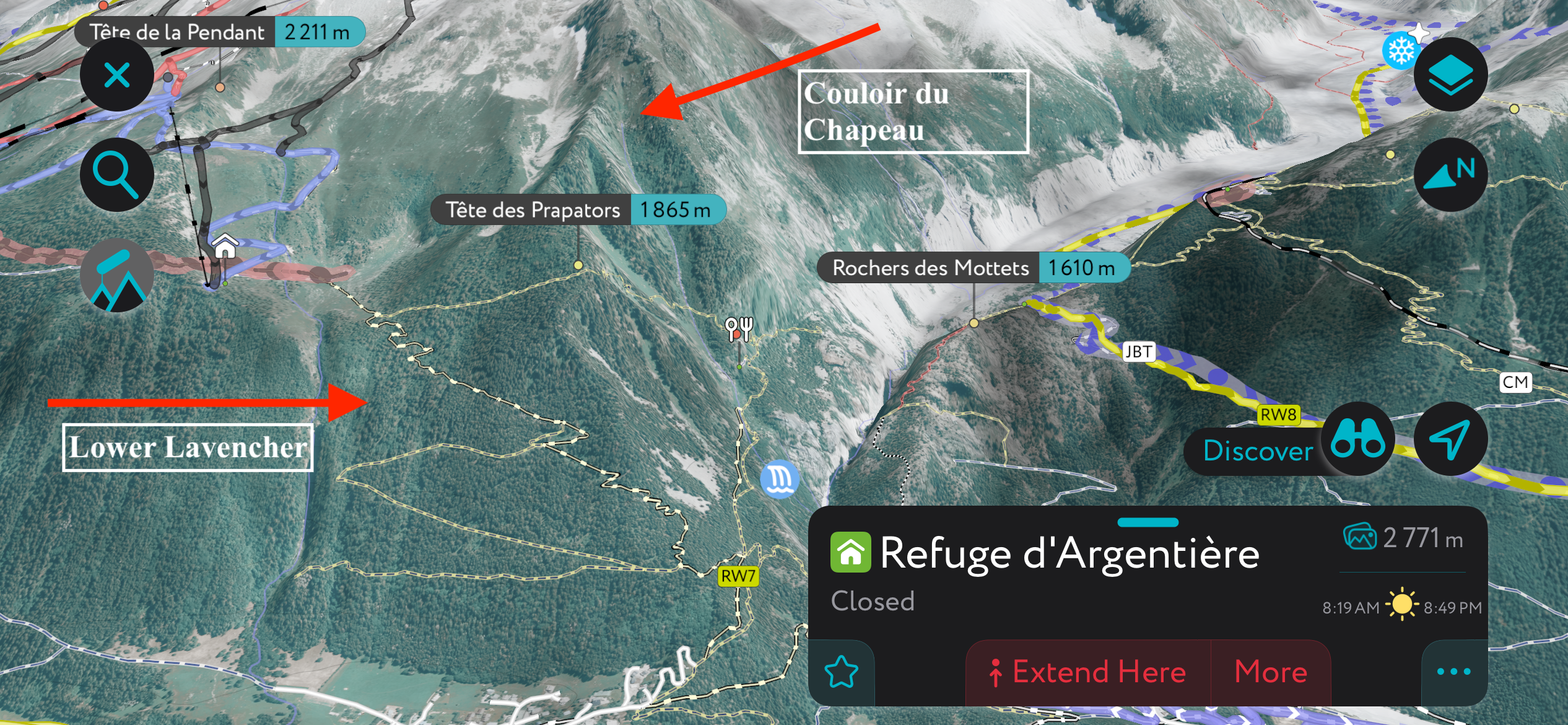
Ski the top of Lavancher Bowl. You’ll see a towering cliff to your left for much of the steep top section. Eventually, the cliff mellows out, and you can traverse and cross over to the other side. It may require sidestepping up.
You’re now in the Couloir du Chapeau. It’s wide—plenty of space to spread out, with small trees here and there. Watch out for avalanches, because there’s a 50-meter cliff at the bottom. You exit the couloir to the left before the cliff, probably passing by a cabin that serves as a mountain hut and restaurant in the summer. Then you hop on the summer trail down to Le Lavencher. Check out this Cham Lines video for an idea of the terrain.
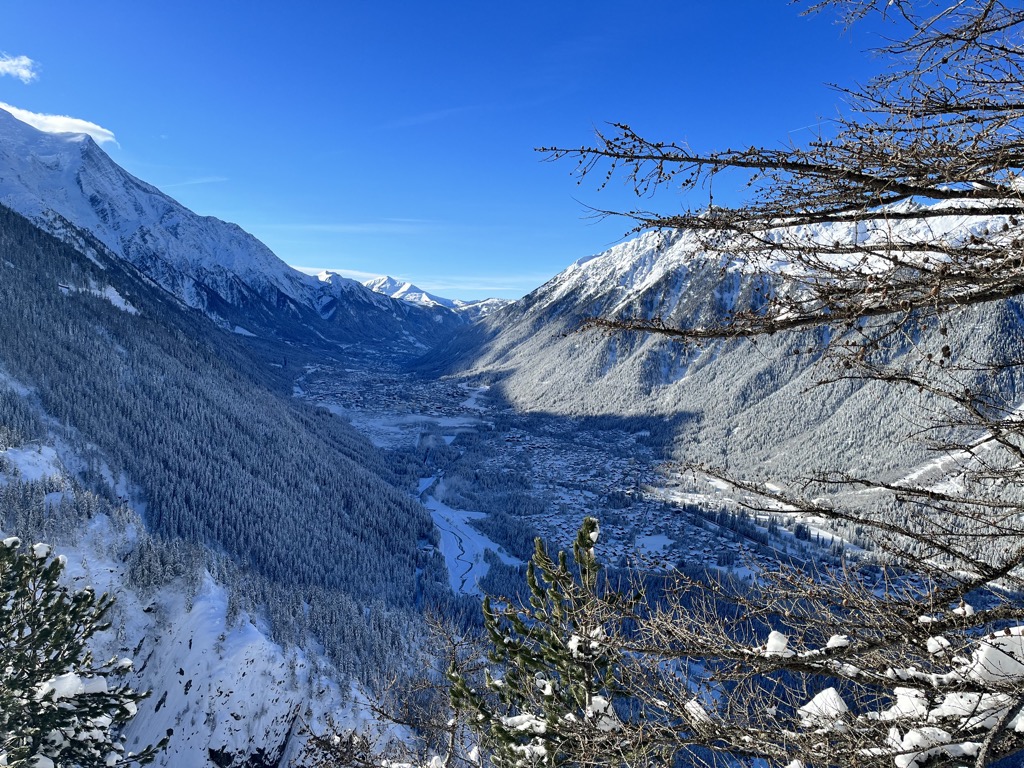
Ticket pricing is complicated at the GM.
Chamonix Le Pass: To ski just the GM, prices start around 55€ for an adult, but you can save money by buying a pass in advance (the amount of savings depends on the day and how far in advance you buy). The prices also drop dramatically if you purchase a consecutive-day pass.
For the Mont Blanc Unlimited, it’s significantly more expensive at around 90€ for the day pass. Look into consecutive days; it’s only 45 euros to add another day in 2025, and it gets even cheaper after that. The Mont Blanc Unlimited has many advantages, including taking the cable car to the top station at the GM when it opens in ‘26.
IKON pass holders will receive 7 days at the GM for free, but it’s only the Le Pass, not the Mont Blanc Unlimited.
There are also a plethora of other options, like single-ascent tickets for ski touring, and piétons passes for sightseers and snowshoers. Consult the Compagnie du Mont Blanc ticket office here.
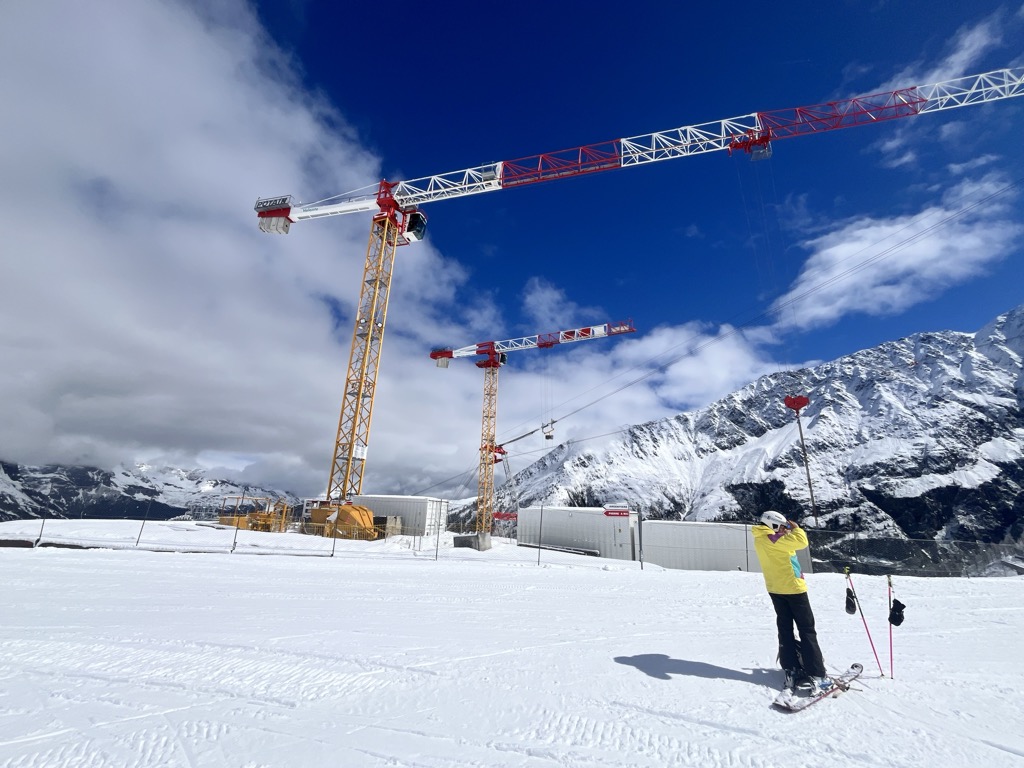
Argentière has an expansive Nordic track that traverses around the forests on the valley floor. There are
approximately fifteen kilometers of groomed trails suitable for both classic and skate skiing. It’s the best cross-country skiing in the Chamonix Valley.
Cross-country skiers can choose from three marked routes: the Moraine, a red-grade trail with 8.5 km of varied terrain; Les Chosalets, a 3 km blue trail; and Les Iles, a gentle 1.3 km green loop conveniently located near the parking area.
Like every good French village, Argentière has an office de tourisme. It’s located right in the little center, up from the Office Bar.
Office de Tourisme d'Argentière
49-33 Rte du Village
74400 Chamonix-Mont-Blanc
Phone: +33(0) 4 50 54 02 14
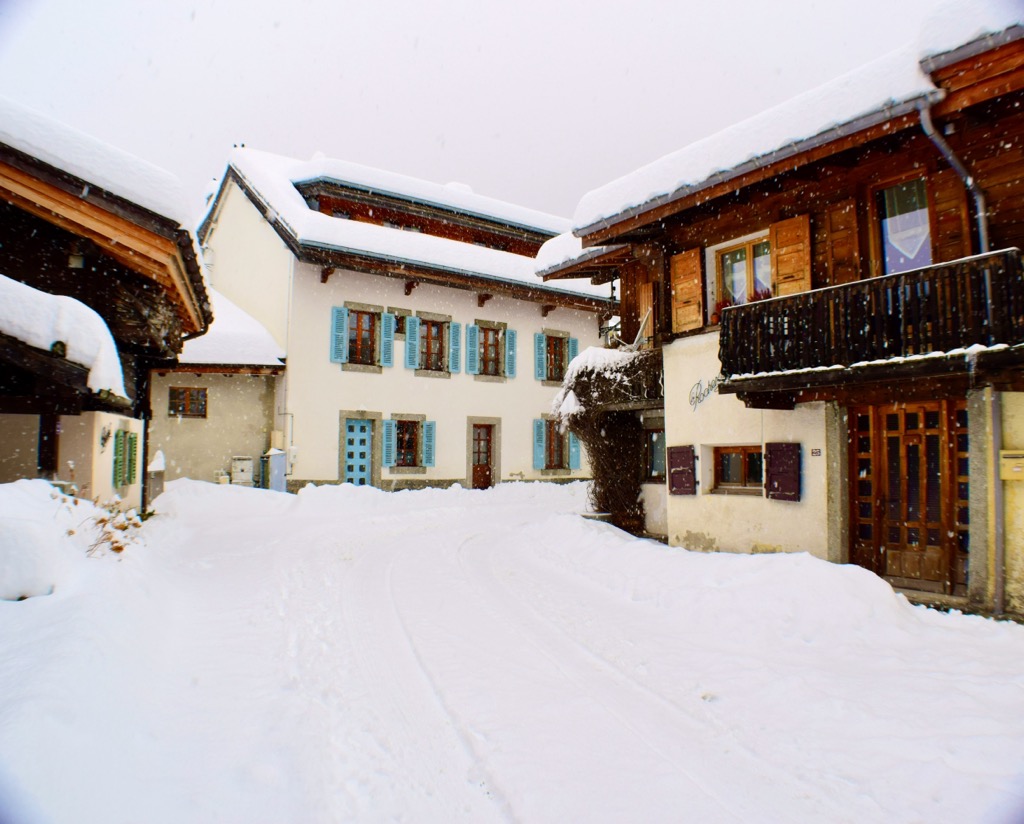
The Chamonix Valley, like most destination ski areas, is heavily developed with apartment buildings and hotels. Argentière is no exception, though it does manage to retain its village vibe, because the GM is just outside the center.
Most hotels are about a 10-15 minute walk from the slopes. The Dahu and the Couronne are the two most visible. There are a plethora of apartment building developments from the 70s and 80s around the GM. Therefore, many visitors stay in vacation rentals. The Grand Roc is a good place to start looking; it’s one of the most proximate to the slopes.
Once upon a time, there was a hostel in Argentière fairly close to the slopes, but it sadly closed during Covid. There’s no on-mountain lodging, and only a few truly ski-in ski-out apartments clustered around the Plan Joran base.
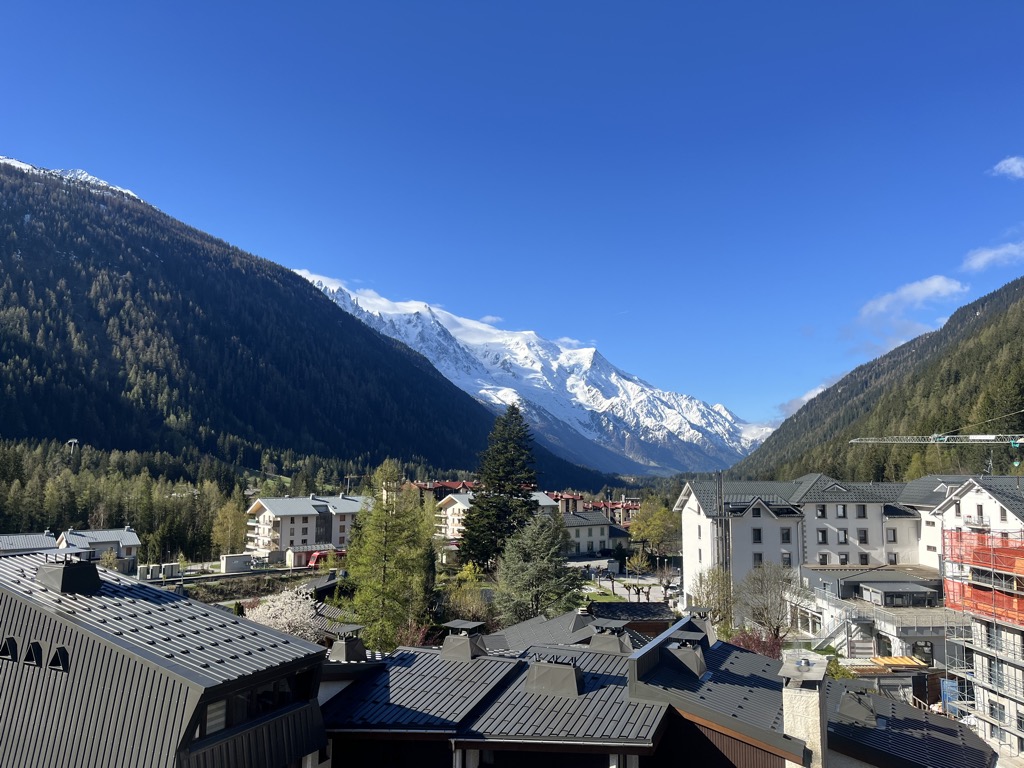
The primary food vendors at the GM are truly an embarrassment to the country of France. They’re owned by the Compagnie du Mont Blanc and only exist to make money. Still, the perfect dining experience is at your fingertips if you go to the right place. There are two good restaurants at the GM.
The first is the Chalet Refuge du Lognon. The setting is incredible, at a point overlooking the terminus of the Argentière Glacier. The food and drinks (vin chaud) are delicious. You can sit inside or outside. It also operates as a refuge, meaning you can stay here overnight. It’s located on the far skier’s right of the mountain at about 2100 meters, accessible from the Herse lift, or the top lift when it gets replaced. You have to be an intermediate or above skier to access this restaurant.
The Cremerie du Glacier is even tastier than the Refuge. First things first, you have to make a reservation, or else you probably won’t get in. And skiing there is a bit of a mission, so you don’t want to get turned around. The food is mostly cheese products, like fondue and la croûte savoyarde. It’s affordable, especially during lunch. But it’s worth it. The place has character and great food at reasonable prices.
The restaurant is located near the bottom of the mountain, in the middle of a dense forest. You access it from the Pierre à Ric trail that goes from the mid-station to the Plan Joran base. The luge path through the forest to get there requires somewhat advanced skiing skills, but you can also traverse around on a groomed track.
There are a number of mid-tier restaurants in Argentière village. Most of them, like the Dahu, are long-standing institutions that churn out the same old Savoyarde bistro fare year after year, decade after decade.
My favorite is La P’tite Verte, located on the main road just after the bridge when heading up the hill. It’s also classic Savoyarde fare, but fresh and high quality. Expect fondue, meats with morilles sauces, steak tartare, and meat-heavy salads, to name a few. It’s heavy food, but exactly what you need after a big day lapping the GM.
The green facade of the empty Savoy bar stands like a ghost of après ski past. Apparently, the place was condemned by termites, which is not particularly surprising if you’ve ever happened to pass an afternoon there. But it was always the best place to head after skiing.
One problem with après in Argentière is that you have to walk 15 minutes up a hill in ski boots if you want to participate. And there are no good bars at the base.
The Office Bar, situated at the town center, is still a happening spot, especially if you have to be British or Australian. The Stone Bar is a lively place to drink or have a pizza.
The best après is in Chamonix. The Elevation bar is where the guides hang out, while the Chambre Neuf throws loud dance parties most days of the week. There’s even a Folie Douce hotel.
Not only are there several ski resorts nearby, all of them are included on the Mont Blanc Unlimited Pass! That consists of the other Chamonix ski areas, as well as Courmayeur in Italy and Verbier in Switzerland, both world-class resorts in their own right.
One of the best things about a trip to Chamonix or Argentière is being able to experience these resorts as well, so don’t just spend all your time at the GM.
Located at the northern end of the Chamonix Valley, Le Tour has gentle, sunny, and open pistes ideal for beginners and intermediates. It’s quite different in character from the GM.
The best Le Tour off-piste is found on the Vallorcine side, if you have good snow to about 1,500 meters. You can also do a fairly mellow ski tour to Switzerland and take the train back to the Chamonix side.
This linked area is accessible directly from Chamonix town. It’s south-facing and offers sun-drenched slopes, panoramic views of Mont Blanc, and varied terrain suited to intermediates and advanced skiers. Brévent is steeper and more technical, while Flégère has more mellow runs.
Both areas are home to some excellent off-piste, with Brévant leading the way. The tram to 2,800 meters offers access to the extreme test-piece, the Ensa couloir, located looker’s left of the tram. Meanwhile, you can head right to traverse the ridge for some shorter but still steep headwalls back into the resort. The Cornu lift offers some less extreme off-piste; head down under the lift, or pass over the ridge towards Flégère into a massive open bowl.
Flégère isn’t quite as fruitful for lift access off-piste, though the Evettes chair can have fun tree skiing during storms. The best itineraries from Flégère involve ski touring from the lifts. Check out the Col du Belvedérè; traverse right from the Floria t-bar, around the ridge, then head up the large bowl to the obvious pass.
Skiing off the Aiguille du Midi is one of the most iconic experiences in the sport of skiing. Reached via cable car from Chamonix center to 3,842 meters (12,605 ft), the Aiguille du Midi is the world’s greatest lift access to high-altitude, glaciated ski routes.
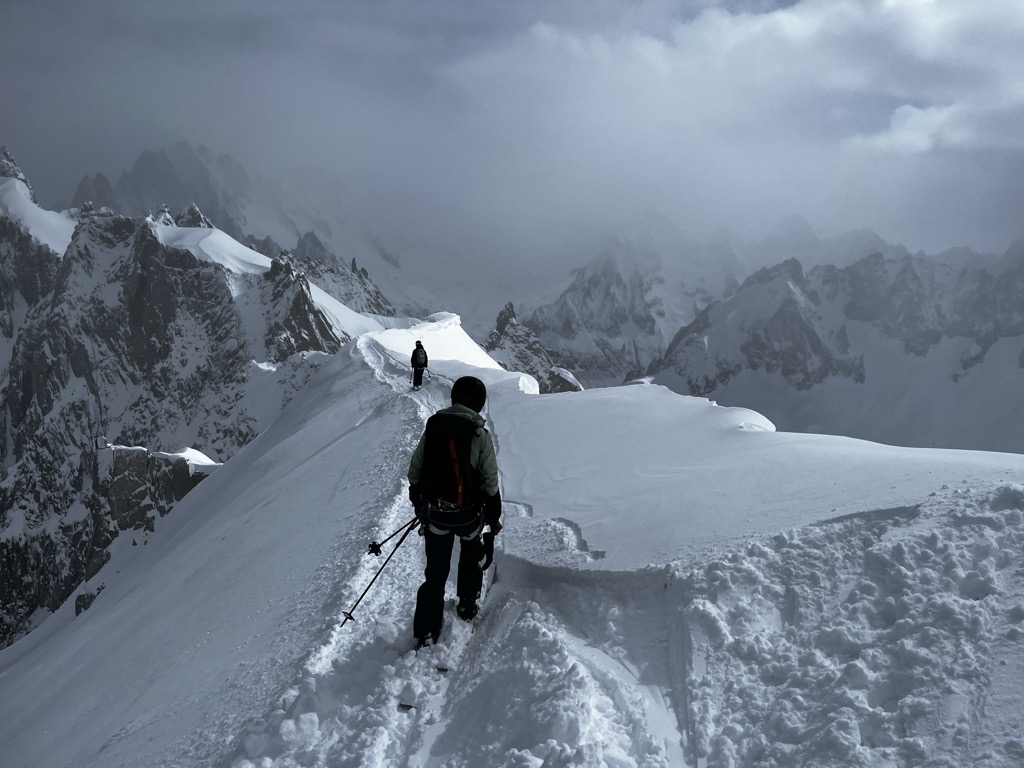
There are no groomed runs—obviously—but the legendary Vallée Blanche is accessible to intermediate off-piste skiers. The crux here is not the skiing, it’s route-finding and crevasse hazard. Every year, people perish by falling into crevasses on the Vallée Blanche. That’s why most tourists do this run with a guide.
The Vallée Blanche is more of an experience than a ski run; it’s a giant traverse down the Mer du Glace glacier, where you’re only making turns on the upper sections. However, some variations offer legitimate skiing. The two most popular are the Petit Envers and the Grands Envers. The Grand Envers in particular offers great skiing all the way to where the Mer du Glace flattens out in the valley, at which point it’s a short traverse back to the gondola, which takes you to the Montenvers train, back down to Chamonix.
Aside from the Vallée Blanche, there are two classic steep couloirs: the Cosmiques and the Glacier Rond. Chances are you won’t be hitting these if you come on a ski trip to the GM, but they’re worth mentioning.
The Aiguille is also the jumping-off point for hundreds of classic ski tours, including the famous Mont Blanc Ascent.
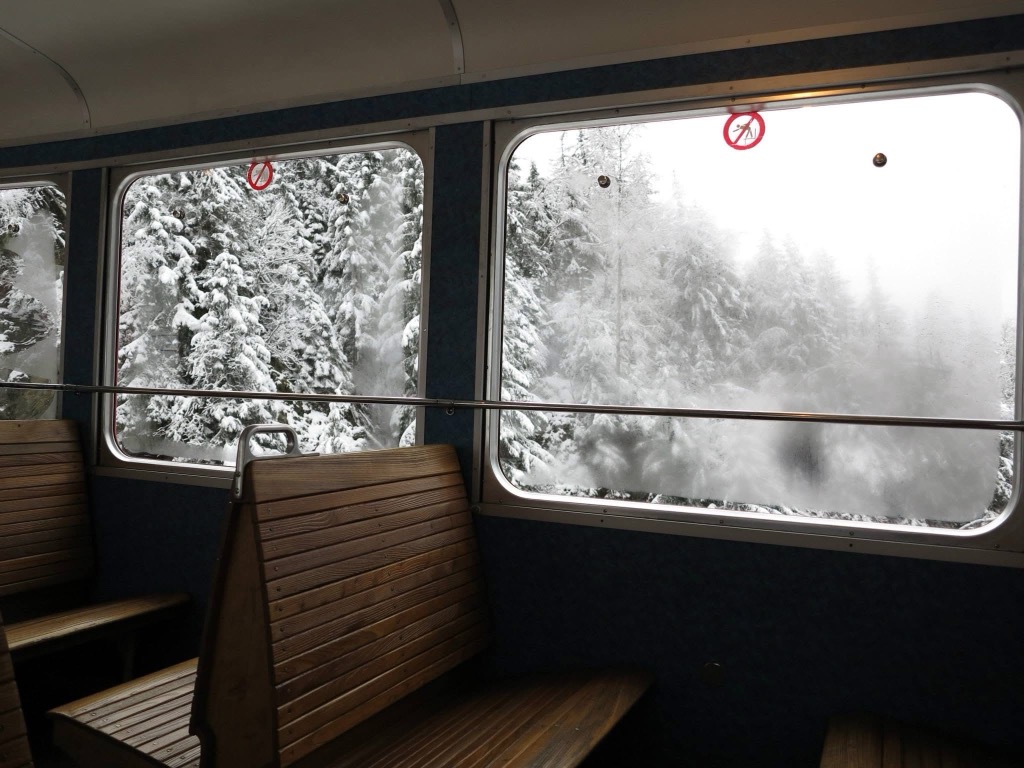
Known for groomers and family-friendly skiing, Les Houches is a decent but unremarkable option in bad weather due to its less-exposed position below treeline. That said, if it’s warm, Les Houches can get the dreaded R-word.
Verbier is a premier ski resort located in the Swiss Alps, about an hour from Chamonix. It’s included on the Mont Blanc Unlimited Pass, and a bus leaves each morning from Cham, returning in the afternoon.
Verbier is legendary for its expansive, challenging off-piste terrain—each year, it's the venue for the Freeride World Tour finals on the Bec des Rosses face—as well as a vibrant après-ski scene (much more so than lowly Argentière). As part of the 4 Vallées, Verbier offers access to over 410 kilometers of pistes and 93 ski lifts. It’s Switzerland's largest ski domain and is larger than all the Chamonix areas combined. Like the GM, the ski season typically runs from early December to late April, with some areas remaining open into early May.
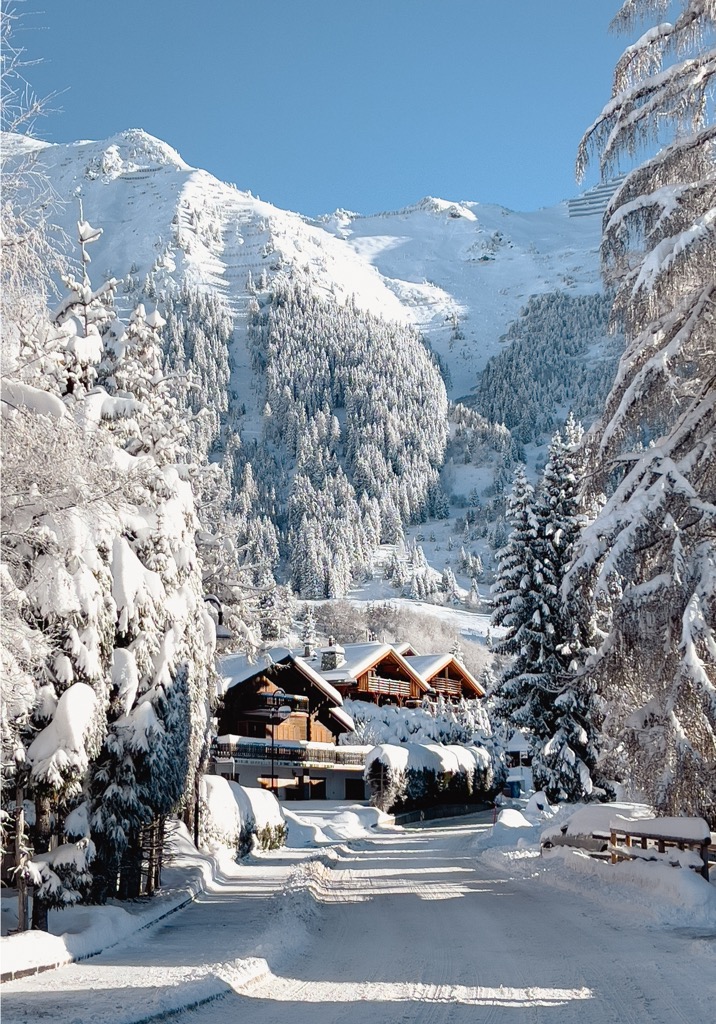
It seems like all the best freeriders in the world are shredding it up at Verbier on any given day. You might be proud of your line, until you see five kids in a row hucking back flips off the cat track.
Verbier is even more fancy and expensive than Chamonix. But it’s still worth checking out Verbier for a day if you’re in Chamonix for a week or more, if only just to mix things up.
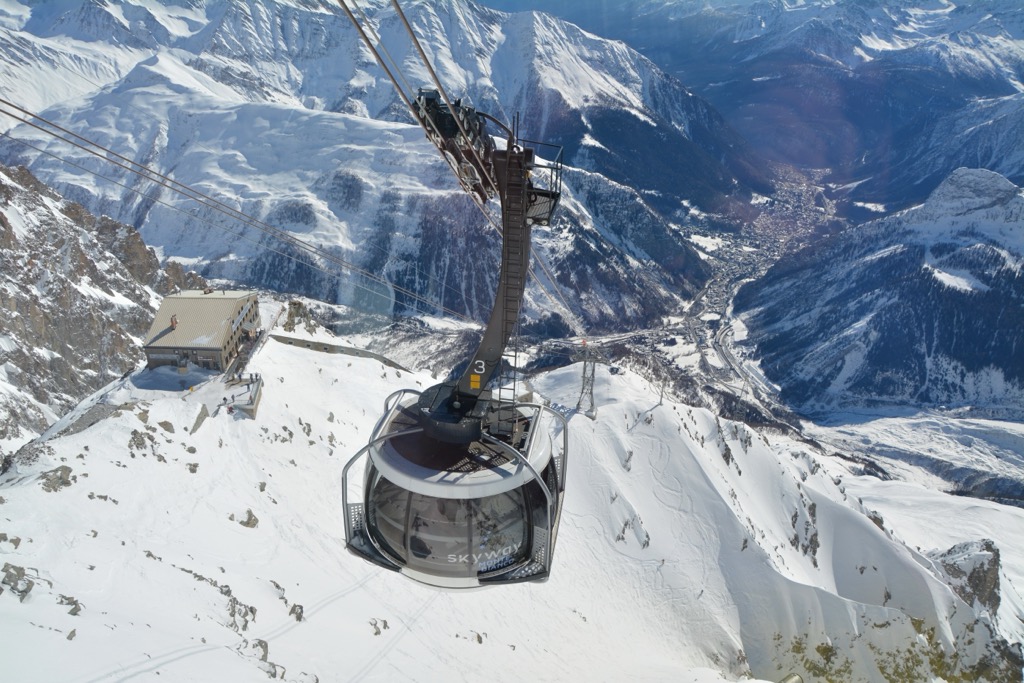
Courmayeur sits at the southern foot of Mont Blanc, opposite Chamonix, in Italy's Aosta Valley. It’s like a mini-Chamonix, with one ski resort (similar in character to Brevènt-Flegérè) and one cable car (similar to the Aiguille du Midi) called the Skyway Monte Bianco.
The ski area has approximately 100 km (62 miles) of pistes, primarily catering to intermediate skiers, and 18 lifts to service them. There’s a mix of wide, open runs on the Plan Chécrouit side and scenic, below-treeline groomers in Val Veny. Elevation ranges from about 1,200 to 2,750 meters, and the season typically runs from early December to mid-April. The ski area is mostly south-facing, but has some good north-facing valley runs.
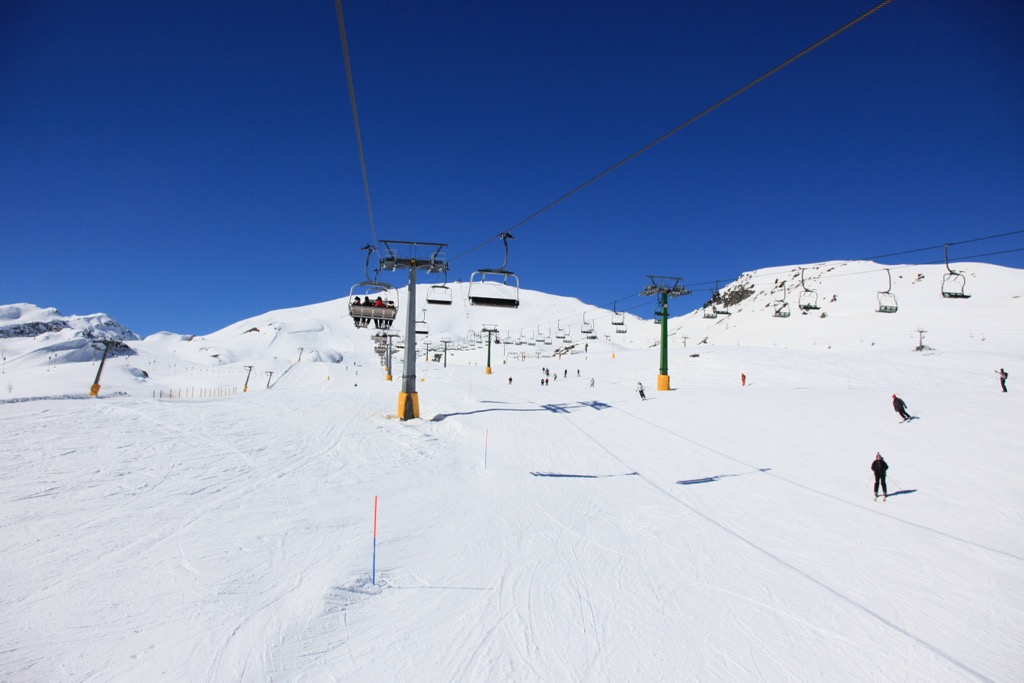
The best off-piste skiing at Courmayeur is off the Arp cable car, which accesses the bowl below the Colle d’Arp. You can also continue down for some epic valley descents, all on north-facing terrain, though getting back to the lifts is a bit of a hike (you can also stay high and traverse—consult the PeakVisor app).
Now for the Skyway Monte Bianco. This is like a south-facing Aiguille du Midi that reaches Punta Hellbronner at 3,450 meters, across the Mer du Glace from the Aiguille (you can see the Aiguille from the top). You’ve got nothing super easy like the Vallée Blanche; instead, you’ve got a lot of steep couloirs and big faces (check out this video to get an idea of the terrain). Like the Aiguille, the Skyway is no joke. It’s south-facing and is subjected to the sun’s punishing rays, meaning you see a lot of avalanches. Many Chamonix legends have died here, particularly in the Marbrée Couloir.
If you liked this guide, you should know that it was brought to you by the one and only PeakVisor App.
PeakVisor is a leader in the augmented reality 3D mapping space; we’re the product of nearly a decade of effort from a small software studio smack dab in the middle of the Alps.
My sidekick during ski missions is always the PeakVisor App. I use the app to track activities, navigate with exquisite 3D maps, and learn the surrounding mountains' names. I’m all for tools that help quicken the pace in the mountains, and the PeakVisor App greatly accelerates things. It’s also critical for planning, whether I’m headed into the backcountry or searching for off-piste goodies at a new ski resort. Read on for a breakdown of some of the app’s best features.
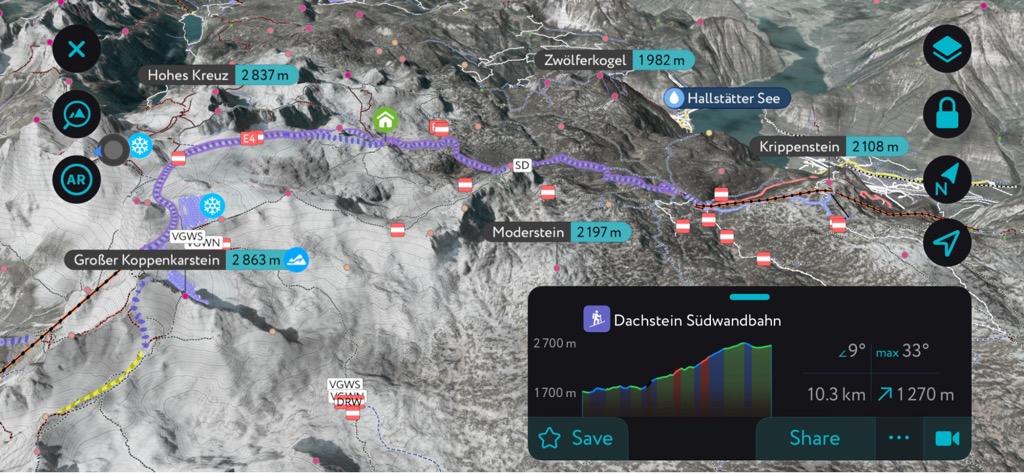
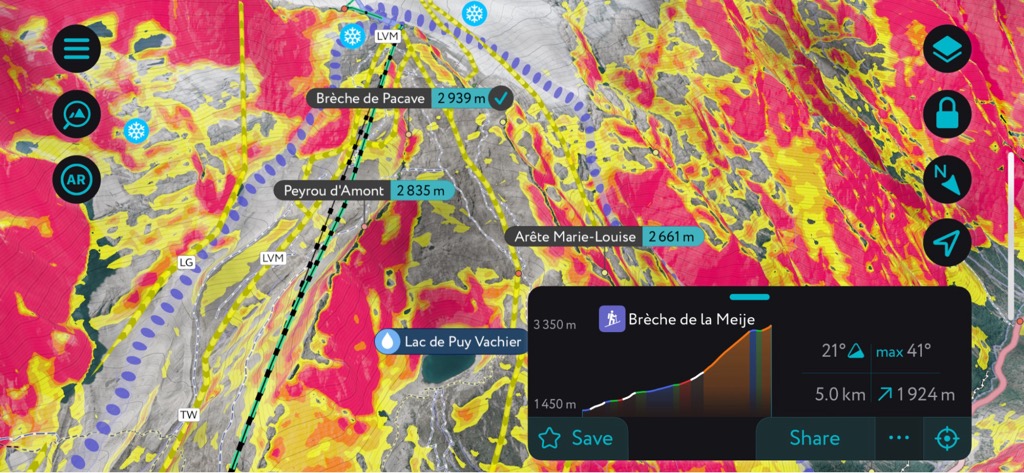
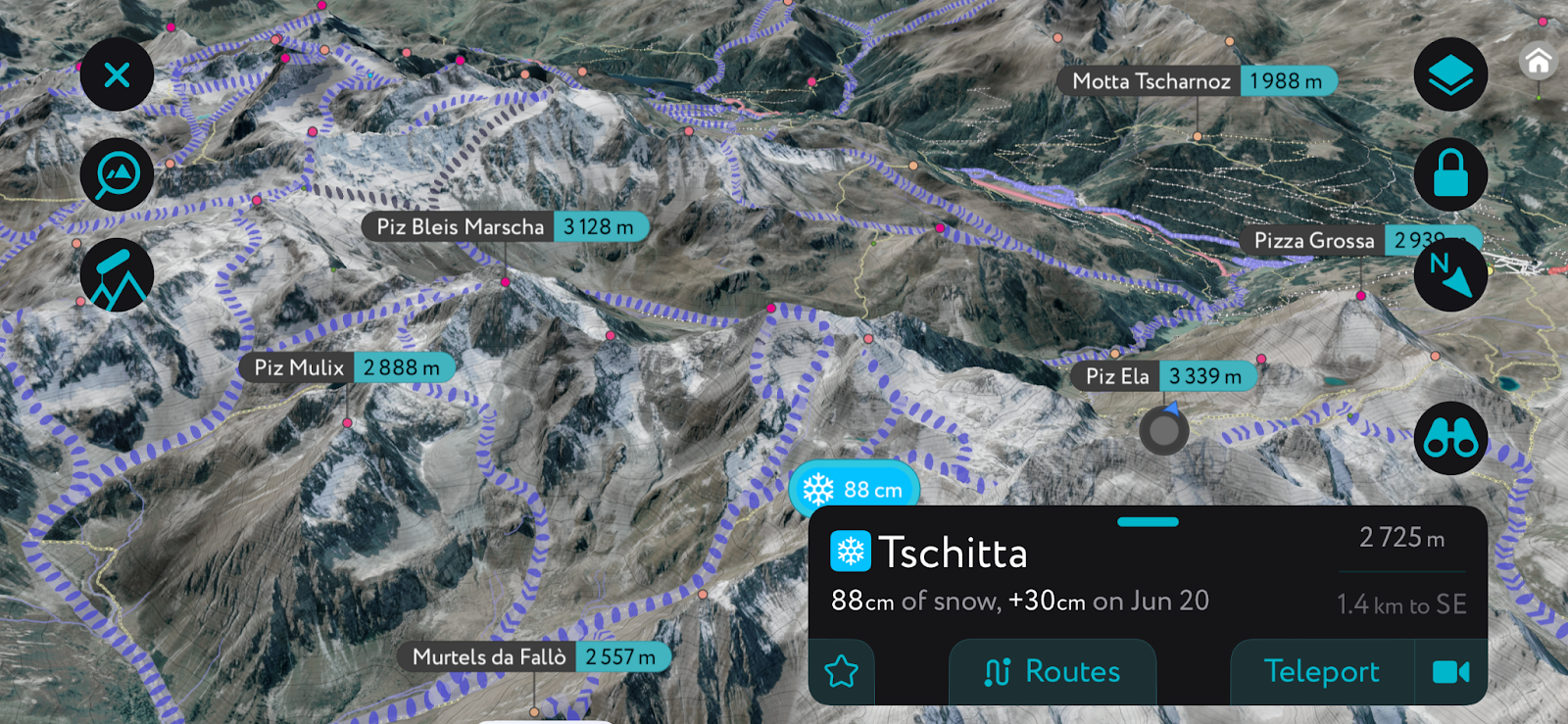
In addition to the visually stunning maps, PeakVisor's advantage is its variety of tools for the backcountry: